Category: Nostalgia

  • Throttle Memories: A Rider’s Pause, Not the End

    Throttle Memories: A Rider’s Pause, Not the End

    The first time I rode a motorcycle, I was in high school. We had pigs in the backyard, but sometimes we had to ride to the next barangay—either to check on them or to buy feed. My father handed me the keys and said, “Subukan mo na.” That was it. No formal lessons. Just instinct, dirt roads, and a purpose.

    I didn’t know then that I’d fall in love with two wheels.

    That old motorcycle? It wasn’t pretty. But it moved. And it introduced me to something I didn’t know I’d fall in love with.

    Classic bikes. That raw, unfiltered connection between man and machine. No Bluetooth. No digital dash. Just an engine, a tank, and the road ahead.

    Years later, I got a 250cc brat-style bike. Tuned by its original owner to run like a race machine—tight throttle, low stance, angry sound. One of the fastest I’ve ever owned. It wasn’t just transport—it was rebellion on wheels. Pure adrenaline every time I cracked the throttle.

    Eventually, life shifted. The 250cc had to go. But I wasn’t done riding.

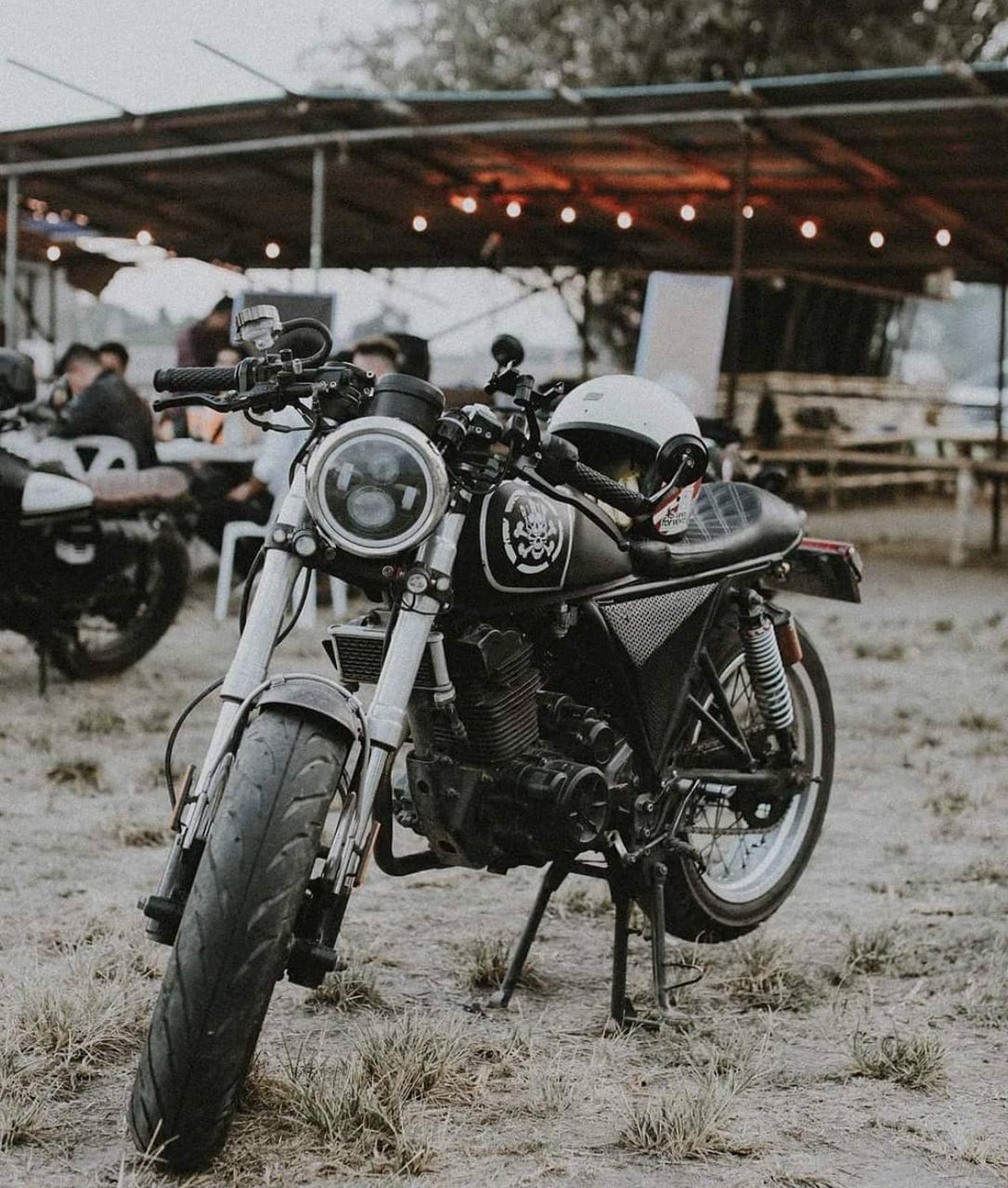
    I picked up a 152cc. Lighter, simpler, and way easier on the wallet. Most people would’ve left it stock. But I saw something else. Not what it was—but what it could be. I brought it to the Apache Customs crew in Pampanga. The same crew I’d been riding with since 2021. Real builders. Real stories. Real heart. Together, we turned that humble bike into a scrambler-inspired classic ride. It had no business being fast. But it had soul.

    It was mine.

    From off-road rides with the Apache boys to late-night tambays at gas stations, that bike carried more than just miles—it carried memories. Bruises, laughter, breakdowns, patched tubes, and sunrises from the backroads of Pampanga.

    Then came 2022. I moved to Makati for work. Took the bike with me. Rode it through the chaos of city life—slipping between jeepneys, dancing through rush hour, trying not to get swallowed whole by EDSA. It was stressful, sure. But the moment I twisted the throttle? Peace.

    Until Commonwealth happened.

    Three close calls. One too many. The last one nearly clipped me off the road. That was my sign. In 2023, I parked the bike. Turned off the ignition. Walked away.

    But the feeling? It never left.

    I still flinch when I hear a deep engine rev outside. I still save bike builds at 2AM. I still dream of winding roads, foggy mornings, the faint rattle of a loose bolt on the tank.

    The road still calls.

    One day, I’ll answer again.

    Maybe not now. But soon. When the timing’s right. When life slows down. When the itch gets too loud to ignore.

    Because once you’ve ridden with your chest to the wind and your heart in sync with the engine…
    You don’t forget.
    You just pause.

    And me?
    I’m just waiting to ride again.

  • A Night of Nostalgia: For the Certified 90’s Kid

    A Night of Nostalgia: For the Certified 90’s Kid

    The amps had gone silent. No more drums echoing through the night. Guitars lay still, unplugged. It was past ten, and the rules said the loud music had to stop. But nobody moved. Nobody wanted it to end.

    The garage lights stayed on. The air was thick with leftover heat and laughter. Bottles clinked softly. A fan hummed in the background like white noise to a night that refused to sleep. Someone reached for their phone. Bluetooth speaker. Spotify. Search: 90s OPM Hugot.

    And just like that, the second set of the evening began.

    No instruments. Just voices. Just memories. Everyone sang.

    The first note of Meteor Rain played and a cheer erupted. Someone stood up and did the signature hand-to-heart move. Laughter broke out, heads shook, but no one resisted. The chorus hit, and everyone joined in—word for word, choreography and all. Because if you grew up in the 90s, you had to dance when F4 played.

    Then came Wala Na Bang Pag-Ibig. The energy softened. Jaya’s voice filled the space and the mood shifted. The smiles stayed, but the eyes closed. The kind of singing that comes from somewhere deep, like you were still in uniform, whispering lyrics into your armchair during idle time in high school.

    Then it hit: the April Boy playlist.

    Honey, My Love, So Sweet dropped like a bomb. Screams. Zero warm-up. Just full-on, straight-into-the-heart karaoke mode. Invisible caps flew through the air. People jumped, pointed to imaginary crowds, acted like the heartbreak was still fresh. It was messy. It was dramatic. It was perfect.

    Next, Bakit Pa swept through the speakers. Jessa Zaragoza’s voice cut through whatever was left of anyone’s composure. An imaginary mic appeared. Someone grabbed a broom and raised it like a Grammy. The drama was peak teleserye. The joy? Completely unscripted.

    Then Bakit Nga Ba Mahal Kita arrived, and the whole room sank into that familiar ache. The kind of song you don’t just sing—you feel. Loud or quiet, everyone joined in. Because everyone knew what it meant.

    But the real kicker? Di Ko Kayang Tanggapin.

    The garage exploded. That intro alone brought everyone to their feet. April Boy’s anthem turned the hangout into a full-blown concert. More cap-throwing. More pretend heartbreak. No one cared how they sounded. It wasn’t about being in tune—it was about being in the moment.

    Because those songs? They weren’t just songs. They were time machines.

    They took everyone back to lazy Sunday afternoons with the radio on. To crushes passed through notebook paper. To rewinding cassette tapes with a pencil because the player chewed up your favorite track. Every chorus pulled out a memory you didn’t even know was still there.

    In that garage, with nothing but a speaker and a playlist, they were kids again.

    They weren’t performers. They weren’t professionals. They were just friends—the same ones who traded baon at recess, lined up for fishballs after class, and shared heartbreaks over cheap ice cream and handwritten love notes.

    That night reminded them why they fell in love with music in the first place.

    Because music brings people together. And sometimes, it’s the cheesiest, most “jologs” songs that hit the hardest.

    The night ended with raspy voices, aching cheeks from too much laughter, and one last cap-throw for good measure. And as the final song faded into silence, one thing stayed true:

    You can take the kid out of the 90s—but you’ll never take the 90s out of the kid.

  • Sarap Balikan: Growing Up with Fu Pei-mei on RPN 9

    Sarap Balikan: Growing Up with Fu Pei-mei on RPN 9

    There’s a certain kind of nostalgia that only 90s kids will understand. The kind that smells like VHS tapes and electric fan breeze, that sounds like dial-up tones and station IDs on free TV. And tucked between the noise of cartoons and afternoon reruns was a quiet, underrated gem on RPN 9—“Fu Pei-mei’s Chinese Cooking Show.”

    It aired with no fanfare, no flashy effects, no background music to hype it up. Just Fu Pei-mei herself—graceful, calm, and precise—standing in her kitchen, slicing, stirring, and explaining the beauty of Chinese cuisine. It wasn’t a show many kids would be expected to watch, but there I was, eyes fixed on the screen, completely mesmerized.

    There was something about her voice, her presence. Even if I didn’t understand all the words, I understood her intention. Every movement was so deliberate. Every dish had a story. She made cooking feel like a ritual—something that required respect, patience, and love. Watching her was like being let in on a secret. And even if I couldn’t cook yet, it sparked something.

    As a 90s kid, most of our shows were loud and exaggerated. But Fu Pei-mei? She was the total opposite. No gimmicks, no catchphrases—just skill and quiet confidence. And that’s what made it unforgettable. Her show stood out because it didn’t need to shout. It whispered its way into your memory, and somehow, stayed there.

    Years later, I realized what a legend she truly was. Fu Pei-mei wasn’t just a cooking show host—she was a culinary ambassador. Her mission to preserve and teach authentic Chinese cooking shaped generations, even far from Taiwan. She didn’t just teach recipes; she taught culture, discipline, and appreciation. Even through a tiny TV screen in the Philippines, she made an impact.

    Looking back now, I’m thankful. Thankful that I got to grow up with moments like that—quiet mornings or afternoons watching Fu Pei-mei on RPN 9, not knowing that one day, those little moments would mean so much. She made me curious. She made me listen. She made me appreciate food not just as something to eat, but something to understand.

    Fu Pei-mei’s legacy lives on. And for every 90s kid who found themselves watching her, even if by accident—it was a soft, unforgettable gift from a simpler time.

    Sarap balikan, talaga.