Tag: books

  • Jemson Cayetano and the Strength of Refusing to Kill: Inside Ang Hunyáng sa Daang Ginto

    Jemson Cayetano and the Strength of Refusing to Kill: Inside Ang Hunyáng sa Daang Ginto

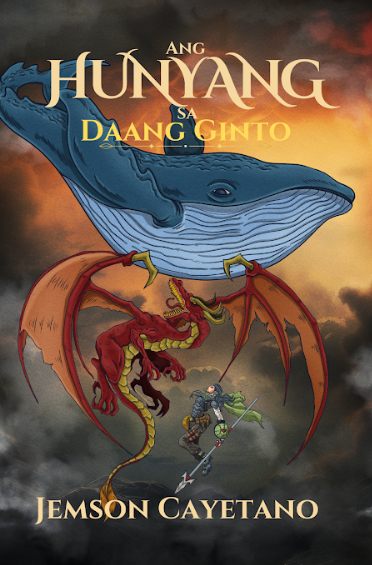
    Ang Hunyáng sa Daang Ginto (roughly, The Hunyáng on the Golden Road) is an epic fantasy novel by Filipino author Jemson Cayetano. It is set in Mu, an original world inspired by Philippine and other Asian mythologies. Its hero, Ilaya, is a Hunyáng, a person who can transform into any creature they have killed. Ilaya refuses to kill. So the only form she can take is a pigeon.

    That single idea carries the whole book, and it is why we wanted to talk to the person who wrote it.

    Excapelabs started as a home for the Philippine indie music scene. But our tagline is Unorthodox Mind, and that kind of mind is not limited to musicians. As we open our doors to creatives beyond music, Jemson’s book felt like the right story to tell.

    What is Ang Hunyáng sa Daang Ginto about?

    Ang Hunyáng sa Daang Ginto follows Ilaya, a young woman from Sanlipi, a nation the rest of her world tends to overlook. She is the first Hunyáng born among her people in a long time. Her mission takes her to the far-off kingdom of Hian, where she must face many stronger Hunyángs to win a single Hiling (Tagalog for wish) that could save her homeland.

    The obstacle is built into the premise. Every other Hunyáng can add a new form with each creature they kill. Ilaya, by choice, has only one.

    Jemson says that at its heart, the book is about “what it means to be strong without being powerful.” It also looks at what happens when a world’s systems are built on violence and one person refuses to take part.

    Who is Jemson Cayetano?

    Jemson Cayetano is a Filipino author and the writer of Ang Hunyáng sa Daang Ginto, the first book of a planned trilogy. Writing an epic fantasy novel had always been his dream, and he says he was simply waiting for the right idea to arrive. He is now writing the second installment.

    He calls himself a student of Pinoy comedy (Pinoy is the informal word Filipinos use for themselves). He also points to The Lord of the Rings and One Piece as proof that worldbuilding is what makes a story timeless.

    Where did the idea for the book come from?

    The idea came from one question. While watching an anime, Jemson wondered what would happen if a power usually given to villains belonged to the main character instead, or became the main power system of an entire world.

    He settled on shapeshifting, a classic trickster ability tied to characters like Loki and Mystique. From there, he started working out how it could become an intricate power system with its own rules.

    Jemson is open about the fact that the idea “didn’t start very deep.” What gives it weight is the rule attached to it. A Hunyáng gains a new form only by killing the creature first. That one rule turns a familiar villain trick into a moral problem, and it gives Ilaya the choice that defines her.

    What does the word Hunyáng mean?

    Hunyáng is a word Jemson invented. He built it from hunyango, the Tagalog word for chameleon, an animal people often link with shapeshifting and adaptation. Some readers assume the word comes from existing mythology, which says a lot about how naturally it fits the world of Mu.

    The word is more than a label for the hero. Jemson says it “represents the whole point of the story.” The book shows how the Hunyángs shape the reality of their world, and what happens when one of them refuses to gain power the way the others do.

    What questions does the book ask its readers?

    Jemson does not write to deliver a lesson. “I am not one to preach about values and ideals,” he says. What he wants is for readers to sit with the same questions he asks himself.

    Two of those questions run through the book: “How far can one go in pursuit of ambition or principles? How can we say it is okay to be ourselves if we are already bringing harm to others?”

    Ilaya’s refusal to kill puts both questions under pressure. Her principle keeps her small in a world built on violence, and her mission forces her to face Hunyángs far more powerful than she is. Jemson admits the book may not offer an answer that satisfies everyone. For him, getting a reader to ask the question at all is “more than worth the effort.”

    Which character means the most to him?

    Jemson loves his whole cast, especially the main group of Ilaya, Lam-Ang, Hendra, and Pei-Pei. But the character he singles out sits outside that group.

    Her name is Elda, and she is a side character. Jemson says he wrote her very carefully, and he describes her arc as “a beautifully haunting story” that still gives him chills.

    Elda did more than move him. She changed the book. Jemson adjusted the tone of the whole story to make sure he did her justice. That is a big change to make for someone outside the main cast. He hopes readers will love her story as much as he does.

    How did he build the world of Mu?

    Jemson calls building Mu the hardest part of writing the book. He wanted a world that feels alive, cohesive, and consistent.

    He holds a firm view on this, even knowing some authors may disagree. He believes epic fantasy asks a writer to commit 100% to a believable world. His reference points are The Lord of the Rings and One Piece, two stories he sees as timeless because of their worldbuilding.

    Mu draws on Philippine and other Asian mythologies, but Jemson stresses that it is entirely original. It holds places like Sanlipi, Ilaya’s overlooked homeland, and Hian, the far-off kingdom where her mission leads. The Hunyáng power system gives the world its rules: who can become what, and at what cost.

    For readers who know fantasy through Middle-earth or the Grand Line, Mu is built with that same ambition, drawn from Philippine and Asian myth.

    Where does the humor come from?

    An epic about violence and principle might sound heavy. Jemson balances it with humor.

    He says a writer’s observations shape the work more than most writers realize, from style and themes down to specific scenes. Comedy is his clearest example. As a self-proclaimed student of Pinoy comedy, he enjoyed writing funny scenes that Filipino readers will recognize from their daily lives, even though the story takes place in a different world and time period.

    For readers outside the Philippines, those scenes offer a look at everyday Filipino humor. For Filipino readers, they are the moments that make Mu feel close to home. The jokes sit beside the book’s heavier moments, and some readers have told Jemson they felt all kinds of emotions throughout the book and loved it for that.

    What was the road to readers like?

    Jemson describes his journey with the book as a roller coaster. He calls it the one story where he can honestly say he “spent all the creativity within my body.” So when it went unsold on several occasions, it hurt.

    He knew it would not be easy. What kept him going was readers. People came to him to say how much they enjoyed the book, and for him, that was enough.

    Now that more people have discovered Hunyáng, Jemson says he “really can’t ask for more.” He is happy, motivated, and already writing the second installment of the trilogy.

    His experience will sound familiar to independent creators anywhere, in books or in music. The work often comes long before the audience does, and the people who show up early are the ones who keep it alive.

    What does he want readers to remember?

    At the very least, Jemson wants readers to feel they have been part of a wonderful journey with the characters. He wants them to smile, cry, and even get annoyed when a character does something annoying.

    If they remember only one thing, he points to a mantra he always uses when he writes dedications:

    “Hindi man palaging ginto ang daang ating nilalakaran, ‘wag natin kalilimutan na ang pagiging mabuti ang pinakamagandang anyo.”

    In English, it reads roughly: even if the road we walk is not always golden, let us not forget that being good is the most beautiful form.

    The line echoes the golden road in the book’s title. It also uses the word anyo, meaning form, the same idea the Hunyáng power is built on. Of all the forms a Hunyáng can take, being good is the one Jemson most wants readers to keep.


    Where can you get Ang Hunyáng sa Daang Ginto?

    Print copies are sold on Lazada and Shopee in the Philippines, and there is also an ebook edition, which may be the easiest option for readers outside the Philippines. Jemson also takes pre-orders for signed copies. Every link is on his official Linktree, along with his Goodreads page for anyone who wants to leave a review.

    In the doc, “ebook edition” links to https://eightlettersbooks.gumroad.com/l/orogce and “his official Linktree” links to https://linktr.ee/Hunyang.Ilaya.

    A Note From Excapelabs

    If you are a creative outside music with a story to tell, our doors are open.

  • SHRED Drumsticks: Forged for the Beat, Born for the Brave

    SHRED Drumsticks: Forged for the Beat, Born for the Brave

    It all starts with a strike. A crack of wood on brass, a thunderous slam on the snare, a roll that surges like adrenaline through your spine. Whether you’re playing your first bar gig in Cebu or destroying a main stage in Manila, there’s one thing every drummer needs—trustworthy sticks that keep up with your rhythm, rage, and resolve.

    And that’s where SHRED Drumsticks comes in.

    Born in 2024 right in the heart of Cebu, SHRED isn’t just another name slapped on a pair of drumsticks—it’s a movement. A brand forged in the raw heat of local gigs, sweaty garage rehearsals, and passionate drum clinics across the country. In a market where serious drum gear is either imported at insane prices or simply unavailable, SHRED made noise—loud, proud, and local.

    “We saw the gap,” says SHRED founder and CEO Jom, a drummer and gear head himself. “There were barely any affordable, quality drumsticks in the Philippines. Either you had to settle for subpar sticks or pay a premium just to get something durable. We thought—why not make our own?”

    But SHRED didn’t just make their own. They redefined what a Filipino drumstick could be.

    Why SHRED?

    Let’s talk wood.

    SHRED Drumsticks are crafted from premium hickory, the gold standard for drummers worldwide. Known for its strength, resilience, and shock absorption, hickory provides that sweet spot between control and power. Whether you’re jazzing on a ride or laying blast beats in a metal pit, SHRED sticks are balanced to deliver consistent performance every single time.

    They’re tough too—made to take a beating without giving up. And that’s actually where the name “SHRED” comes from.

    “It’s the image of drumsticks constantly smashing against cymbals and heads,” Jom shares. “They chip, they splinter—they shred. It’s destructive, but beautiful. That’s the kind of energy we wanted our brand to carry.”

    And it shows. From the first moment you hold a pair of SHREDs, you’ll feel it—the weight, the texture, the confidence.

    Built By Drummers, For Drummers

    One of SHRED’s greatest strengths isn’t just the material. It’s the heart behind the brand.

    This isn’t some faceless corporation. SHRED is powered by real musicians—people who know the pain of a cracked stick mid-gig, who’ve played cramped clubs and outdoor festivals in the same weekend. They’ve been there. And because of that, every decision made at SHRED comes from a drummer’s perspective.

    “We weren’t interested in building a hype brand with overpriced gear,” Jom insists. “We wanted something real. Something you’d recommend to your bandmates because you trust it.”

    SHRED’s models come in classic sizes—2B, 5A, 5B, 7A—all built to international specs. But unlike international price tags, SHRED keeps things accessible. You won’t need to pawn your pedals just to buy a good pair of sticks.

    Making Noise Nationwide

    In just over a year since its founding, SHRED Drumsticks has grown from a local Cebu venture into a nationwide force, currently available through four certified sellers:

    📍 SHRED Drumsticks Rizal
    📍 SHRED Drumsticks Cavite
    📍 SHRED Drumsticks Bulacan
    📍 SHRED Drumsticks Davao

    This growing presence is no accident—it’s a testament to the trust SHRED has built within the drumming community. These aren’t just resellers—they’re drummers, instructors, and gear specialists who believe in the brand’s mission: affordable quality for every Filipino drummer.

    And the plan is to keep growing. SHRED aims to expand to more provinces, partner with music schools, and sponsor drummers and events that align with their vision.

    “We’re not here to sell sticks,” Jom says. “We’re here to support drummers. That’s why we price the way we do. That’s why we’re careful with quality. That’s why we’re everywhere we can be.”

    More Than a Brand—A Community

    What separates SHRED from other drumstick brands is its vibe.

    Scroll through their socials and you won’t just see product shots—you’ll see clips of live shows, rehearsal videos, young drummers unboxing their first pair of SHREDs. It’s not curated—it’s communal.

    There’s a shared pride when a drummer says, “Gamit ko SHRED.” It’s like being part of a club that actually listens to its members. They repost drummers’ stories. They answer DMs. They watch your gig videos. They care.

    And that community-first mindset is the fuel behind SHRED’s mission.

    Built to Outlast the Trends

    Let’s face it—gear brands come and go. But SHRED isn’t just hopping on a trend. It’s built to outlast.

    Because it’s rooted in the real grind. In the soundcheck chaos. In the broken stick during a breakdown. In the after-gig kwentuhan. In the bruises and blisters of Filipino drummers everywhere.

    “We’ll keep making sticks as long as people are playing,” Jom says, with zero hesitation. “As long as there are kids building drum kits out of tin cans, or dads showing their kids how to do a double stroke roll on a pillow—we’ll be here.”

    Play Harder. Play Longer.

    That’s not just a hashtag. It’s the SHRED promise.

    #PlayHarderPlayLonger isn’t about reckless smashing—it’s about pushing yourself without worrying if your gear can keep up. It’s about durability that empowers and accessibility that includes. It’s about Filipino drummers finally having a brand that represents their hunger, grit, and groove.

    So if you’re a drummer looking for sticks that won’t quit on you—whether you’re playing blast beats in your bedroom or riding grooves on stage with your band—it’s time to join the SHRED movement.

    Because sticks may break.
    But the beat?
    The beat never dies.

    🛒 Want to get your hands on a pair?
    Find SHRED Drumsticks at any of their official certified outlets in Rizal, Cavite, Bulacan, and Davao.

    📱 Follow SHRED Drumsticks on Facebook and Instagram to see the latest drops, artist features, and exclusive promos.

    🛠️ Need help choosing a size? DM them for recommendations or to ask about upcoming restocks.

    SHRED Drumsticks
    Crafted for Precision. Priced for Passion.
    #PlayHarderPlayLonger

  • ELEYN: From Studio Tambays to Stage Takeovers

    ELEYN: From Studio Tambays to Stage Takeovers

    “Hoy grabe, baka isulat ni Issa ‘yan!” Elaine blurts out in the middle of laughter, her voice half-laughing, half-hysterical. The rest of the band howls, trying (and failing) to keep a straight face over Zoom.

    You know you’re not just talking to a band—you’re catching up with a barkada na walang filter, walang arte, and definitely walang takas sa asaran. ELEYN isn’t just a music project. It’s a shared wavelength, the kind you build over years of late-night tambays, impromptu sessions, and inside jokes too twisted to explain. And as they tell it, the band began—like most barkadas do—“tambay lang muna.”

    From Elaine to Eleyn

    Back when they were still figuring themselves out musically, the band didn’t even have a name.
    “Mga bagets pa kami noon,” Elaine recalls. “Nagkaayaan lang magkita, may gig na kami the next day tapos wala pa kaming pangalan.”

    They eventually landed on Elaine, but changed the spelling to ELEYN so it wouldn’t sound like a solo act. “E-L-E-Y-N na lang para hindi ako mukhang solo artist,” she laughs.

    It stuck. And thank god it did.

    Gig or Gimmick? Pareho.

    Before any official releases, they juggled originals and covers. “Nagpaparamor lang kami kapag may request yung event,” says Paolo, the band’s guitarist-slash-tropa na laging may pakwela. They performed tracks from Paramore, Versa Emerge, and other scene staples while crafting their own sound behind the scenes.

    But even before that—there was just a studio. And some heartbreak. “Tambay lang kami sa studio, tapos si Elaine may ex pa noon—iyak siya,” Paolo teases.

    “Hoy, grabe!” Elaine blurts, half-laughing and half-begging.

    Too late. (Sorry, Elaine.)

    Behind the kulitan is a deeper chemistry. These are people who know each other’s history, mood swings, and flavor ng paboritong kape. And that’s the reason the creative process flows easily. “Alam na namin gusto namin sound. Mabilis lang makabuo ng kanta kasi naka-visualize na,” says Angelo (aka Tito Wiwi), guitarist and resident brain when it comes to production.

    The Line-Up Saga

    ELEYN officially started in 2010, but the lineup we see today came together around 2021–2022. “Mahaba ‘yung story, ang daming naging bandmates. Iba-iba lineup dati,” the band explains.

    Shad, the band’s drummer, started doing double pedals because of ELEYN. Paolo, meanwhile, was focused on dancing before he took his guitar seriously—something they all joke about during the call. “Next year, baka wala na rin kami,” one of them jokes, and everyone just laughs again.

    But the bond? Rock solid. And it shows.

    Their favorite memories aren’t the practice or the gigs—it’s the tambay.
    “Walang practice, walang plano. Yung tsismisan lang, outing, lutong imbento, tapos sabay kakain. Yun talaga yung masaya,” one of them say, in a rare moment of sentimental clarity before someone inevitably breaks the moment with a joke. (And yes, they did.)

    WKL: Wag Kang Lalayo

    Fast forward to 2025, and ELEYN’s newest single “WKL (Sa Katotohanan)” just dropped on May 30, distributed by Warner Music Philippines. It’s a follow-up to their previous emotional ride “WKL (Sa Panaginip),” and it continues to explore the unspoken, the distance, the longing.

    “Gusto lang namin na wag lang sila lumayo,” says Paolo. That’s the heart of WKL. It’s not just a love song—it’s a plea. A feeling. A little hope tucked inside synths and distortion.

    The track was produced under Whosoever Recording, with Elaine and Tito Wiwi at the helm, and the rest of the band shaping it into what it is now.
    “Mabilis lang nasulat ’yan, kasi gets na namin agad kung saan pupunta yung tunog,” Elaine shares.

    With Warner Music Philippines distributing, ELEYN keeps their creative control while reaching wider audiences—without losing that signature ELEYN touch.

    Genre? Nope, It’s Just ELEYN

    Trying to box them into one genre is a fool’s errand. Rock? Yes. Pop? Kinda. Electronica? Sometimes. Emo? On some days. But none of those fully cover what they do.

    It’s ELEYN. Period.

    Their discography tells the story:

    • Self-titled EP (2014) – A five-track introduction that announced their arrival, featuring “Our Lips Are Sealed”
    • Claws & Blood (2017) – A sharper, darker collection with the standout “EKIS” and its music video
    • “Teresa” and “Playright” (2022) – More layered, more textured, emotionally wider
    • Unplugged + Live Sessions – Where their artistry and chemistry become front and center
    • “Yakap” and “WKL (sa panaginip)” – Released just a year ago, still streaming strong
    • “WKL (sa katotohanan)” – The latest chapter in their ongoing narrative

    Every release sounds like growth—sonically and emotionally.

    WKL Tour 2025

    ELEYN’s not just staying inside studios anymore. They’re out there, face-to-face with fans in their “WKL (Sa Katotohanan)” Tour. And they’re bringing the noise to every corner of Luzon:

    • May 31 – Canto Bogchi Joint, Baguio
    • June 1 – Moon Bar & Resto, Urdaneta, Pangasinan
    • June 7 – Tahanan, Novaliches QC
    • June 14 – Beryo, Sta. Rosa Laguna
    • June 20 – Unknown13Pub, Katipunan QC
    • July 12 – Alpha Bar, Bayombong, Nueva Vizcaya

    The tour isn’t just a setlist—it’s a full experience.

    Dreaming Loud

    When asked about dream collaborations, the band answers almost in chorus:
    “Regine Velasquez.”

    Yes, you read that right.
    And no, they’re not kidding.
    “Kahit ballad, kahit ano, si Regine talaga,” Elaine says, eyes wide with the kind of fan-level admiration you’d expect from people who, deep down, are still that group of bagets jamming without a band name.

    Would Regine say yes? Who knows? But one thing’s for sure: kung sakali, it’s going to be unforgettable.

    The Heart of Eleyn

    What makes ELEYN special isn’t just the music. It’s the way they make you feel like you’re part of the room. Like you’re in the studio with them, slouched on a couch, drinking soda out of a plastic cup, watching them argue about which song should close the set.

    They don’t take themselves too seriously, but they take the music seriously.
    They fight, they laugh, they jam, and they stick around.

    Because sometimes, being in a band isn’t just about the gigs or the streaming numbers.
    Sometimes, it’s about showing up—again and again—until it becomes something more than friendship.

    It becomes ELEYN.


    Follow ELEYN
    📍 Facebook: facebook.com/eleynmusicph
    📍 Instagram: @eleynmusic
    📍 TikTok: @eleynmusic
    📍 YouTube: Eleyn Music
    📩 Email: eleynmusicph@gmail.com

    Catch them on the WKL (Sa Katotohanan) Tour and stream the latest single now on all platforms.
    Wag kang lalayo.

  • Through Her Eyes: Watching a Single Mom With ADHD, Bipolar Tendencies, and Impostor Syndrome Try to Stay Afloat

    Through Her Eyes: Watching a Single Mom With ADHD, Bipolar Tendencies, and Impostor Syndrome Try to Stay Afloat

    At first glance, Mia looked like she had it under control.

    She was 34, sharp-witted, and resourceful—always with her laptop open, coffee in hand, and a dozen mental tabs running all at once. To her colleagues, she was “resilient,” “strong,” even “a supermom.” But if you paid attention—really paid attention—you’d see something else in her quiet moments: grief, exhaustion, and a constant battle in her eyes.

    Mia was a single mom. But her kids didn’t live with her right now.

    They were with her ex-partner, a man she had built a life with for eight years—until she discovered the betrayal that shattered everything. The cheating, the gaslighting, the emotional chaos. Mia left to protect herself, but in doing so, made the heart-wrenching decision to let the kids stay with their father temporarily.

    Not because she didn’t love them—she loved them so fiercely it ached—but because she was terrified of breaking them.

    She was afraid her ADHD, her emotional swings, her moments of shutdown would ripple into their young lives. So she worked on herself first. Alone. Quietly. Often painfully.


    Living with ADHD in the Workplace

    Mia had always been described as “too much.” Too energetic, too talkative, too sensitive. But she only got her ADHD diagnosis at 31—long after years of burning out in every job, relationship, and project she touched.

    Her days were a whirlwind of hyperfocus and forgetfulness. She could plan an entire launch in one sitting, yet forget a meeting five minutes after writing it down. She thrived under pressure but crumbled under routine. Admin work felt like drowning in wet sand.

    She wasn’t lazy. She wasn’t careless. She just had a brain that danced differently.

    But try explaining that to a world that praised grind culture and penalized pauses.


    Bipolar Tendencies and Emotional Whiplash

    Mia wasn’t diagnosed with full-blown bipolar disorder, but her moods shifted like weather fronts.

    There were days she felt electric—full of ideas, making plans, sending out pitches at 3AM with unstoppable fire. But those highs never lasted. Eventually, the fog rolled in. Days when she couldn’t get out of bed. When she stared at the ceiling for hours wondering if her life had already peaked.

    The emotional pendulum made relationships difficult, work unpredictable, and self-trust almost impossible.

    When she was up, she feared the crash. When she was down, she doubted she’d ever rise again.


    The Weight of Impostor Syndrome

    Despite her talents, Mia never felt like she belonged in the rooms she entered.

    She would ace presentations, close projects, even earn client praise—but deep inside, a voice always whispered, “They’re going to find out you’re not actually good enough.”

    That voice, fed by years of masking her ADHD and enduring gaslighting in her relationship, became her internal compass. She second-guessed every decision. She apologized too much. She’d freeze when asked for her opinion in meetings, fearing she’d sound “crazy” or “unprofessional.”

    Impostor syndrome wasn’t just a fleeting doubt—it was the lens through which she saw her entire life.


    Relationship Anxiety and Emotional Trauma

    Mia hadn’t dated since the breakup. It wasn’t that she didn’t want love—it was that love terrified her now.

    Eight years with someone who lied, cheated, and manipulated her left scars. Her anxious attachment—already heightened by ADHD—turned into hypervigilance. She’d overanalyze text messages, panic if someone she liked pulled away, and feel guilty for wanting closeness.

    In quiet moments, she’d replay her old relationship like a movie reel, trying to find where she went wrong. She worried she’d never be able to trust again—or worse, that her kids would absorb her brokenness.

    So she chose distance—for now. Healing became her only relationship.


    Financial Anxiety and the ADHD Money Spiral

    Mia made enough to survive—but not much more. Freelance gigs, part-time contracts, a few consulting projects. But managing money with ADHD was its own nightmare.

    Budgeting felt impossible. Paying bills on time took Herculean effort. She’d either obsessively track every cent or ignore her finances entirely for weeks. During her “up” phases, she spent impulsively—retail therapy disguised as self-care. During the lows, she felt guilty for buying groceries.

    Every financial decision came with shame, fear, and the haunting pressure of being a mother—even if her kids weren’t with her at the moment.


    The Hard Work of Healing

    What most people didn’t see was how hard Mia worked just to keep moving forward.

    She was in therapy—every other Friday. Her therapist helped her untangle the self-blame, build better routines, and understand her wiring. She tried meds. It took months to get the dosage right, but it helped soften the extremes.

    She journaled. Not for aesthetics, but survival. She used apps that broke down tasks into smaller steps. She left Post-its everywhere. She built “transition time” into her day, knowing her brain needed space between activities.

    She created new routines, not perfect ones. Her mornings were slow, her evenings quieter. She practiced forgiving herself when she messed up—a task far harder than any spreadsheet or deadline.

    And most of all, she kept showing up.

    For herself. For the hope of being whole. For her kids.


    A Different Kind of Strength

    Mia might not fit the mold of the “strong single mom” social media idolizes. She wasn’t doing it all. She wasn’t always okay. But she was learning to live honestly—with her limitations, her patterns, and her potential.

    That kind of strength—the quiet, gritty kind—is harder to see, but infinitely more powerful.

    She still cried sometimes when she heard her children’s voices on the phone. She still panicked when a client email went unanswered. She still had days when her apartment was a mess and her thoughts even messier.

    But she was alive. She was healing. And that counted.


    Why Telling Mia’s Story Matters

    There are so many women like Mia.

    Smart, talented, emotionally complex—juggling ADHD, bipolar tendencies, impostor syndrome, broken hearts, and motherhood. Living between chaos and calm. Doing the work behind closed doors while pretending everything’s fine.

    Their stories deserve to be told. Not for sympathy, but for truth. For awareness. For others to see themselves and know they’re not broken, just built differently.

    Healing doesn’t always look like a makeover or a breakthrough. Sometimes, it looks like waking up, drinking coffee, and showing up to the day with your whole messy self.

    That’s Mia’s story—and maybe yours too.

  • Jan — A Life Between Drawings, Drums, and Deep Reflections

    Jan — A Life Between Drawings, Drums, and Deep Reflections

    Meet Jan

    In the heart of the Bulacan creative scene, everyone simply knows him as Jan. No fanfare, no fancy titles—just Jan. While a few close friends like Eys and Alvin lovingly call him “Jani” (a phone name that stuck from their workdays together), to the rest of the world, it’s just Jan—raw, honest, and real. This understated simplicity echoes in both his art and music, forming the quiet foundation of a vibrant creative force.

    A Natural Gift: Drawing from Four Years Old

    Drawing wasn’t something Jan had to learn—it was something that simply was. At four years old, without any formal lessons, he picked up a pencil and started sketching the world as he saw it. Being a left-hander added a symbolic layer to his journey, but his talent went beyond handedness; it was instinct. And it still is. “Kahapon, ngayon, bukas—magdodrawing pa rin ako,” he says, a promise to himself and to his art.

    Expanding Creativity: From Drawing to Drums and Songwriting

    At eight, life handed Jan another instrument: the drums. Taught by his cousin, he fell in love with rhythm, then later found his voice through singing. Drawing, drumming, singing—these creative pillars grew together, weaving into the multi-dimensional artist he is today. Each skill fed into the next, building a deep, emotional reservoir that still fuels his projects.

    The Emotional Bridge: How Jan’s Art and Music Connect

    In his teenage years—those intense emo days—art and music seemed almost inseparable. As he grew older, however, each medium adjusted to its own rhythm. His music became heavier, sadder, deeper. One of his proudest songwriting moments is “Adrenaline” by Continents, a song about a dying man confronting betrayal, faith, and fear. Lyrics like “the unforgiving snake I see, hissing questions of what I believe” reveal the emotional complexity he pours into his music.

    Meanwhile, his artwork remained heavily influenced by rock culture but allowed for a broader expression of his experiences. If his songs wrestle with inner chaos, his visuals often explore the intricate beauty of life’s complexities.

    A Glimpse of the Perfect Creative Day

    For Jan, perfection isn’t grand or loud—it’s subtle and sacred. The perfect day? A Friday morning at 4 a.m., freshly awake, sitting at a desk under a single lamp, the soft hum of the electric fan filling the quiet air. Coffee in hand, he works on two separate drawings, letting the world sleep while his imagination runs free. By 6 a.m., he pauses for another cup, just before the rest of the world stirs awake.

    Deep Roots in the Bulacan Rock Scene

    Jan entered the Bulacan indie music scene when he was just 16, during the iconic “First of Summer” era of bands like Narda. The scene didn’t just influence him—it transformed him. Once known as the “mabait na bata,” Jan evolved into an artist whose rocker soul can never quite be erased, no matter where life takes him. Today, he stands not just as someone shaped by the scene, but as someone who has quietly shaped it too.

    Pieces That Reflect the Soul

    When asked what artwork feels like him, Jan points to Peter Bruegel the Elder’s “The Fight Between Carnival and Lent.” Like the painting, he straddles worlds: religious yet worldly, joyful yet melancholic. It’s a silent battle within—one that only the deeply reflective could understand.

    Musically, his life’s soundtrack would be “Simple Math” by Manchester Orchestra. Lyrics like “What if I’ve been trying to get to where I’d always been?” mirror his endless journey of self-questioning and discovery. Listening to it, you feel the weight of an artist who isn’t just creating for applause, but for understanding.

    The Role of Silence and Reflection

    Jan knows that creativity demands space. “Pag wala talaga, wala talaga,” he admits. It’s not a loss of passion but an acknowledgment that true ideas need genuine fuel. His quiet hiatuses aren’t gaps in his artistry—they’re part of the cycle, necessary periods of reflection that deepen everything he eventually creates.

    Dreams and Inspirations

    In the visual world, Jan dreams of joining the exhibits of mixed media masters like Ian Quirante, Eys Alamillyo, and Jukus Sepada. Musically, he dreams to build a band as profound as Manchester Orchestra or join groups like Legarda or Basalt Shrine, who embody the deep emotional resonance he craves.

    Final Message: Reflect, Question, Forgive

    If there’s one thing Jan hopes people take from his art and music, it’s this:
    “Question yourself. Reflect on yourself. Forgive yourself.”

    Change is inevitable. Emotions rise and fall. But through reflection and self-compassion, we find who we really are.

    Conclusion: Jan’s Journey is Just Beginning

    Jan may be a quiet figure in the Filipino art and music community, but his impact is undeniable. He is a force shaped by reflection, struggle, and unrelenting passion. In every sketch, every beat, and every word he sings, Jan reminds us that sometimes, the loudest battles—and the most beautiful creations—happen in silence.

    For Jan, life isn’t simple.
    “Life is hard. Life is complex. Especially what’s inside your head—those are the hardest battles to fight and the hardest stories to explain,” he shares. But when he turns those inner storms into drawings, or into songs, they somehow transform. “Parang nagiging iba e,” he says. Art becomes not just an expression, but a way to survive, to understand, and to heal.

    At the core of it all, Jan’s journey is about one thing: questioning yourself. Through every line he draws, every lyric he pens, and every quiet moment he takes, Jan invites all of us to do the same—to dive deep, to sit with our doubts, and to find something beautiful inside even our darkest thoughts.

    Because for Jan, and for those who connect with his work, questioning isn’t weakness—it’s where real strength, art, and meaning begin.

  • Tambay, Tunog, Tadhana: The Love Story That Began at North Studio

    Tambay, Tunog, Tadhana: The Love Story That Began at North Studio

    Words by someone who believes love songs are written in real life too.

    There are places where music lives—and then there are places where music introduces you to the person you’ll never forget.

    It was October 20, 2018—just another gig night at North Studio Marilao. Maria’s band, PCFY, was gearing up to take the stage, and as usual, the pre-set chaos buzzed around her. Amid the noise and movement, he arrived. Joshua—quiet, calm, and cool. An old friend of her bandmates , reappearing after years away due to work in Marikina. They introduced him casually, and with barely a word, Maria handed him her phone to film their set. An introvert in a room full of sound—and yet, in that small moment, something sparked.

    Simple, diba? But that moment stuck.
    “Sparks all over me,” Maria recalls.

    And while the music raged on around them, their story played on a different wavelength. There were no cheesy pickup lines, no dramatic love-at-first-sight. Just a camera phone pass, a thank you, and a connection that would keep finding its way back—like a favorite track on repeat.

    Tambay, Tunog, Tadhana

    Maria was always around North. It was her comfort zone, her tambayan. Joshua, meanwhile, would stop by whenever he was back in Bulacan. And somehow, like fate tuning a perfect harmony, they’d always bump into each other—no plans, no texts. Just music, inuman, and shared space with the North Studio crew: Boss Ed, Manoy Jason, Oma, and the rest of the gang.

    Even if Joshua wasn’t in a band at the time, Maria felt that spark. “Pa-mysterious yung dating niya,” she laughs. And for an extrovert like her, that was more than enough reason to be curious.

    The Rooftop That Witnessed It All

    Fast forward to December 22, 2019—Maria’s birthday. The studio was packed, videoke was blasting (yes, in a studio!), and the drinks were flowing. Amid the chaos and laughter, Maria and Joshua found themselves outside, just the two of them, sitting by the familiar spot with the hanging skull. And right there, under the faint glow of the rooftop lights, they shared their first kiss.

    “TMI naman, pero ‘yun talaga ‘yon.”
    Kilig. Raw. Real. Just like every note that’s ever been played in that space.

    My Heart, Paramore, and the Playlist of Us

    While they didn’t share the exact same genre tastes, one song managed to sneak into their unofficial love story soundtrack: “My Heart” by Paramore. It wasn’t planned or symbolic—it was just something they could jam together. And sometimes, that’s all love needs. One shared moment of music.

    North Studio: Not Just a Place, But a Piece of Their Story

    Maria and Joshua aren’t just another couple who met through music—they’re living proof that North Studio is more than a place to plug in your amp. It’s not just a rehearsal space, or a gig venue, or a rooftop hangout. For them, it became the middle ground—literally and emotionally. Maria was from Meycauayan, Joshua from Bocaue, and North Studio sat right in between. Convenient? Yes. Coincidence? Maybe. But destiny? That feels a little more accurate.

    “Dito kame madalas mag-abot,” Maria says, recalling how the studio was the one place where their paths always seemed to cross. Whether it was a planned inuman or a random prod night, somehow, they’d both end up there. Over time, casual greetings turned into deeper conversations, and the shared comfort of North slowly stitched their story together.

    Even Boss Ed saw it coming. One day, he messaged Maria and, out of nowhere, offered something totally unexpected: a wedding gown. Yes, a literal wedding gown—belonging to his wife, Ate May. Like some rock ‘n roll oracle, Boss Ed was already manifesting what the rest of them hadn’t even said out loud yet.

    “Parang na-foresee niya na kami talaga yung magkakatuluyan,” Maria laughs, half-joking, half-crying-inside-from-kilig.

    And that’s the kind of magic North Studio holds. It’s not just a home for musicians—it’s a quiet keeper of beginnings, of friendships that shift into something more. Even when they weren’t renting the studio, even when it was just one of those classic late-night tambays, Boss Ed always let them be. Always supportive. Always present.

    Because at North, it’s never just about the music—it’s about the people, the bonds, and the love stories no one saw coming. Well… except maybe Boss Ed.

    To the Next Generation of North Studio “Peeps”

    Their advice?
    “Be open sa lahat ng genre. Be supportive. Be real.”
    And always—ALWAYS—make sure your feet are clean when you walk into the studio. (Respect the floor, respect the music!)

    Because you’ll never know…
    Your next jam session might just be your meet-cute.
    Your next prod night might turn into your forever.

    One line to sum it all up?

    “Supported. We felt supported by everyone we met sa NxS.”

    And that’s the North Studio magic—more than the music, more than the soundproof walls. It’s the people. The community. The shared spark. And the way it always, always finds a way to bring the right hearts together.