Tag: interviews

  • Jemson Cayetano and the Strength of Refusing to Kill: Inside Ang Hunyáng sa Daang Ginto

    Jemson Cayetano and the Strength of Refusing to Kill: Inside Ang Hunyáng sa Daang Ginto

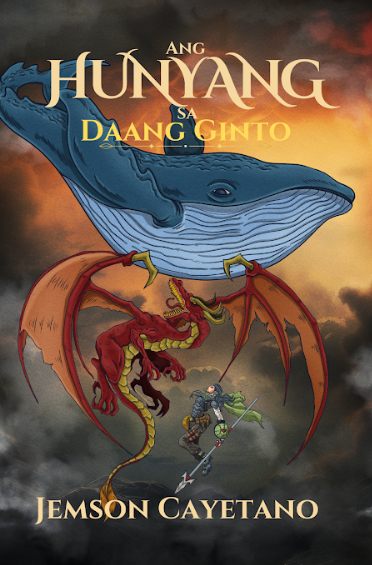
    Ang Hunyáng sa Daang Ginto (roughly, The Hunyáng on the Golden Road) is an epic fantasy novel by Filipino author Jemson Cayetano. It is set in Mu, an original world inspired by Philippine and other Asian mythologies. Its hero, Ilaya, is a Hunyáng, a person who can transform into any creature they have killed. Ilaya refuses to kill. So the only form she can take is a pigeon.

    That single idea carries the whole book, and it is why we wanted to talk to the person who wrote it.

    Excapelabs started as a home for the Philippine indie music scene. But our tagline is Unorthodox Mind, and that kind of mind is not limited to musicians. As we open our doors to creatives beyond music, Jemson’s book felt like the right story to tell.

    What is Ang Hunyáng sa Daang Ginto about?

    Ang Hunyáng sa Daang Ginto follows Ilaya, a young woman from Sanlipi, a nation the rest of her world tends to overlook. She is the first Hunyáng born among her people in a long time. Her mission takes her to the far-off kingdom of Hian, where she must face many stronger Hunyángs to win a single Hiling (Tagalog for wish) that could save her homeland.

    The obstacle is built into the premise. Every other Hunyáng can add a new form with each creature they kill. Ilaya, by choice, has only one.

    Jemson says that at its heart, the book is about “what it means to be strong without being powerful.” It also looks at what happens when a world’s systems are built on violence and one person refuses to take part.

    Who is Jemson Cayetano?

    Jemson Cayetano is a Filipino author and the writer of Ang Hunyáng sa Daang Ginto, the first book of a planned trilogy. Writing an epic fantasy novel had always been his dream, and he says he was simply waiting for the right idea to arrive. He is now writing the second installment.

    He calls himself a student of Pinoy comedy (Pinoy is the informal word Filipinos use for themselves). He also points to The Lord of the Rings and One Piece as proof that worldbuilding is what makes a story timeless.

    Where did the idea for the book come from?

    The idea came from one question. While watching an anime, Jemson wondered what would happen if a power usually given to villains belonged to the main character instead, or became the main power system of an entire world.

    He settled on shapeshifting, a classic trickster ability tied to characters like Loki and Mystique. From there, he started working out how it could become an intricate power system with its own rules.

    Jemson is open about the fact that the idea “didn’t start very deep.” What gives it weight is the rule attached to it. A Hunyáng gains a new form only by killing the creature first. That one rule turns a familiar villain trick into a moral problem, and it gives Ilaya the choice that defines her.

    What does the word Hunyáng mean?

    Hunyáng is a word Jemson invented. He built it from hunyango, the Tagalog word for chameleon, an animal people often link with shapeshifting and adaptation. Some readers assume the word comes from existing mythology, which says a lot about how naturally it fits the world of Mu.

    The word is more than a label for the hero. Jemson says it “represents the whole point of the story.” The book shows how the Hunyángs shape the reality of their world, and what happens when one of them refuses to gain power the way the others do.

    What questions does the book ask its readers?

    Jemson does not write to deliver a lesson. “I am not one to preach about values and ideals,” he says. What he wants is for readers to sit with the same questions he asks himself.

    Two of those questions run through the book: “How far can one go in pursuit of ambition or principles? How can we say it is okay to be ourselves if we are already bringing harm to others?”

    Ilaya’s refusal to kill puts both questions under pressure. Her principle keeps her small in a world built on violence, and her mission forces her to face Hunyángs far more powerful than she is. Jemson admits the book may not offer an answer that satisfies everyone. For him, getting a reader to ask the question at all is “more than worth the effort.”

    Which character means the most to him?

    Jemson loves his whole cast, especially the main group of Ilaya, Lam-Ang, Hendra, and Pei-Pei. But the character he singles out sits outside that group.

    Her name is Elda, and she is a side character. Jemson says he wrote her very carefully, and he describes her arc as “a beautifully haunting story” that still gives him chills.

    Elda did more than move him. She changed the book. Jemson adjusted the tone of the whole story to make sure he did her justice. That is a big change to make for someone outside the main cast. He hopes readers will love her story as much as he does.

    How did he build the world of Mu?

    Jemson calls building Mu the hardest part of writing the book. He wanted a world that feels alive, cohesive, and consistent.

    He holds a firm view on this, even knowing some authors may disagree. He believes epic fantasy asks a writer to commit 100% to a believable world. His reference points are The Lord of the Rings and One Piece, two stories he sees as timeless because of their worldbuilding.

    Mu draws on Philippine and other Asian mythologies, but Jemson stresses that it is entirely original. It holds places like Sanlipi, Ilaya’s overlooked homeland, and Hian, the far-off kingdom where her mission leads. The Hunyáng power system gives the world its rules: who can become what, and at what cost.

    For readers who know fantasy through Middle-earth or the Grand Line, Mu is built with that same ambition, drawn from Philippine and Asian myth.

    Where does the humor come from?

    An epic about violence and principle might sound heavy. Jemson balances it with humor.

    He says a writer’s observations shape the work more than most writers realize, from style and themes down to specific scenes. Comedy is his clearest example. As a self-proclaimed student of Pinoy comedy, he enjoyed writing funny scenes that Filipino readers will recognize from their daily lives, even though the story takes place in a different world and time period.

    For readers outside the Philippines, those scenes offer a look at everyday Filipino humor. For Filipino readers, they are the moments that make Mu feel close to home. The jokes sit beside the book’s heavier moments, and some readers have told Jemson they felt all kinds of emotions throughout the book and loved it for that.

    What was the road to readers like?

    Jemson describes his journey with the book as a roller coaster. He calls it the one story where he can honestly say he “spent all the creativity within my body.” So when it went unsold on several occasions, it hurt.

    He knew it would not be easy. What kept him going was readers. People came to him to say how much they enjoyed the book, and for him, that was enough.

    Now that more people have discovered Hunyáng, Jemson says he “really can’t ask for more.” He is happy, motivated, and already writing the second installment of the trilogy.

    His experience will sound familiar to independent creators anywhere, in books or in music. The work often comes long before the audience does, and the people who show up early are the ones who keep it alive.

    What does he want readers to remember?

    At the very least, Jemson wants readers to feel they have been part of a wonderful journey with the characters. He wants them to smile, cry, and even get annoyed when a character does something annoying.

    If they remember only one thing, he points to a mantra he always uses when he writes dedications:

    “Hindi man palaging ginto ang daang ating nilalakaran, ‘wag natin kalilimutan na ang pagiging mabuti ang pinakamagandang anyo.”

    In English, it reads roughly: even if the road we walk is not always golden, let us not forget that being good is the most beautiful form.

    The line echoes the golden road in the book’s title. It also uses the word anyo, meaning form, the same idea the Hunyáng power is built on. Of all the forms a Hunyáng can take, being good is the one Jemson most wants readers to keep.


    Where can you get Ang Hunyáng sa Daang Ginto?

    Print copies are sold on Lazada and Shopee in the Philippines, and there is also an ebook edition, which may be the easiest option for readers outside the Philippines. Jemson also takes pre-orders for signed copies. Every link is on his official Linktree, along with his Goodreads page for anyone who wants to leave a review.

    In the doc, “ebook edition” links to https://eightlettersbooks.gumroad.com/l/orogce and “his official Linktree” links to https://linktr.ee/Hunyang.Ilaya.

    A Note From Excapelabs

    If you are a creative outside music with a story to tell, our doors are open.

  • When the Music Finds You: How Songwriters Cabalen Sparked My Own Journey to Uplift Local Artists

    When the Music Finds You: How Songwriters Cabalen Sparked My Own Journey to Uplift Local Artists

    In a small corner of Angeles City, under the warm glow of restaurant lights and the hum of quiet conversations, a spark was born. That spark would later become the Songwriters Cabalen Community—a movement that grew not just from music, but from a need: a need to be heard, to be seen, and to be connected through stories and sound.

    I still remember attending one of their shows back in 2023. At the time, I was drifting—curious about the indie scene but unsure where I belonged. I wasn’t a performer. I wasn’t even from Pampanga. But something about that night stayed with me long after the last chord faded. Maybe it was the honesty in every lyric, or the way the crowd leaned in—not just to hear the music, but to feel it. That night lit something in me, and it’s what eventually inspired me to start my own platform: a space where local and indie artists could share their stories, their songs, and their journey.

    But let me take you back further—to where it all began.


    A Space That Didn’t Exist Yet

    When Michi moved to Pampanga in 2019, she noticed what most people wouldn’t. Pampanga had talent. It had culture. It had music. But it didn’t have a space—a real, tangible space—for local songwriters to connect, collaborate, or even just be heard. If that space existed, it was buried too deep for newcomers to find.

    So, Michi did what many dream of but few actually do—she built the space herself.

    With experience organizing live music events in Manila, she knew what it took. But this time, she wasn’t just building a show. She was building a community. She reached out to fellow creatives who shared her fire: Rey Bonaobra and Michael Kevin. All it took was one question:

    “Do you want to perform live?”

    Sometimes, the biggest movements begin with the smallest invitations.


    Camalig: Where the Dream Took Root

    Thanks to the support of Ms. Bennylee Baltazar, that dream found a home at Camalig Restaurant in Angeles City. The venue was perfect—not too big to be overwhelming, not too small to feel limited. It was intimate. Real. A place where original music could echo off the walls and into hearts.

    In February 2022, the very first Songwriters Night happened.

    From the outside, it might’ve looked like any other acoustic night. But if you listened closely, you’d know this was different. This wasn’t about cover songs or top hits. This was about truth-telling. Raw. Honest. Vulnerable. Every artist brought their own story to the mic, and every listener walked away carrying pieces of those stories with them.

    The format was simple—but the feeling? It was electric.


    From Gathering to Community

    One night became another. And another. The crowd grew—first with friends and family, then strangers who came back every month. It wasn’t just the performers who felt at home anymore. The audience did, too.

    And that’s when it became more than an event. It became a community—the Songwriters Cabalen Community.

    Month after month, the shows continued. Each one brought new voices, new songs, new layers of emotion. No two nights were the same, and yet the feeling was always familiar: you belong here. Whether you were a seasoned songwriter or someone still scribbling lyrics in a notebook, the message was clear—your voice matters.

    Eventually, the community found a new home at LaVerne, where the stage got a little bigger, the sound a little louder, but the heart stayed exactly the same.


    The Pause That Made Space for Reflection

    Then came December 2024.

    After nearly three years of soul-filled shows, the Songwriters Cabalen Community decided to pause. It wasn’t a goodbye. It was a breath. A moment to step back and ask the hard but necessary questions: What have we missed? What can we do better? What do we want this to become?

    As someone who had quietly followed the journey since that night in 2023, I felt the silence. And oddly enough, I found inspiration in it, too.

    In that pause, I realized how deeply I believed in what they were doing—not just hosting events, but honoring journeys. Songwriters Cabalen wasn’t just a stage; it was a reminder that stories matter. And that every community, no matter how small, deserves to be nurtured.

    That’s when I knew I had to build something of my own.


    Building Something Because They Did

    I didn’t have a venue. I wasn’t an event organizer. But I had something else: a deep love for indie and local music, and the desire to make artists feel seen.

    Inspired by the structure and soul of the Songwriters Cabalen Community, I started laying the groundwork for a platform that would give voice to those often overlooked. Not just performances, but stories. Not just promotion, but connection.

    Because if a single night at Camalig could move me this deeply, how many more people could be moved if only they had access?

    That’s the magic Songwriters Cabalen showed me: the importance of giving artists space—to speak, to stumble, to grow, and to shine.


    A Comeback Rooted in Purpose

    Now, after months of silence, the music returns.

    On July 12, the Songwriters Cabalen Community comes back with a show at LaVerne. But it’s not just another gig. It’s a new chapter—wiser, stronger, more intentional. The community has learned from its pause. And now, it’s singing again with more heart than ever.

    This isn’t just about artists anymore. It’s about everyone—the dreamers, the fans, the quiet listeners in the crowd who find themselves reflected in someone else’s lyrics.


    Because Music Is Never Just Music

    Songwriters Cabalen didn’t just give musicians a mic. They gave meaning to original work. They created a space where vulnerability wasn’t just accepted—it was celebrated.

    And for people like me, who don’t always know where they fit in the music scene, that kind of authenticity is rare. It’s what planted the seed in me to help artists tell their stories—to build something, however small, that honors their voice.

    Because communities like Songwriters Cabalen don’t just change the local scene.

    They change people.

    They changed me.

    And that’s why, when they rise again this July, I’ll be there. Just like before. But this time, not just as a listener—but as someone carrying their legacy forward.

    Because when a community is built on passion and purpose, it never really fades.

    It just waits for the right moment to sing again.

  • Letter Day Story: Living Every Note Like It’s Their Last

    Letter Day Story: Living Every Note Like It’s Their Last

    It’s almost surreal to sit down and write about Letter Day Story again—this time as a feature. I still remember watching them live during our Eto na Nga! production with Groovelabs Productions last year. Sila ‘yung klase ng banda na kahit matagal mo nang hindi napapakinggan, isang tugtog lang, and it all comes back. Sobrang bait nila in person, too. Kaya when the chance came up to do a feature, I didn’t hesitate. And now, here we are.

    In a sea of new faces and shifting sounds in the local music scene, Letter Day Story stands tall—quietly and steadily making music, unshaken by trends, and guided by something far deeper than fame.

    From Conservatory Classrooms to Center Stage

    Back in 2002, a group of students from the UST Conservatory of Music came together, bonded not just by friendship but by a shared itch to create something of their own. The lineup may have evolved over the years, but what hasn’t changed is their dedication to music—and to each other.

    The heart of the band beats stronger than ever with Dex on vocals, Oli and EJ holding down the rhythm and soul of the group, and Niko, the newest official member, who’s no stranger to the family. “He’s been our long-time sessionist—around a decade na rin,” they shared. “Finally, now, he’s officially with us.” Niko’s quiet loyalty and consistency through the years earned him a place not just on stage but at the very core of LDS.

    Together, they’ve weathered it all—grief, change, and countless milestones. And through it, one truth remains: LDS is nothing without its members.

    Their big break came in 2008, when they joined and surprisingly won Nescafe Soundskool. “We weren’t even aiming to win,” they said. “We just wanted to enjoy playing our music on stage and perform our original song, Ikaw pa Rin.” But fate had other plans. What they thought was just a finalist roll call turned out to be the awarding. They had won. And with it came a deal with Sony Music, leading to radio tours, out-of-town gigs, albums, and collaborations with names like Gloc-9, Yeng Constantino, and even the late Pepe Smith.

    It was a whirlwind, but it was only the beginning.

    Music That Mirrors Life

    When you talk to Letter Day Story about their music, you don’t get canned answers or vague inspirations. Their songs are lived-in. They’re part of their journey.

    Take Mithi, for example—one of the band’s most meaningful tracks. “When Dex wrote it, the message really mirrored our band’s own struggles,” they shared. “There were times when even our parents didn’t believe in what we were doing. They’d say there was no future in this.”

    Mithi became more than a song. It became their reminder to keep going.

    Then there’s Sama-Sama, a song about staying together, weathering everything as a unit. “There’s even a line at the end of the song, a chant that goes sulat araw kwento,” they said. “That’s letter day story—our name and our story.”

    It’s rare to see a band that writes not just about life, but through it.

    From Covers to Craftsmanship

    The band’s evolution wasn’t just emotional—it was technical too. They started out doing covers but quickly found themselves wanting more. They wanted to write. Create. Innovate. That hunger led them to work with producers and artists that would shape their sound.

    One key piece of their story was their guitarist, Notnot, who passed away in April 2024. Long before that, though, he had carved his mark not just as a musician, but as a sought-after sound engineer. His work with IV of Spades, Juan Karlos, Gloc-9, and others reflected just how far he’d come.

    “His work was highly regarded,” the band shared, their pride evident even through typed words. And even in his absence, his spirit lives on in their new material. DSY (Dahil Sayo) was his last song—and what a beautiful, aching piece it is.

    The Indie Life and Its Realities

    Since parting ways with Sony in 2011, Letter Day Story has been an indie band in every sense. No label. No hype machine. Just passion, persistence, and presence.

    “Being independent now is much better than before,” they admitted. “Back then, it was hard for our music to be heard unless a big label signed us to get on the radio. Today, there are so many chances for indie artists. We can create and release music whenever and however we want.”

    Still, the road isn’t easy. Getting on Spotify’s top playlists, competing for organic streams—it’s a different kind of hustle. One that doesn’t always come with instant results.

    “We can’t control trends,” they added. “But artists shouldn’t worry too much. The most important thing is to love music and love what you do.”

    Then and Now: From Jumping Crowds to Phone Lights

    If you’ve ever been to a Letter Day Story gig, you know the kind of energy they bring. Rehearsals aren’t just for precision—they’re about heart. “In the actual show, we play from the top of our lungs,” they said. “Making music is a huge stress reliever and a source of pure fun.”

    Back in the 2010s, their crowds were often fully immersed—jumping, shouting, singing along. These days, things have shifted. “Most people in the crowd are now holding up their phones,” they said, noting how the digital era changed how we consume live music.

    But they’re not bitter. In fact, they’re grateful. “Even new generations who are watching or hearing us for the first time show us love. And our old fans… still manage to love and support our music and our band.”

    Next Collabs and Big Dreams

    The band remains wide-eyed when it comes to today’s scene. “We’d love to collaborate with artists like One Click Straight, Zild, Blaster, Dionela, Skusta Clee, and Setsuna,” they said. Their tastes reflect the openness they’ve cultivated over the years. Pop, R&B, hip-hop—it’s all music. It’s all art.

    And yes, they’ve got new music, too. After 13 years, they’ve released DSY and just dropped NUNG IKA’Y NAWALA last June 27. It’s a track born from heartbreak, about being left without answers, and the slow process of letting go.

    More singles are on the way. A promo tour is in the works. Studio sessions are ongoing.

    Letter Day Story isn’t slowing down. They’re just getting better at telling their truth.

    Staying Lit, Staying Inspired

    So, how do they do it? How do they keep the fire alive after more than two decades?

    “It really comes down to having the same mindset and heart,” they said. “Even with our different professional day jobs and family commitments, we still make time for music and truly enjoy it.”

    That might just be the secret. Not chasing trends. Not trying to one-up themselves. Just showing up—with full hearts, loud amps, and a willingness to grow.

    NUNG IKA’Y NAWALA: A Visual Story of Letting Go

    Released on June 27, NUNG IKA’Y NAWALA is more than just a single—it’s a gut-punch of a song that lingers. Written from a place of quiet heartbreak, it speaks to the pain of being left behind with no closure. “When someone leaves you for no reason, and you’re left searching for answers,” the band shared. “You try not to give up. But in the end, the pain is so deeply shattering that you finally let go.”

    And just as powerful as the song is the music video that goes with it.

    Directed with striking emotional weight, the official music video brings the story to life—capturing the emptiness, longing, and slow-burning grief that follows a sudden goodbye. It’s intimate, cinematic, and quietly devastating in all the right ways.

    If you haven’t seen it yet, now’s the time:
    Watch “NUNG IKA’Y NAWALA” on YouTube

    Whether you’ve been with Letter Day Story since the beginning or you’re just discovering their music today, NUNG IKA’Y NAWALA is the kind of track—and video—that pulls you in and stays with you.

    For the Fans and the Future

    “To all our longtime amazing fans,” they wrote, “thank you for continuously supporting us and for never forgetting our music! It means so much that you’re even sharing our songs with your kids.”

    Their message to younger bands is simple but weighty: “Never think that moving forward with music is only about chasing fame. Focus deeply on your craft. And love your passion.”

    As for their legacy?

    They want every performance to matter. Every moment to count. “Pour your soul into every note you play and every word you sing,” they said. “Let your passion ignite the stage.”

    That’s the kind of legacy that doesn’t fade—even after the lights dim.

    Letter Day Story is now streaming on all major platforms. Their latest single “NUNG IKA’Y NAWALA” is out now.
    Catch them live, if you ever get the chance. I know I will. And if luck’s on our side, maybe we’ll get to share another production stage with them soon. Eto na nga, diba?

  • Camaraderie (CMRD): Built by Bonds, Carried by Sound

    Camaraderie (CMRD): Built by Bonds, Carried by Sound

    In a music scene that constantly shifts between trends and aesthetics, Camaraderie (CMRD) stands their ground—not with gimmicks, but with stories. Real ones. The kind that stick. The kind you play on loop because somewhere between the lyrics and guitar lines, you find yourself.

    Formed in 2018 by five college friends, Camaraderie (CMRD) wasn’t born out of a marketing strategy or social media campaign. It began the way most enduring bands do—through friendship. Back then, they called themselves Blue Liempo, jamming in school corridors, performing in events that didn’t have stages, and using whatever gear was available. But like their music, they evolved. The name Camaraderie, shortened as CMRD, came as they realized what they had was something more permanent. A name that mirrors the very foundation of their journey: connection, trust, and sticking it out no matter what.

    Since their debut, CMRD has steadily carved their space in the Filipino alternative rock scene. But this isn’t a band chasing virality. They’re not about the flash or the fast rise. What they chase instead is meaning—in melody, in memory, in moments that are often left unsaid. And that’s what makes them different.

     Filipino alternative rock

    From Campus Gigs to Soulful Singles

    Long before their songs hit streaming platforms, CMRD was just a bunch of students finding their rhythm—literally and figuratively. They started out playing school gigs, small-town festivals, and community events. The settings were modest, but the response was anything but. Audiences connected, not just because the music sounded good, but because it felt real.

    Then came 2018—the year it all officially began. Their first single, “Paalam,” dropped with a quiet kind of impact. It wasn’t flashy. It didn’t rely on trends. But it hit hard. The song spoke of letting go, of goodbye without closure, of partings that echo longer than expected. It resonated with everyone who’s ever had to walk away without the words to explain why.

    In 2019, “Hingalo” followed. This wasn’t a sequel—it was a progression. Where “Paalam” was about endings, “Hingalo” captured the suffocating feeling of trying to hold on. A quiet, internal struggle—the kind you carry alone. The band’s ability to write about emotional weight without turning dramatic is part of their signature. They lean into vulnerability but never make a spectacle of it. It’s subtle. Sincere. And that’s why it works.


    ERPAT: A Tribute That Hit Home

    Fast forward to 2024, and the band released one of their most personal works yet—“ERPAT.” In a time when love songs dominate playlists, “ERPAT” went a different route. It honored fathers. Not the cinematic kind with grand speeches, but the real ones—quiet, present, dependable.

    The track explores a kind of love that’s often unspoken. It doesn’t rely on dramatics or high-octane solos. Instead, it moves with intention. Like the men it celebrates, “ERPAT” is steady and grounded. The lyrics paint images of early mornings, silent sacrifices, and lessons learned through example, not lectures. It’s a thank-you wrapped in melody—one that many listeners didn’t realize they needed until they heard it.

    In interviews, the band speaks about “ERPAT” with a mix of pride and humility. “We wrote it for our dads,” they said. “But when it came out, we realized it was for everyone who had that kind of presence in their life. Or even those who didn’t—and wish they had.”


    No Filters, Just Feeling

    There’s a noticeable pattern in CMRD’s music: they don’t rush. They don’t put out singles just to stay relevant. Each release feels intentional, a reflection of a stage in their lives. For them, music isn’t content—it’s expression. And that shows.

    You won’t find oversaturated branding or calculated controversies in their timeline. What you’ll find is a group of artists who still rehearse like they’re playing their first gig, who still write lyrics in group chats, and who still believe that a single line in a song can change someone’s day.

    CMRD’s writing process isn’t about catching trends. It’s about catching truths. Real ones. Whether it’s the grief of goodbyes in “Paalam,” the weight of persistence in “Hingalo,” or the silent gratitude in “ERPAT,” each song comes from something lived.


    Friendship at the Core

    If you sit down with CMRD, you’ll quickly realize that the music is just one part of their story. Their bond—built on years of late-night rehearsals, shared meals, and life milestones—is what fuels everything else.

    They may have started as Blue Liempo, but what they became is Camaraderie in every sense of the word. It’s not just their name—it’s their way of life. They don’t just play music together; they’ve grown up together.

    And that growth isn’t always smooth. There were doubts. There were delays. There were years between releases. But through all of it, they stayed. The band’s journey mirrors what a lot of people go through—friend groups that become chosen families, creative pursuits that demand real sacrifices, and dreams that evolve as people do.

    Their success isn’t about streams or views, though those matter. It’s about staying grounded, about creating something worth sharing, about making people feel seen—even if just for the length of a song.


    What’s Next for CMRD?

    If the past few years have taught us anything, it’s that Camaraderie (CMRD) doesn’t move unless they mean it. So what’s next? Whatever it is, it’ll come from a real place.

    They’ve hinted at more releases, and maybe even a concept EP. But as always, they won’t put out anything unless it’s ready—not just sonically, but emotionally. That’s the bar they’ve set for themselves. And it’s high.

    In a landscape crowded with noise, Camaraderie (CMRD) chooses to be a voice. A familiar one. A comforting one. The kind that says, “We’ve been there, too.”

    Their songs are for the listeners who feel deeply but don’t always know how to say it. For the overthinkers, the quiet ones, the people who stay up late replaying memories. For those who understand that music doesn’t need to be loud to be powerful—it just needs to be true.


    Final Notes

    Camaraderie (CMRD) isn’t trying to change the world. But they are trying to tell their truth—and maybe help others feel a little more understood in the process.

    And sometimes, that’s exactly what the world needs.

  • Indie in Focus: Capturing the Pulse of Bulacan’s Music Scene Through Visual Storytelling

    Indie in Focus: Capturing the Pulse of Bulacan’s Music Scene Through Visual Storytelling

    The indie music scene in Bulacan is no longer just simmering beneath the surface—it’s roaring with raw talent, passion, and creative fire. From small town bars to open-air lounges, it’s in these spaces where the next wave of Filipino music is being born. And at the heart of it all? Visual storytelling.

    As the indie scene blossoms, so does the need to preserve these fleeting yet powerful moments—and that’s where we come in. At ExcapeLabs, we do more than just point and shoot. We capture emotion, movement, and memory. Our work is not only about indie music photography in Bulacan—it’s about telling the story behind every chord, every scream, every shared glance between artists and fans.

    Ultimate Ube 20th Anniversary

    Behind the Lens: Our Approach to Indie Music Photography in Bulacan

    We believe great event coverage goes beyond clean shots. It’s about capturing energy. Whether it’s the sweat on a drummer’s brow or the way light catches the edge of a guitar during a solo, our method is rooted in a deep respect for the music and the people behind it.

    Through experimental photography in the Philippines, we push the boundaries of traditional gig documentation. We play with motion blur to freeze the chaos and use lighting tricks that give life to shadows and silhouettes. Every frame is intentional.

    Recent Highlights: The Bay Lounge, March 22

    One of the most electric nights we captured recently was the March 22 album launch of Northern Lads’ Kislap ng mga Alaala at The Bay Lounge in Plaridel. The band had poured two months of hard work into preparing for this moment, with 8-hour rehearsals every Sunday at North Studio in Marilao. And it showed.

    That night wasn’t just about Northern Lads—they were joined by other indie forces like Trick Project, Figvra, Ronald Mendoza, At Last, The Coaches, and the comeback of Captain Jack PH. We were there in the pit, cameras in hand, capturing every scream, every tear, and every crowd chant.

    Some of our most memorable shots include:

    • The intimate duet between Mary Catherine and Dan Garcia in “Kasi Naman”
    • Ronald Mendoza lighting up the stage with “PM is the Key”
    • Captain Jack PH’s triumphant return after 8 months, with a new member and unmatched energy

    Our Gear and Philosophy

    Our visual storytelling in music begins with our eyes, but it’s brought to life through the gear we use. We work with a mix of DSLRs and mirrorless cameras, paired with fast primes for low-light situations. Our go-tos? A Fujifilm X-S10 and X-S20.

    We use minimal flash, preferring natural stage lighting to keep the atmosphere authentic. And we edit to enhance mood, not distort it—keeping colors true to the experience.

    A Call to Collaborate: Let’s Build This Scene Together

    Indie music in Bulacan is a movement. And like any movement, it needs documentation, promotion, and love. At ExcapeLabs, we’re committed to this scene. We don’t just want to shoot your gig—we want to help tell your story.

    We’re proud to be in collaboration with GrooveLabs Productions, amplifying the voice of local musicians through both sound and visuals. If you’re an artist, band, or organizer in Bulacan, let’s connect. Let’s create something that lasts longer than the echo of the last song.

    You bring the music. We’ll bring the lens.

    Follow our journey and see the stories unfold: #UnorthodoxMinds #IndieMusicPhotographyBulacan #VisualStorytellingInMusic