Tag: philippines

  • Jemson Cayetano and the Strength of Refusing to Kill: Inside Ang Hunyáng sa Daang Ginto

    Jemson Cayetano and the Strength of Refusing to Kill: Inside Ang Hunyáng sa Daang Ginto

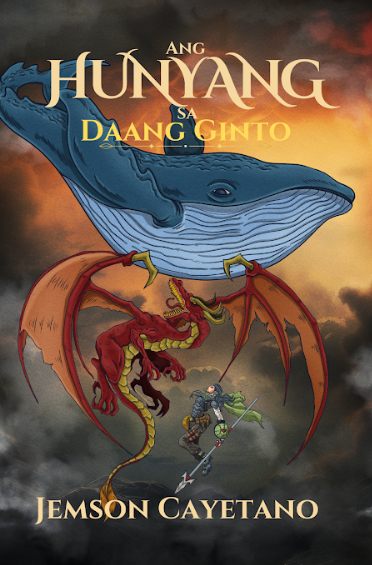
    Ang Hunyáng sa Daang Ginto (roughly, The Hunyáng on the Golden Road) is an epic fantasy novel by Filipino author Jemson Cayetano. It is set in Mu, an original world inspired by Philippine and other Asian mythologies. Its hero, Ilaya, is a Hunyáng, a person who can transform into any creature they have killed. Ilaya refuses to kill. So the only form she can take is a pigeon.

    That single idea carries the whole book, and it is why we wanted to talk to the person who wrote it.

    Excapelabs started as a home for the Philippine indie music scene. But our tagline is Unorthodox Mind, and that kind of mind is not limited to musicians. As we open our doors to creatives beyond music, Jemson’s book felt like the right story to tell.

    What is Ang Hunyáng sa Daang Ginto about?

    Ang Hunyáng sa Daang Ginto follows Ilaya, a young woman from Sanlipi, a nation the rest of her world tends to overlook. She is the first Hunyáng born among her people in a long time. Her mission takes her to the far-off kingdom of Hian, where she must face many stronger Hunyángs to win a single Hiling (Tagalog for wish) that could save her homeland.

    The obstacle is built into the premise. Every other Hunyáng can add a new form with each creature they kill. Ilaya, by choice, has only one.

    Jemson says that at its heart, the book is about “what it means to be strong without being powerful.” It also looks at what happens when a world’s systems are built on violence and one person refuses to take part.

    Who is Jemson Cayetano?

    Jemson Cayetano is a Filipino author and the writer of Ang Hunyáng sa Daang Ginto, the first book of a planned trilogy. Writing an epic fantasy novel had always been his dream, and he says he was simply waiting for the right idea to arrive. He is now writing the second installment.

    He calls himself a student of Pinoy comedy (Pinoy is the informal word Filipinos use for themselves). He also points to The Lord of the Rings and One Piece as proof that worldbuilding is what makes a story timeless.

    Where did the idea for the book come from?

    The idea came from one question. While watching an anime, Jemson wondered what would happen if a power usually given to villains belonged to the main character instead, or became the main power system of an entire world.

    He settled on shapeshifting, a classic trickster ability tied to characters like Loki and Mystique. From there, he started working out how it could become an intricate power system with its own rules.

    Jemson is open about the fact that the idea “didn’t start very deep.” What gives it weight is the rule attached to it. A Hunyáng gains a new form only by killing the creature first. That one rule turns a familiar villain trick into a moral problem, and it gives Ilaya the choice that defines her.

    What does the word Hunyáng mean?

    Hunyáng is a word Jemson invented. He built it from hunyango, the Tagalog word for chameleon, an animal people often link with shapeshifting and adaptation. Some readers assume the word comes from existing mythology, which says a lot about how naturally it fits the world of Mu.

    The word is more than a label for the hero. Jemson says it “represents the whole point of the story.” The book shows how the Hunyángs shape the reality of their world, and what happens when one of them refuses to gain power the way the others do.

    What questions does the book ask its readers?

    Jemson does not write to deliver a lesson. “I am not one to preach about values and ideals,” he says. What he wants is for readers to sit with the same questions he asks himself.

    Two of those questions run through the book: “How far can one go in pursuit of ambition or principles? How can we say it is okay to be ourselves if we are already bringing harm to others?”

    Ilaya’s refusal to kill puts both questions under pressure. Her principle keeps her small in a world built on violence, and her mission forces her to face Hunyángs far more powerful than she is. Jemson admits the book may not offer an answer that satisfies everyone. For him, getting a reader to ask the question at all is “more than worth the effort.”

    Which character means the most to him?

    Jemson loves his whole cast, especially the main group of Ilaya, Lam-Ang, Hendra, and Pei-Pei. But the character he singles out sits outside that group.

    Her name is Elda, and she is a side character. Jemson says he wrote her very carefully, and he describes her arc as “a beautifully haunting story” that still gives him chills.

    Elda did more than move him. She changed the book. Jemson adjusted the tone of the whole story to make sure he did her justice. That is a big change to make for someone outside the main cast. He hopes readers will love her story as much as he does.

    How did he build the world of Mu?

    Jemson calls building Mu the hardest part of writing the book. He wanted a world that feels alive, cohesive, and consistent.

    He holds a firm view on this, even knowing some authors may disagree. He believes epic fantasy asks a writer to commit 100% to a believable world. His reference points are The Lord of the Rings and One Piece, two stories he sees as timeless because of their worldbuilding.

    Mu draws on Philippine and other Asian mythologies, but Jemson stresses that it is entirely original. It holds places like Sanlipi, Ilaya’s overlooked homeland, and Hian, the far-off kingdom where her mission leads. The Hunyáng power system gives the world its rules: who can become what, and at what cost.

    For readers who know fantasy through Middle-earth or the Grand Line, Mu is built with that same ambition, drawn from Philippine and Asian myth.

    Where does the humor come from?

    An epic about violence and principle might sound heavy. Jemson balances it with humor.

    He says a writer’s observations shape the work more than most writers realize, from style and themes down to specific scenes. Comedy is his clearest example. As a self-proclaimed student of Pinoy comedy, he enjoyed writing funny scenes that Filipino readers will recognize from their daily lives, even though the story takes place in a different world and time period.

    For readers outside the Philippines, those scenes offer a look at everyday Filipino humor. For Filipino readers, they are the moments that make Mu feel close to home. The jokes sit beside the book’s heavier moments, and some readers have told Jemson they felt all kinds of emotions throughout the book and loved it for that.

    What was the road to readers like?

    Jemson describes his journey with the book as a roller coaster. He calls it the one story where he can honestly say he “spent all the creativity within my body.” So when it went unsold on several occasions, it hurt.

    He knew it would not be easy. What kept him going was readers. People came to him to say how much they enjoyed the book, and for him, that was enough.

    Now that more people have discovered Hunyáng, Jemson says he “really can’t ask for more.” He is happy, motivated, and already writing the second installment of the trilogy.

    His experience will sound familiar to independent creators anywhere, in books or in music. The work often comes long before the audience does, and the people who show up early are the ones who keep it alive.

    What does he want readers to remember?

    At the very least, Jemson wants readers to feel they have been part of a wonderful journey with the characters. He wants them to smile, cry, and even get annoyed when a character does something annoying.

    If they remember only one thing, he points to a mantra he always uses when he writes dedications:

    “Hindi man palaging ginto ang daang ating nilalakaran, ‘wag natin kalilimutan na ang pagiging mabuti ang pinakamagandang anyo.”

    In English, it reads roughly: even if the road we walk is not always golden, let us not forget that being good is the most beautiful form.

    The line echoes the golden road in the book’s title. It also uses the word anyo, meaning form, the same idea the Hunyáng power is built on. Of all the forms a Hunyáng can take, being good is the one Jemson most wants readers to keep.


    Where can you get Ang Hunyáng sa Daang Ginto?

    Print copies are sold on Lazada and Shopee in the Philippines, and there is also an ebook edition, which may be the easiest option for readers outside the Philippines. Jemson also takes pre-orders for signed copies. Every link is on his official Linktree, along with his Goodreads page for anyone who wants to leave a review.

    In the doc, “ebook edition” links to https://eightlettersbooks.gumroad.com/l/orogce and “his official Linktree” links to https://linktr.ee/Hunyang.Ilaya.

    A Note From Excapelabs

    If you are a creative outside music with a story to tell, our doors are open.

  • From Burnout to Breakthrough: How Nixx Santos Found Her Voice Through Creativity, Music, and New Beginnings

    From Burnout to Breakthrough: How Nixx Santos Found Her Voice Through Creativity, Music, and New Beginnings

    Sometimes, the biggest opportunities come from moments when we feel the most exhausted.

    For independent singer-songwriter Nixx Santos, every milestone in her career can be traced back to one simple decision: finding a creative outlet during a season of burnout.

    Like many working professionals, Nixx found herself caught in the routine of work, responsibilities, and the feeling that every day was becoming the same. Looking for a hobby that could reignite her creativity, she started exploring music videos, creative concepts, and songwriting. What began as a personal escape soon evolved into something much bigger.

    “I wanted to explore something creative again. I wanted to find something that would inspire me and make me excited.”

    That search for creativity eventually led her to become part of Holens Media, where she found a home that allowed her to grow not only as a performer but also as a creative storyteller.

    PhotograFin

    Creating Beyond the Music

    Joining Holens Media gave Nixx the opportunity to learn every side of the music industry. Rather than simply recording songs, she immersed herself in content creation, artist promotions, visual storytelling, and creative direction.

    Being involved behind the scenes became one of the biggest lessons of her career.

    “Magkaiba pala kapag ikaw mismo yung gumagawa. Hindi lang siya idea. Kailangan mo siyang i-execute, i-test, at matutunan kung ano yung effective.”

    That hands-on experience shaped the artist she is today.

    Long before gaining recognition as a recording artist, Nixx had already explored filmmaking. In 2020, she became the 1st Runner-Up at the Makata Indie Film Festival as an actress, writer, and director. That experience naturally carried over into her music career, where she has independently directed and produced six music videos, blending cinematic storytelling with her original songs.

    The Story Behind “The Ghost Hunter”

    Every artist has a song that changes everything.

    For Nixx Santos, that song is “The Ghost Hunter.”

    The single became one of her most successful releases, introducing listeners to her unique blend of storytelling and pop rock while opening new opportunities for collaborations and performances.

    To promote the song, Nixx launched the official Mumu Dance Challenge, a campaign that quickly became one of the highlights of her career.

    The project was built around her biggest collaboration with Arman Salon, who became her primary partner in bringing the challenge to life. Together, they encouraged audiences to dance to “The Ghost Hunter” and upload their own videos on TikTok.

    The campaign steadily gained momentum, with videos reaching nearly 100,000 views and introducing the song to thousands of new listeners.

    The challenge continued to grow as Tungaw TV – F4 ng Pinas, Misha Ann, and Kris Bernal joined the Mumu Dance Challenge, helping amplify the campaign through their own platforms and encouraging more people to participate.

    “The best feeling is seeing people enjoy the music and become part of it,” Nixx shared. “Every person who joined the Mumu Dance Challenge helped bring the song to more people, and I’m grateful for everyone who supported it.”

    For Nixx, the success of the campaign wasn’t measured only by the views, but by the community it created around her music.

    Recognition That Changed Everything

    As her audience continued to grow, so did the recognition for her work.

    One of the proudest moments of her career came when her song “Moo” earned a nomination at the 17th PMPC Star Awards for Music under the Female Acoustic Artist of the Year category.

    Walking into the venue surrounded by some of the country’s most respected artists became an unforgettable milestone.

    “I was honestly overwhelmed. I was sitting there thinking, ‘Nominee na pala ako.’ Hindi ko in-expect na aabot ako sa ganitong opportunity.”

    She even laughed while recalling how she was initially seated in what she later learned had been Moira’s seat before a coordinator politely transferred her elsewhere.

    “I don’t even know who nominated me, but I’m truly grateful because someone believed in my music.”

    That nomination reminded her that years of hard work were finally reaching people beyond her immediate circle.

    PhotograFin

    Bringing Her Music to More People

    Nixx’s journey has taken her far beyond recording studios.

    She has been featured on major radio and television programs including MOR Entertainment, iFM, JAM 88.3, Magic 89.9, Edge TV Philippines, DWAN 1206 AM’s KaLogan with Marc Logan, Net25’s Kada Umaga and Letters and Music, EuroTV Philippines, Radyo Katipunan 87.9 FM, Magnum Radio, and DYRN Radyo Natin 90.9 FM.

    She also appeared during Kris Bernal’s Ticktoclock birthday celebration on TikTok Live, introducing her music to an even wider online audience.

    Her growing career has also led to performances across Metro Manila, including mall shows at SM City San Jose del Monte, Robinsons Novaliches, Xentro Mall Montalban, and Ayala Malls Feliz.

    Her work has earned additional recognition as Edge TV Philippines Artist of the Week and as one of the recognized artists at the Umbrella Festival, adding to a growing list of accomplishments.

    Beyond entertainment, Nixx has also participated in AGOH Band charity concerts, showing that music can also be a platform for giving back to the community.

    Still Writing Her Story

    Looking back, Nixx never imagined that searching for a hobby would eventually lead to award nominations, television appearances, radio interviews, successful collaborations, and a growing fanbase.

    “It gets tiring, but it’s the kind of tired that feels fulfilling. Pagod ka, pero masaya ka kasi alam mong may ginagawa kang mahal mo.”

    With more performances, collaborations, and music on the horizon, she continues to embrace every opportunity that comes her way, including upcoming guestings and live shows.

    For Nixx Santos, the journey is still just beginning.

    What started as a way to escape burnout has become a career built on creativity, perseverance, and genuine passion. Through every performance, every collaboration, and every person who joins the Mumu Dance Challenge, she continues to prove that sometimes the smallest decision to create can become the biggest turning point in an artist’s life.

  • Ang Dating Don Juan: Riding the Post-Pandemic Wave with Pop-Punk Fire

    Ang Dating Don Juan: Riding the Post-Pandemic Wave with Pop-Punk Fire

    It’s 2022. The city is still shaking off the haze of lockdowns. Live music, once silenced, is crawling back into bars, clubs, and tiny backstreet venues. Somewhere in this slow-burn comeback, a few long-time friends—each from different bands that had gone quiet during the pandemic—look at each other and decide: “Tara. Buo-in na natin ’to.”

    That’s how Ang Dating Don Juan was born.
    No grand ceremony, no overly deep meaning behind the name (“Wala naman syang meaning. Sadyang yun lang talaga ang naisip namin,” they admit). Just a shared itch to make noise again. And noise, they did.


    From Hiatus to Hype

    “Original pa naman lahat ng members,” says vocalist-guitarist Yuwi. The lineup has remained untouched since day one. They weren’t strangers thrown together by ads or scene matchmaking—they were already friends, just on different paths. When the gigs came back post-pandemic, the idea clicked. The plan wasn’t just to jam for nostalgia’s sake; it was to release songs and get back into the circuit.

    Their first track as a band, “Parang Langit Na,” came together like a fresh breath after months indoors. “Bagong proseso para samin—halo ng aming mga inspirasyon, style, at kwento ng pag-ibig,” says Yuwi. As a pop-punk band, they wanted the energy high and the emotions right on the surface.

    Musically, they pull from Belmont, The Story So Far, Neck Deep, and One Ok Rock—bands known for melodic precision and heartfelt delivery. “Sakanila kami kumukuha ng inspirasyon sa pagsusulat—inaaral namin kung paano nila binibigyan ng talino at detalye bawat parte ng kanta, at ina-apply namin sa sariling gawa,” Yuwi explains.


    Keeping It Together

    In an industry where bands form and break apart with alarming frequency, Ang Dating Don Juan is still in its “honeymoon” phase. “Wala pa naman,” says Yuwi when asked if they’ve had near-breakups. “I think the band is still too young to have these kinds of problems.”

    Bassist Rem puts it in more colorful terms: “Depende siguro kung ugod ugod na tapos di na kinakaya yung rayuma. haha.”

    That doesn’t mean the grind isn’t real. Gigs mean long nights, heavy gear, and minimal sleep. “Sa live gigs, pagod at puyat ang kalaban parati,” Rem says. “On the gig itself, situational per venue pero nasusolve naman.”

    Their songwriting process is currently anchored by Yuwi, who lays down the foundation before the rest of the band pitches in. But they’re not afraid to shake things up. “Balak daw magexperiment ng bagong songwriting process sa next album,” Rem teases.


    A Sound That Sticks

    In a sea of local bands, they’ve carved a space with what lead guitarist Mat describes as “melodic guitar leads at energy ng kanta.” It’s an approach that mixes the catchiness of pop-punk with an edge sharp enough to cut through a crowded lineup.

    Jovan, another member of the crew, adds that the dedication in the group keeps their sound tight: “Naging unique siguro kami dahil sa dedikasyon ni Mat. Di kami pwedeng tamarin—nakakahiya kung di namin matapatan yung ‘dedikasyon’ ni Mat. hahaha.”

    That energy isn’t just about the music—it’s about the connection. “First, gusto namin maramdaman nila yung naramdaman rin namin when we listened to our favorite bands for the very first time,” says Yuwi. “Yung hype, yung eargasm, yung longing for a live show. Second, we want to connect with them on a deeper level… Moving forward, magrerelease kami ng mga kanta about how life fucks us up inside out.”

    He promises the sophomore album will be “everybody’s life story.” A bold claim, but one that fits their mix of relatability and stage-burning confidence.


    Life on the Road (and Stage)

    Right now, Ang Dating Don Juan is in the middle of their cheekily-titled album tour “Wag kang mag tour ka naman.” They’ve been posting updates on their page for fans who want to catch the next stop. The tour is more than just promotion—it’s a way of saying thanks.

    “Syempre, punong puno ng pasasalamat dahil kung wala sila, wala rin naman kami sa eksena na kung nasaan man kami ngayon,” says Yuwi. “Babawi nalang kami sakanila sa pagtugtog namin ng malupit sa bawat shows!”

    That gratitude also pushes them to play with full force, no matter the crowd size. Whether it’s a cramped underground space or a bigger festival slot, they treat it with the same level of energy. “Babawi kami sa kanila sa bawat gig,” Mat echoes.


    The Next Chapter

    The band isn’t slowing down. Aside from the ongoing tour, they’ve hinted at a collaboration with a “very special guest.” No details yet—just enough to get fans speculating. “May niluluto kaming collab… abangan!!” Mat grins.

    Jovan backs this up, mentioning that a new release is already in the works alongside the collab. “Abangan nyo na lang,” he says, almost daring fans to keep an eye out.


    Why the Name Works

    Some band names come with backstories, metaphors, or deep personal connections. Ang Dating Don Juan? Not so much. “Wala naman syang meaning,” they admit. “Sadyang yun lang talaga ang naisip namin.”

    Maybe that’s the charm—it’s not trying too hard. It’s memorable, easy to say, and just mysterious enough to make people ask about it. In a scene where image can overshadow substance, the band lets the music do most of the talking.


    In the Studio and Beyond

    Recording sessions for the band are equal parts work and camaraderie. The group’s chemistry, built from years of friendship, makes it easy to throw ideas around without stepping on egos.

    With Yuwi at the helm of songwriting, and everyone else throwing in riffs, fills, and vocal tweaks, each track becomes a group effort. For the next album, that process might shift—something they see as a natural evolution rather than a risk.

    Experimentation is already baked into their DNA. As they mix influences from Western pop-punk to Japanese rock, the goal isn’t to mimic but to adapt. Belmont’s precise structures, TSSF’s lyrical grit, Neck Deep’s hooks, and One Ok Rock’s anthemic punch—all reimagined through their own experiences.


    Looking Ahead

    If you’ve been following the band, you know the pace they’re keeping is relentless. Gigs, recording, touring—it’s all in motion. The challenge, especially for a relatively young band, is sustaining that momentum without burning out.

    For Ang Dating Don Juan, the key seems to be staying grounded in why they started in the first place: the thrill of playing, the connection with the crowd, and the simple joy of making music with friends.


    Final Words to the Scene

    Before wrapping up, they want the community to know they’re here to stay—and they’re here to keep delivering. “Babawi nalang kami sakanila sa pagtugtog namin ng malupit sa bawat shows,” says Yuwi again, as if it’s a promise stitched into the band’s ethos.

    They’re not pretending to have all the answers, or to carry some grand mission statement. But in a post-pandemic local scene that’s still finding its rhythm, Ang Dating Don Juan is proof that sometimes, you don’t need a deep backstory or industry playbook. Sometimes, it’s enough to show up, plug in, and play like you mean it.

    Because at the end of the night—when the lights fade, the gear’s packed, and the adrenaline settles—it’s the songs, the sweat, and the shared moments with the crowd that make a band worth remembering.

    And for Ang Dating Don Juan, this is just the beginning.

  • Carpathia PH: The Sudden Change of Plans That Led to Sound

    Carpathia PH: The Sudden Change of Plans That Led to Sound

    There are bands that plan for years, grind in the underground, and wait for that one break. Then there are bands like Carpathia PH, who formed not out of ambition, but out of a shared itch to play music again—musicians once active, now “napaglipasan” or resting in creative hibernation, who found their way back not through some grand design, but through jamming.

    “It actually started lang talaga as jamming,” one of the members shares through a casual Google Doc interview. “Halos lahat kami dito mga musikerong napaglipasan na, or mga inactive lang.”

    From that spontaneous reunion of passion and talent came something a little more permanent. The core began with Paul, Niks, and Rona. The chemistry clicked. Before long, the project evolved into a full band. “Then hanggang sa nagtuloy-tuloy, ayun, binuo na namin ‘yung banda at nag-commit na.”

    Welcome to the story of Carpathia PH: a band born from a love of music rekindled and a name that speaks volumes.

    The Ship That Answered the Call

    The name Carpathia wasn’t just randomly pulled out of a hat or AI name generator. It has weight, and as Niks—the brain behind the name—explains, RMS Carpathia was the ship that responded to the Titanic’s distress call. “Si Carpathia na dapat pupunta ng UK, eee nagkaroon ng sudden change of plans para iligtas ‘yung mga survivors.”

    A sudden change of plans—there’s something poetic about that. Much like how this band formed: an unexpected detour that turned into a mission. A rescue of creative selves, a revival of sound.

    The Sound: Rock, Sweet, Chill

    Asked to describe their sound in three words, they went with: Rock. Sweet. Chill.

    “Rock kasi may mga kanta kaming Gazey sounding so maingay talaga tapos may mga Punk Rock pa. Sweet is meron din kaming sweet lyrics kahit maingay ‘yung song. Then Chill is meron kaming British Indie Rock na mga song na parang pang-roadtrip.”

    In short, Carpathia isn’t the type to box themselves in. Their sonic identity is a little bit of everything: a layered, textured collage of genre fragments that all come together in a sound that’s theirs.

    Influences, Writing, and the Studio Vibe

    It’s easy to assume Carpathia’s genre—Rockgaze, as they call it—was a deliberate choice. But really, it was a compromise born out of wildly different influences.

    “Actually ‘yung genre mixes na ‘yun kasi ng mga influences namin,” they admit. “Iba-iba kami ng influences. Si Nik, pure metal. Paul is indie and blues. Si Rona, indie and punk. Si Nate naman, more on Paramore at Christian songs for church.”

    So how do they make it work? Collaboration, for one. They admit there’s usually one lyricist per song, but the arrangement process is where the magic happens: “Dun na kami nag-ci-critical thinking.”

    And when they’re in the studio? Chill lang.

    “Hindi kami tense, and ‘yung parang may hinahabol na deadline. Gusto lang namin makuha ‘yung vibe ng kanta.”


    Gears, Growth, and Gigs

    Carpathia debuted live in March 2024 with their song Lost in the Moment—a gig they treated not as a breakthrough, but as a detox.

    “Nag-try kaming mag-gig last March para patanggal lang ng kalawang at i-debut live ang isa sa mga song namin,” they share, alluding to the itch to perform and the desire to finally bring their sound out of rehearsal rooms and onto a stage.

    That same song holds special meaning for Paul. “Siguro ‘yung Lost in the Moment, kasi para sakin lang ahh… di siya mahirap talaga, oo. Pero nag-transition kasi ako from bassist to lead guitarist, tapos original song pa ‘to. So ayun, nahirapan ako gumawa ng melody. Sila Niks, Nate at Rona, parang easy lang. Hahaha.”

    And when asked what gear he can’t live without?

    “Overdrive. Klon Style na Overdrive to be exact. It gives me my signature sound.”


    Women in Rock, Covers, and Character

    Carpathia may not be a band of flashy personas, but each member brings a distinct flavor to the table. Rona, the band’s vocalist, faces the usual challenges of being a woman in a male-dominated genre.

    But instead of backing away, she owns the space.

    Nate dreams of doing a cover song with a signature Carpathia twist. Though he didn’t drop a specific title, you can sense his quiet confidence that whatever song they pick—it’s going to sound like them.

    As for Niks, the exercise was simple: describe each bandmate in one word. Unfortunately, the answer wasn’t included in the doc—but that’s probably because summing up complex people in a word isn’t really the Carpathia way.


    Behind the Chat Threads and Late Nights

    Like all bands, Carpathia has its behind-the-scenes quirks.

    Sino ang pinaka maingay sa group chat? “Si Paul.”
    Laging late sa practice? “Si Paul din.”
    Laging gutom? “Si Niks.”
    Pabibo sa stage? “Rona.”

    That last part makes sense—fronting a band isn’t just about hitting the right notes, it’s also about holding the stage with grace and presence.


    Tampuhan, Day Jobs, and Alternate Realities

    Bands fight. It’s part of the creative equation. But Carpathia handles disagreements with clarity.

    “Usually we talk about it as a band. Kung may issue, sinasabi agad. Then we listen. That’s it.”

    And if music hadn’t called them back?

    “Kung hindi kami musicians, baka office workers na kami lahat ngayon,” they laugh. “Or may kanya-kanyang small business.”


    What’s Next?

    Carpathia PH may be new, but they’re not rookies. They’ve seen the scene, stepped away from it, and now they’re stepping back in on their own terms. No rush, no pressure. Just music.

    From that first jam session to their debut gig, from gear obsessions to shared chat thread chaos, Carpathia is proof that sometimes, all it takes is one sudden change of plans to steer you toward your purpose again.

    And just like the ship they were named after, they’ve got a mission now: answer the call, show up for each other, and make music that saves—even if only a little.


    Follow Carpathia PH on social media and catch their single “Lost in the Moment” live whenever they hit the stage again. Stay tuned for their upcoming releases this 2024.

  • SETSUNA: Seize the Moment, Burn With It

    SETSUNA: Seize the Moment, Burn With It

    You know a band is serious when they name themselves after a fleeting moment.

    SETSUNA, a NuMetal band formed in 2024, might be the new kids on the block, but they’re already making waves in the local scene. A unique mix of heavy riffs, rap verses, emotional release, and live chaos—that’s what you get when you listen to or witness SETSUNA. But behind the sonic force and blazing logo (yes, the fire emoji is deliberate) is a story that spans multiple cities, genres, and life experiences.

    This is a band born not just from music, but from persistence, timing, and that one perfect moment when everything finally clicks.


    A New Chapter, A Familiar Struggle

    The spark that ignited SETSUNA began quietly in 2021. Back then, Mark Quintero—also the bassist of Nobita—was tapped by their manager Joel Ellorin to start a new band. Mark wasn’t starting from scratch. He knew the scene, he knew the sound, and most importantly, he knew the right people.

    He hit up Mighty Ji, a guitarist from Pangasinan known for his versatility, and someone who had already been toying with the idea of forming a NuMetal group with DJ Rua, then based in Denmark.

    “Actually, matagal nang idea ‘to ni Rua at Mighty Ji,” Mark shares. “Nung 2021 pa nila naisip pero ‘di pa nag-materialize. Nung nakausap ko ulit si Mighty, ayun tuloy-tuloy na.”

    The concept was still up in the air when, in June 2023, Mark invited rapper Toshiro Kier to join the band. “Akala ko drummer role ‘yung offer,” Toshiro laughs, “’Yun pala magra-rap ako. Surprise!” But he said yes—and that unexpected twist became part of the band’s evolving identity.

    By December 2023, DJ Rua had returned to Manila. Mark invited him to officially join the project. And by early 2024, the skeleton of SETSUNA was starting to grow flesh.

    “January 2024, kami nila Ji, Toshiro, Rua—nagsimula nang buuin ‘yung concept at tunog. Pasahan ng demo, gawa ng material. Hanap pa ng iba,” says Mark.

    Then came vocalist Marka Krus, a familiar name in the Valenzuela band circuit known for his covers of nu-metal giants like Disturbed and Korn, and drummer Daniel Arzadon of Galigo Tribe. The final lineup clicked in June. By July 2024, SETSUNA had its first rehearsal.


    What’s In A Name? Everything.

    SETSUNA is a Japanese word meaning “a moment” or “an instant”—the fleeting nature of time and how each second counts.

    “Si Mark Quintero ang nag suggest ng name,” they share. “Ang SETSUNA kasi, it’s about embracing that moment. Every gig, iniisip namin na baka ‘yun na ‘yung huli, so todo bigay. Laging 100%.”

    And that moment? They want you to feel it too.

    “Kaya fire ‘yung logo namin,” Toshiro says. “Kasi ‘yung music namin gusto namin sumindi rin ‘yung mga tagapakinig. Gusto namin mailabas nila ‘yung pain, galit, struggles. ‘Pag nakita naming nagwawala ‘yung crowd, ‘yun ‘yung palitan ng energy. ‘Yun ang SETSUNA.”


    Meeting Halfway From All Directions

    The band is scattered geographically—Marka is in Laguna, Daniel and Toshiro are in Pangasinan, while Mark and Rua are based in Valenzuela.

    “Logistically challenging,” admits Rua. “Ang layo namin sa isa’t isa. Pero once nagsama-sama kami, grabe ‘yung energy. Worth it lahat.”

    They may not hang out daily, but their dynamic is built on constant check-ins, memes, group chats, and occasional tapik sa balikat moments.

    “We always check on each other,” says Daniel. “Mental health sa banda is not just a side topic. Parte siya ng process namin.”


    The Sound of This Generation’s Pain

    When asked how they’d describe their music, they don’t hesitate:

    “We are the New Generation of NuMetal in the Philippines.”

    Their influences are obvious to the trained ear—shades of Slipknot, Korn, Papa Roach, Slapshock, and Greyhoundz. But SETSUNA doesn’t just copy. They reinterpret. They infuse each breakdown and scream with their own experiences.

    “Lahat ng kanta namin, may pinanggalingan,” Marka shares. “Personal stories talaga. Hugot kung hugot.”

    The songwriting process is collaborative. “Walang one-man team dito,” adds Ji. “Pasahan kami ng ideas, minsan lyrics lang, minsan riff. ‘Pag nag-click, boom. Tapos na agad isang kanta.”


    First Steps and Festival Fevers

    Despite being a young band, SETSUNA already found themselves on a big stage early on. Their first live performance? A massive festival gig.

    “Puto Festival, December 2024,” Toshiro recalls. “Kasabay namin si Flow G. Andaming tao. Kabado kami, siyempre. Pero pag akyat namin ng stage, wala na. Rock out na!”

    Every gig they’ve done since then has been special. “Wala pa kaming one year na active,” says Rua, “pero lahat ng tugtugan, parang milestone agad.”


    No Surrender, Just Volume

    With every step forward, SETSUNA has had to fight resistance. The NuMetal scene isn’t exactly thriving in the mainstream local circuit.

    “Back in 2023, ang daming nag-doubt,” says Mark. “Tahimik ‘yung eksena, lalo na sa heavy. Wala masyadong naniniwala sa idea namin. Pero sige lang. Gawa lang.”

    Quitting was never an option.

    “Hindi namin naisip sumuko,” says Ji. “Alam na namin na mahirap ‘tong path na ‘to. Pero mahal namin ginagawa namin.”

    That love fuels every rehearsal, every sweaty session, every setlist.


    What They See in the Scene

    SETSUNA sees promise in the Philippine indie scene—across genres and regions.

    “Ang daming bago,” says Daniel. “Bulacan, Laguna, QC, Pangasinan—ang daming prod ngayon. Iba’t ibang tunog. Alive na alive ang indie.”

    If they had their way, they’d want more support, more unity, and less gatekeeping.

    “Let people play what they love,” Marka adds. “Kahit anong genre, basta totoo.”


    Fire Still Burning: What’s Next?

    The dream isn’t just to play. It’s to keep playing.

    “Our main goal this 2025 is to release our album,” Mark says. “Tapos sana maka-tugtog kami sa mga lugar kung nasaan ‘yung mga dragon namin—our fans.”

    Fans can also look forward to a collaboration track with Sir Ian Tayo, as well as upcoming gigs announced through their social media.

    “We’re planning something huge,” teases Rua. “So abangan niyo. Ilalapag namin lahat online.”


    Fuel from the Fans

    SETSUNA doesn’t take their growing fanbase for granted.

    “Kayo ang gasolina ng apoy,” says Marka. “Every message, every comment—binabasa namin lahat. Pinaparamdam niyo na worth it lahat ng pagod.”

    The gratitude is as fierce as their sound. For SETSUNA, every headbang from the crowd, every lyric sung back, every cheer—it all matters.

    And while moments may be fleeting, this one they’re holding onto tightly.


    Follow SETSUNA on social media for updates on shows, releases, and new music.
    Let the fire spread. Let the moment burn. Let it be SETSUNA.

  • Ultimate Ube: From Skate Fails to Gig Stages

    Ultimate Ube: From Skate Fails to Gig Stages

    In the middle of Ibayo, Marilao in 2004, a group of skaters failed miserably at landing tricks. So what did they do instead?

    They started a band.

    No wild story, no lightning bolt moment — just a bunch of friends who swapped boards for instruments. And that’s how Ultimate Ube was born.

    “Wala e, frustrated kami kasi ‘di kami makabuo ng tricks. Kaya nagbanda na lang kami,” the band shares through a casual, sometimes cheeky Google Doc interview. “Skateboard or die… pero parang mas okay palang tumugtog.”

    Fast-forward two decades, Ultimate Ube is still playing — not just music, but the long game. With a lineup that now includes Arman Macarasig, Alvin Villasotto, Cyrus Malana, Aaron Manzano, Gian Silva, Lance Roxas, JD JD Oleriana Cruz, and Harrold Silva, the band continues to roll with the rhythm of life, proving that consistency — not virality — is the real flex.


    A Flavor That Stuck

    The name “Ultimate Ube” didn’t come from some deep metaphor. In fact, it came from a random mall sighting.

    “Naglalakad si Arman, nakita niya ‘yung flavor ng waffle — ‘Ultimate Ube.’ Ang pangit daw ng lasa. Yun na ‘yun.”

    No deep philosophy. Just the perfect blend of weird and memorable — much like the band itself.

    When they started, their sound was punk-ish. “Yun kasi ‘yung pinaka madaling tugtugin,” they admit, laughing. But like any group of friends who grow up together, the music matured with them. Though their influences are scattered and eclectic, they’ve learned to fuse them through endless jam sessions and constant rehearsal.

    The creative process?

    “It always starts with an idea,” they say. Sometimes it’s the vibe, sometimes lyrics, sometimes melody. Arman usually writes the words, “kasi siya rin ang kakanta,” while Alvin pitches in. Cy drafts a melody. Then the rest comes together like a jam in a garage — messy, noisy, and sometimes magic.


    Bomb Threats and Original Jokes

    Their first gig was on July 15, 2004, at Arman’s school. It was supposed to happen a day earlier, but it got moved because the school received a bomb threat. Yes, you read that right.

    “Puro original compositions ang tinugtog namin… lyrics na puro kalokohan.”

    That sentence captures the band’s spirit perfectly. They’ve never taken themselves too seriously, but they’ve always been serious about having fun.


    Real People, Real Stories

    Behind the jokes and riffs, however, are real names and real moments.

    Some of their lyrics mention actual people they know. “Mga kilala talaga namin,” they say. They don’t name-drop for attention. These are friends, exes, and maybe a few tambay legends immortalized in verses and lines.

    Not every song is born from heartbreak or epiphany — sometimes, it’s just about that one tricycle driver in their barangay who always overcharges. Or that friend who never showed up to practice but had the nerve to claim credit. Ultimate Ube doesn’t romanticize the struggle. They sing about it.

    And because writing songs takes time — sometimes a lot of time — the decision of what to release next is usually obvious. “Kung ano yung nagawa namin, yun na yun. Walang botohan.”


    Pay-to-Play and Other War Stories

    Like most indie bands, Ultimate Ube has scars from the scene. The pay-to-play gigs. The “last band” syndrome in 40-act lineups. The shows where the barangay tanod shut everything down before they could plug in.

    “Ginagawa na lang naming good memory ‘yung mga bad gig na ‘yon. Pampakwentuhan pag nagkikita.”

    Their challenges aren’t unique — it’s the classic indie combo: low funds, high passion. But what keeps them afloat isn’t some dream of superstardom. It’s the love for playing, the friends they’ve made, and the tiny wins that pile up over the years.

    They also credit supportive families for keeping the dream realistic.

    “Malaking bagay ‘yung support ng pamilya. Kaya kami tumagal.”


    When Burnout Hits

    “May burnout pace din kami,” they admit. And when it happens? They don’t force it. They take breaks, give each other space, and somehow always find their way back.

    “Kasi in the end, hahanapin din talaga namin ‘yung tugtugan. Nasa sistema na namin eh.”

    That’s not drama — that’s routine. After years of chasing venues, managing life and work, and figuring out rehearsal schedules that fit everyone’s 9-to-5s, the band has learned to ride the wave instead of fighting it.


    From Listeners to Friends

    You won’t find a fancy fan name like “UbeFam” here.

    “Wala kaming tawag talaga sa kanila,” they say. “Pero karamihan sa nakikinig sa amin, nagiging kaibigan namin.”

    That might be the most Ultimate Ube thing ever.

    They answer comments when they can. They recognize familiar faces in shows. Their listeners aren’t just metrics — they’re people they might end up drinking with after a gig.

    When asked how they feel about fans who deeply relate to their music, they simply reply:

    “Happy :)”


    Metallica, Kung Pwede Lang

    When asked who they’d love to collaborate with — local or international — they didn’t hesitate:

    “Metallica sana.”

    You gotta love the confidence.

    And why not? From skate-fails to stage-lights, this band has played long enough to earn the right to dream big. Even if it’s half-joke, half-serious, that kind of answer shows you where their head’s at — humble, but not afraid.


    The Next Riff

    Do they plan to release an album? Maybe tour?

    The answer is somewhere between “maybe” and “depende kung may oras.”

    They’re not rushing. They never have. What’s clear is that Ultimate Ube isn’t in it for the clout. They’re in it for the love of music, the friendships, the stupid in-jokes, the bomb-threat gig anniversaries, and the weird names that somehow stick.

    And if there’s one piece of advice they’d give to new indie bands out there?

    “Enjoy lang. At keep your day job.”

    Because for Ultimate Ube, that balance is the secret sauce. They’ve lived through the gig droughts, the burnouts, the cancellations, and the quiet months where nothing seems to move. But somehow, they’re still here. Still jamming. Still weird. Still Ube.

    Not for the fame. Not for the charts. But for the music, the mess, and the magic that happens when friends keep showing up — instruments in hand, stories in their heads, and zero pressure to land a perfect trick.

    Skateboards may break. But some bands? They keep rolling.

  • Prinsesani: The Island Girl Who Sang Her Way Through Silence

    Prinsesani: The Island Girl Who Sang Her Way Through Silence

    In a world where dreams are often postponed for practicality, Prinsesani—a singer-songwriter from the paradise island of Puerto Princesa—chose to pause, not give up.

    She calls herself an “island girl from the last frontier,” but don’t mistake her gentle tone for softness. Prinsesani is the kind of artist who wears multiple crowns: singer, poet, director, writer, dreamer. Every title is stitched with grit.

    “I’m Sanilyn Gianan, aka Prinsesani,” she opens, almost shyly. “Singer-songwriter, poet, writer, director, producer, dreamer, visionary… and everything in between.” She smiled like someone who has been through all the edges of her identity and come out the other side singing.

    Dancing Before She Could Sing

    Before she ever held a microphone, Prinsesani danced. At age 3, her tiny feet moved to rhythms not everyone her age would recognize. By 5, she was humming old Broadway songs, mistakenly thinking they were for kids. It wasn’t the lyrics that captivated her—it was the drama, the emotion, the bigness of it all.

    At 7, she sang at school. By 9, she was hosting a local TV show. At 10, while washing dishes, she wrote her first song, Kaibigan, Magtiwala Ka—a tribute to her elementary barkada. She didn’t even know how to play an instrument yet. That came at 12, when she taught herself guitar just so she could accompany her words.

    And by 15? She was competing at a national songwriting competition in Baguio.

    Most people are still trying to figure out who they are at that age. Prinsesani already knew what she wanted—and more importantly, what she had to say.

    Pausing the Dream for a Bigger One

    Life, though, has a funny way of throwing side quests.

    “I had to halt everything when I transferred to Manila for law school,” she explains. “I did little gigs sa Conspi with RJ Jimenez… pero bawal eh. Kailangan magtapos.” Her music took a backseat as she poured herself into becoming a Juris Doctor. It wasn’t giving up—it was a strategy.

    “Pero music talaga ang driving force ko to finish law school,” she admits.

    When she finally passed and landed a full-time job, it became the launchpad for her comeback. She had something most indie artists didn’t: a way to fund her own music.

    Coming Home to Herself

    Her return wasn’t quiet.

    In 2019, she was discovered by veteran artist and producer Rannie Raymundo, who saw in her not just talent—but vision. That collaboration opened doors she hadn’t knocked on in years.

    “Through that, the indie world opened up for me, lalo na nung pandemic,” she shares. Her songs suddenly found their way to audiences in Australia, the US, Japan, and Singapore. It was like the world was waiting for her return.

    One of the pivotal moments was when her song SELOS topped the charts of Madhouse Music, a well-known indie label. “Baguhan pa lang ako noon, kaya di ko inexpect,” she says.

    But what stays with her the most? “Ang Bahay Ligaya moments,” she recalls—referring to a creative space and memory tied to her Madhouse days. “Mananatili iyon sa mahalaga.”

    The Song She’ll Never Forget

    If there’s one song she holds closest to her heart, it’s Pampang.

    “I wrote it for my dad,” she says. But it’s more than that—it’s a layered tribute to family, environment, and sovereignty. It’s music with a spine.

    She’s not the type to write just for writing’s sake. Her creative process is thoughtful.

    “I write with my heart, re-write with my head,” she says with clarity. She draws inspiration not from heartbreak or fame, but from literature. From stories that need to be told differently.

    Her tools? Nothing fancy. “Phone, pen, paper, and guitar,” she says. The simplicity suits her just fine.

    Staying Indie and Standing Ground

    Being independent isn’t a lifestyle choice for Prinsesani—it’s a statement. From production to promotion, she does it all.

    “I mount my own concerts,” she explains. “Social media helps. Creative friends help. Pero mostly, it’s me.”

    She knows how hard it is. “Mahirap i-market sarili mo sa isang industriya na sobrang saturated. Lalo kung wala kang team,” she says. “May puwang ba ako sa mundo nila?” she often wonders, half-laughing.

    But doubt doesn’t live long with her. Her answer to fear is motion.

    She even helped form the Palawan Songwriters Community—a platform for young composers on the island who don’t have the resources but have something to say.

    “Alam ko ang kawalan dahil naranasan ko,” she says. And because of that, she’s determined to fill those gaps.

    Writing Her Own Verse in History

    Prinsesani doesn’t just want to make music—she wants to make space. Space for others, for stories, for forgotten places and unheard voices.

    Her long-term dream? “To be more flexible with music,” she shares. She wants to finish her pending albums. She dreams of writing for a musical play. And if you ask her about her dream collaborations, she already ticked one off: Rannie Raymundo.

    But if given the chance? “Ryan Cayabyab—musical. Odette Quesada—love song. Rico Blanco and Ely Buendia—rock!” she says with visible excitement.

    And her message to aspiring songwriters?

    “Sumulat ka lang. Gawin mo muna. It’s a privilege na hindi lahat ng tao nabibigyan. Kaya kung ikaw, nakakalikha—don’t waste it.”

    From Palawan to the World

    In the sea of artists, some scream to be heard. Prinsesani whispers. But the kind of whisper that makes you stop and listen.

    She wants to be remembered not just for her music, but for what it stood for.

    “Gusto ko maalala ang music ko bilang sumulat ng mapagpalayang berso,” she says. “Yung maipaalala ang halaga ng buhay, kalikasan, pagmamahal sa Diyos at sa pagiging tao.”

    That’s how she writes. That’s how she sings. That’s how she lives.

    Final Notes

    To the community of Madhouse Music, she has one thing to say: “Maraming salamat. Sa inyo ako nagsimula at hinding hindi ko iyon nakakalimutan.”

    To everyone else?

    Catch Prinsesani on Spotify, YouTube, Instagram, and Facebook. Just search for her name. Her latest release, Tulog Na, is part of the Songwriters United Christmas album.

    And if you’re an independent dreamer, still figuring things out?

    “Sumulat ka…. lumikha ka. Husayan mo ang dangal ng iyong sining. Magtanghal ka sa entablado ng masa.”

    Because in the end, the stage is wide. The stories are many. And voices like Prinsesani? They remind us that sometimes, the quiet ones say the most.

  • Melissa Corpus: The Songwriter Who Chose to Stay

    Melissa Corpus: The Songwriter Who Chose to Stay

    In the unassuming town of Montalban, Rizal, a voice quietly rose during the stillness of the pandemic. A voice that doesn’t belt like the power divas of the ’90s, but one that speaks — sings — truths that are heartbreakingly familiar and unmistakably her own.

    Melissa Corpus isn’t here to chase the spotlight. She’s here to write about why it hurt, how it healed, and the people who stayed or left. A singer-songwriter who writes not with grand theatrics, but with memory, loss, and hope — all bundled in a melody that tends to arrive, as she puts it, “by download.”


    The Gift She Didn’t Ask For

    “I’m more of a lyricist,” Melissa shares, “since I don’t play any instruments. Pero siguro lucky lang ako na binigyan ako ni Lord ng ganitong gift. Kapag may lyrics, parang kasabay na yung melody. Hindi ko rin ma-explain. Basta dumadating.”

    A PWD artist with Bell’s Palsy since birth, Melissa’s introduction to music wasn’t through training or conservatories. It was home — her titas and cousins playing Whitney Houston and The Carpenters on early mornings, waking her up with melodies that would later define her foundations.

    “The first song I remember loving? Whitney’s ‘The Greatest Love of All’ and ‘Paraiso’ by Smokey Mountain. Hindi ko alam, pero may hugot na agad ‘yung batang ako dun.”


    A Pandemic Pivot

    While most people were trying to bake banana bread or survive their fourth Zoom meeting, Melissa opened a YouTube channel called PPF Live Sessions and started featuring musicians.

    “I remember one convo with a guest… napunta sa relationships. Then nalaman ko songwriter siya. Sabi ko, ‘Gawa ka nga ng song about sugal.’ Pero ako pala ‘yung nakasulat nung kanta — lyrics and melody. Tinulungan na lang ako sa arrangement.”

    That song became Susugal, her first official single. From there, the pen never stopped.


    Not Just a Phase

    It wasn’t all sunshine and claps.

    “May mga times talaga na gusto ko na bitawan. Kasi totoo naman — magastos, tapos minsan parang wala namang nakikinig. Yung tipong kami-kami lang din yung nanonood sa gigs ng isa’t isa. Nakaka-discourage talaga.”

    But she didn’t stop. Instead, she wrote Serye, an entire album that chronicled her grief, growth, and grounding — from heartbreak, losing her parents, to finally finding love.

    “If there’s one song that means a lot to me, it’s Huling Tagpo. Sinulat ko siya for my ex… pero eventually naging goodbye song ko na rin for my mom who passed away last 2023.”

    Her voice breaks a little. “Pero I’m also proud of Kapit Lang. Ang dami kong natanggap na messages na ‘yun daw ang tumawid sa kanila sa hirap. Sobrang buo na puso ko nun as a songwriter.”


    From Madhouse to Meaning

    Melissa got her start at Madhouse Music, the independent label founded by Rannie Raymundo.

    “Dun ako natutong sumulat nang mas maayos. Weekly may song prompts. Dapat laging handa. Seryoso kami pero masaya. Tapos may collabs din. Kapit Lang, Munting Hiling, Pag-amin — lahat ‘yan di ko magagawa kung wala sila.”

    She fondly recalls the moment Sir Rannie heard Ikaw ang Pinili, a waltz-style wedding song.

    “Nagustuhan niya. Doon niya ako pinasok sa label. Grabe ‘yung feeling.”

    Eventually, she moved on to Cre8Music Records, where she enjoys creative freedom and support. But she’s never forgotten where it all began.

    “Kahit hindi na ako palaging nakaka-attend ng ganaps, andyan pa rin sila. Kaya salamat sa inyo, Madhouse.”


    The Writing Room

    Melissa doesn’t have a studio. No fancy gear.

    “Phone lang. Pag may dumating na melody, record agad. Saka ko na lang buuin later. Usually, nauuna ‘yung chorus. Kung satisfied ako dun, saka ko inaayos ‘yung verse.”

    Sometimes, inspiration strikes from a friend’s demo (Tahanan was born after listening to Prinsesani’s song) or a K-drama (Hanggang Kailan Kita Hahanapin came from watching Stairway to Heaven).

    “I guess more than heartbreak, mas general life experience ang source ko. Pero mostly heartbreak pa rin, kasi yun ang dami kong pinagdaanan. Char!”

    Her tone is light, but you can hear the weight behind her laughter. She writes from wounds, but she doesn’t stay bleeding.


    The Real Indie Grind

    As an artist with no band, no manager, and limited resources, how do you promote your music?

    “Connect. Guest sa prod shows. Magpitch ng sarili. Kahit free exposure lang, G na. Lahat ng open mic, events, sinasalihan ko.”

    She also writes and creates graphics for Soundscape Music Review, proof that when you love something, you don’t wait for a perfect setup — you find your way in.

    “God placed me here for a reason. Kahit may disability, kahit di ako ganun ka-pogi or ka-ganda sa stage. Di dapat yun maging hadlang.”

    The biggest challenge? Getting your songs on mainstream radio without paying fees. And representation.

    “Sana mas inclusive sa mga events. Mas importante pa rin kung anong message ang dala ng kanta mo.”


    Words for the Dreamers

    To aspiring artists still unsure of their sound?

    “Wag mong kopyahin idol mo. Pede mong gawing inspiration, pero wag mong gayahin. Eventually, makikita mo rin ‘yung sarili mong tunog.”

    Melissa also emphasizes the value of community and feedback.

    “Minsan feeling mo okay na ‘yung gawa mo, pero pwede pa pala mas gumanda. Be open to feedback. Pero know your boundaries rin. You don’t have to change everything.”

    She encourages others to join workshops, open mics, competitions, and Facebook groups.

    “Expose your work. Paano ka makikilala kung nakatago lang yan sa baul?”


    What’s Next?

    Melissa dreams of collaborating with December Avenue, Ebe Dancel, and Moira Dela Torre for a cinematic sagutan song about exes getting a second chance.

    “Yung tipong hindi pa kayo ready dati, pero ngayon, pwede na ba?”

    She also wants to be remembered — not as someone with a disability, but as someone who wrote music that mattered.

    “I want to be remembered as the ‘Ate Mel’ of the indie scene. Yung tumulong. Yung nagbigay ng advice. Yung hindi naging madamot.”

    She’s already performed on WishBus for Ikaw ang Gabay, and hopes to return. Not for the clout, but for the message.

    “It’s not about perfection. It’s about the heart. Embracing what God gave you. Nurturing it. Kasi maigsi ang buhay. Gamitin natin sa bagay na may kabuluhan.”


    Where to Find Melissa

    Spotify: Melissa Corpus
    Facebook: Melissa Corpus Music
    Instagram: @melissacorpusmusic
    TikTok: @melissacorpusmusic


    Final Note from Melissa:

    “Thank you sa lahat. Sa Escapelabs, Miss Issa, Madhouse Music, and sa lahat ng taong naging parte ng journey ko. Hindi ako andito kung wala kayo.”

    With or without the stage lights, Melissa Corpus continues to show up — quietly, consistently, and with her whole heart. That’s not just music. That’s legacy.

  • Shallies: The Band That Almost Didn’t Happen, But Did—And Now They’re Just Getting Started

    Shallies: The Band That Almost Didn’t Happen, But Did—And Now They’re Just Getting Started

    Some dreams are loud and urgent—they demand to be heard, seen, done now na. But some dreams, like the kind Gio and JL of Shallies had, simmer quietly in the background for years, waiting for the right moment, the right tools, the right time.

    For Shallies, that moment came in September 2024.


    It all started back in high school. Two boys who shared the same barkada, the same music taste, and a shared frustration: “Wala kaming pera, kulang pa sa skills, tapos wala pang maaya para buuin ‘yung banda.” That’s how Gio, the primary songwriter of Shallies, described the early days. The desire was always there—guitar chords written in notebooks, song ideas saved on old phones—but life, as it often does, had other plans.

    “Now somehow we can afford to save para makabili ng instruments at gumawa ng songs,” he shared. “Sayang kasi yung potential ng mga songs if hindi marerelease.”

    And so they did it. Quietly, no fanfare. No big launch party. Just two friends finally breathing life into songs that had long lived only in imagination.

    JL, the other half of the founding duo, put it plainly: “It all started with Gio’s idea. Siya nag-supply ng gas.”

    The name Shallies—unusual, unforgettable—was Gio’s idea too. Derived from “shilly-shally,” it captures years of hesitation and half-starts. But finally, the indecision gave way to action, and Shallies became real.


    From Bowie to Parokya: A Clash of Eras, A Blend of Styles

    If you had to describe Shallies’ sound in one word, “eclectic” wouldn’t even scratch the surface. Gio cites British legends like Bowie, The Smiths, and Radiohead as his core influences—artists known for lyrical depth and sonic experimentation. JL, on the other hand, brings in the punch: “Eheads, Parokya, Rivermaya, Oasis, Paramore, NFG, Sum 41, Greenday.” His list reads like a ’90s alt-rock starter pack.

    So how do they make it work?

    “We find the common denominator,” JL said. “Then we find a way to merge them together.”

    Gio’s approach to songwriting is rooted in melody first. “Kapag may pumasok na tune sa utak ko, I record it agad. Then the lyrics follow.” He added, “The melody creates the lyrics itself.”

    The band’s creative compass isn’t fixed to one genre. “Alternative rock ang roots,” JL admits. But from there, anything goes. A song might start out sounding like a pop punk jam and end up echoing New Wave energy. Their guiding principle? “Whatever sounds right to us,” Gio said.


    Making Music for the Masses—One Song at a Time

    “Ang goal namin? Maka-connect sa listeners. Accessible dapat ang sound,” Gio explained.

    That’s why even their arrangement process leans on the familiar. “Pop structure,” he said. “Para mas madaling ma-absorb ng audience.”

    One of the songs closest to JL’s heart is Holiday Ride, their very first complete track. “Di ko sasabihing mahirap siya buuin, pero bias ko talaga siya,” he laughed.

    Gio, on the other hand, holds a deep connection to every track. “Even if the songs aren’t based on my personal experiences, I draw from stories around me. Isang kanta, habang nanonood ako ng Friends; another, habang naghihintay ako sa elevator.”

    That’s the thing about Shallies—they’re not here to dazzle with complexity or overwhelm with abstract ideas. Their magic lies in the everyday. Songs about mundane moments that somehow hit just right.


    The Chill Before the (Hopeful) Storm

    Right now, the band is still in transition. With only three members (including their producer), they’re balancing music-making with life’s many obligations. Gigs are still a dream in the works.

    “Wala pa kaming live gigs,” Gio said. “Pero studio sessions, meron na.”

    Pre-recording rituals? “Vape at NBA,” JL deadpanned.

    Even without the full stage experience yet, Shallies is carving a space for themselves online. They recently released “Gotcha Under My Skin,” a punk/pop track dripping with teenage urgency. Coming up? Their first Tagalog single and a track simply known as Untitled Song #1, which JL says will transport listeners straight back to their high school days.


    Creative Differences? Not a Problem

    Most bands talk about “collaboration” like it’s a corporate strategy. With Shallies, it’s more fluid—less about power-sharing, more about trust.

    “Kung sino gumawa ng kanta, siya pa rin ang may final say,” Gio explained. “Pero open kami sa suggestions. If it improves the song, go.”

    JL echoed the same sentiment. “We’ll meet halfway. Pero importante din na hindi patayin ‘yung creativity ng writer.”

    It helps that they understand each other’s personalities to a T. “Pareho kami ng vibe,” JL said. “Mas outgoing lang si Gio, ako mas tahimik. Pero siya rin ‘yung OC sa details. Ayaw niya ng ‘pwede na.’”


    Looking Ahead: Dreams, Collabs, and That Elusive Break

    While they’re not in a rush to chase fame, the desire for mainstream recognition is there. “We’ll continue to improve and get better every day,” Gio said. “We want to create more classic songs that people can sing to.”

    Collaborations? JL’s keeping it grounded. “Gusto ko makatrabaho si Luis Azcona ng Maude. Typical OPM alternative rock sana.”

    As for fan encounters, wala pa daw silang specific stories of people connecting with their lyrics—but they’re hopeful. “We want to connect with fans and listeners through our music. It would be a nice feeling siguro if it happens.”

    And it will. Because if Shallies’ journey teaches us anything, it’s that the slow burn is still a burn. Quiet dreams still blaze.


    One Last Thing

    So, what do Shallies want you to feel when you hear their songs?

    They answered in sync:
    “We want our listeners to feel the emotions and excitement every time they hear our songs.”

    Not bad for a band that almost never happened. Not bad at all.

  • AIYANA: The Bloom That Refused to Wilt

    AIYANA: The Bloom That Refused to Wilt

    Some bands are born in garages. Some in the flicker of a dream. And others, like Aiyana, were born in a haze of riffs, bar gigs, and quiet conviction — somewhere in the cool air of Tagaytay, where the fog never fully lifts but the music finds a way to rise.

    Formed in 2021, Aiyana started, as many bands do, with covers and caffeine-fueled jam nights. But what separates them from the rest is what happened after the covers. The band decided to try crafting something original — just for the thrill of it. What came out wasn’t just a song, but a signal. A spark. And from there, the fire kept growing.

    “We started out as a cover band, tumutugtog-tugtog lang sa mga bar,” kwento ng banda. “Then nagtesting kami gumawa ng original song, tapos ayun — doon na nagstart.”

    Aiyana is composed of Jec Castillo (lead guitar), GB Castillo (rhythm guitar), Jing Gonzales (bass & backup vocals), Justin Bonavente (drums), and Jayce Castillo (lead vocals). There’s something magnetic about how they introduce themselves: no big declarations, no flashy intros — just pure confidence in what they bring to the table. And if the name “Aiyana” sounds unique, that’s because it is. Not only does it mean “eternal blossom,” but it’s also the name of Jec and Jayce’s daughter. A band, a name, a family — literally.


    Soundcheck: What Does Aiyana Sound Like?

    Describe Aiyana’s sound and you’ll likely get a grin before an answer.

    “J-rock, prog-ish, pop-punk-ish with metal-core and djent riffs and pop vocals,” they laugh. “Mahirap iexplain. Pag tinanong genre namin, sinasabi lang namin: ‘Aiyanacore.’”

    It’s a sound that doesn’t sit still — it runs, it pivots, it plays. From the intricate riffs built by Jec, to the emotionally gritted lyrics penned by Jayce, Aiyana’s music sits in that rare place between chaos and clarity. Whether you’re in love, heartbroken, or somewhere in between, their songs will find you.

    Kung pakikinggan mo nang buo ang catalog nila, mararamdaman mong bawat kanta ay may bitbit na kuwento. “Love, frustrations sa pag-ibig, mga gustong sabihin pero hindi masabi… ‘yung sakit, at kung paano mag-move forward,” they explain.

    Think Typecast meets Up Dharma Down, but through the lens of anime intensity and emotional complexity. Their influences are an eclectic, beautiful mess: Jaya, Yosha, August Burns Red, Yoasobi, As I Lay Dying, and even Polyphia. If that doesn’t give you a clue on their sonic DNA, maybe it’s time to just hit play.


    Tagaytay: Scene of the Climb

    Tagaytay isn’t the first place that comes to mind when you think “indie scene,” but maybe it should be. For Aiyana, it’s not just their hometown — it’s their battlefield and sanctuary.

    “Dati walang bar or place na nagca-cater sa mga indie bands,” they share. “Parang puro show band ang priority. Pero ngayon, nakakataba ng puso isipin na may ilang venues na sumusuporta sa indie scene.”

    Their favorite? Lyleth’s Overlooking Restaurant. Hindi lang dahil sa malamig na hangin o masarap na kape — kundi dahil ito ang unang sumugal sa kanila at sa iba pang indie bands.

    And when asked what makes Tagaytay’s scene different from, say, Manila?

    “Sa Cavite, more on pop-punk and death metal. Sa Laguna, hardcore. Sa Manila, mathrock and shoegaze. But kami, we try to steer away from the usual para maging distinct yung sound ng Aiyana.”

    In short: they’re not trying to blend in. They’re trying to bloom.


    Music, Blood, and Guts

    Chemistry isn’t built in a day. But Aiyana? Their foundation runs deeper than most bands you’ll meet.

    “Yung lead and rhythm guitarist, magkapatid. Yung lead guitarist at bokalista, mag-asawa. Yung bassist at bokalista, magkakilala since 2005. Yung drummer at guitarists, dati nang magkabanda.”

    No wonder they click. This isn’t just a lineup — it’s a constellation of old ties, late-night rehearsals, shared meals, and inside jokes.

    At kahit na may times na parang gusto nang sumuko — walang tulog, walang bayad, sariling gastos sa tugtog — the passion keeps them moving. “Masayang tumugtog e. Passion talaga. Tapos looking back, iniisip namin bakit ba namin ito sinimulan in the first place.”

    This isn’t a band chasing clout. They’re chasing connection.


    Bigger Dreams, Braver Steps

    Ask them what their dream gig is and the answer is delightfully humble: “Basta big stage!” they laugh. “Gusto namin ma-feature sa Wish Bus, tsaka sa Cozy Cove.”

    They know that putting their music out there — sa Spotify, sa Facebook, sa live gigs — is not easy. Pero they’re in it for the long haul. And they’ve got something most bands struggle to find: vision. Hindi lang basta music para sa kanila. It’s therapy, it’s storytelling, it’s rebellion, and healing wrapped into rhythm and melody.

    And for the younger bands trying to follow the same path?

    “Hindi biro ‘to,” they warn. “Kailangan matibay ang loob. Bawal ang sensitive. Don’t be afraid to express yourself. Dapat iisa kayo ng goal. Time management din. And most importantly, love each other. Hindi namin sinasabing jowain niyo mga kabanda niyo — hahahaha — pero love and understanding talaga.”

    In a world where egos often crash before the chords even do, Aiyana’s advice hits differently. It’s not just about skill or clout. It’s about building something that lasts — something that, like their namesake, keeps blooming.


    The Lighter Side of Aiyana

    Of course, it’s not all tears and tuning.

    Who’s always late to practice?

    “Si Jing! Akala namin wala nang tatalo sa record ni Justin, pero Jing wins! Love you, Jing!”

    One song they wish they wrote?

    “ABC by Polyphia” — no hesitation.

    Favorite Tagaytay food?

    “Bulalord (bulalo!), Cecilia’s Buko Pie, at siyempre, sa Diner’s!”

    If Aiyana was a movie?

    “Sci-fi love story pero anime-ish tapos bida si Justin!” Hilarious. Fitting.

    And three words to describe themselves?

    “Unique. Experimental. Innovative.”

    They laugh after saying it — almost sheepish. But you know what? It’s true.


    Aiyana Is Just Getting Started

    There’s a kind of quiet power in how Aiyana talks about their journey. Walang pasikat. Walang pa-deep. Just real stories, good music, and the people who never stopped believing in them.

    If you listen closely, you’ll hear it in their riffs — the sound of a band that didn’t just find itself, but fought to become something special.

    So the next time you find yourself in Tagaytay, between the steam of bulalo and the chill of the fog, keep your ears open. Somewhere nearby, Aiyana is probably playing a set. And they’re playing like it’s the only night that matters.

    Because to them — and to everyone who listens — it always is.