Tag: writing

  • Jemson Cayetano and the Strength of Refusing to Kill: Inside Ang Hunyáng sa Daang Ginto

    Jemson Cayetano and the Strength of Refusing to Kill: Inside Ang Hunyáng sa Daang Ginto

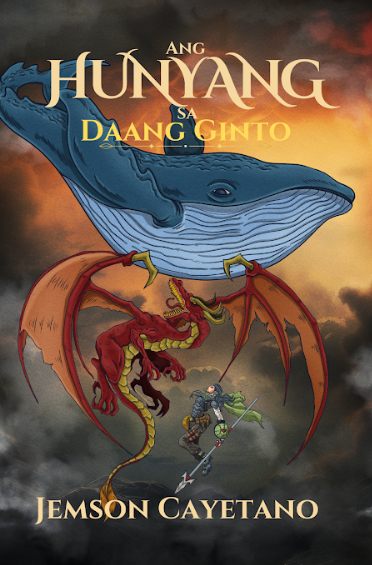
    Ang Hunyáng sa Daang Ginto (roughly, The Hunyáng on the Golden Road) is an epic fantasy novel by Filipino author Jemson Cayetano. It is set in Mu, an original world inspired by Philippine and other Asian mythologies. Its hero, Ilaya, is a Hunyáng, a person who can transform into any creature they have killed. Ilaya refuses to kill. So the only form she can take is a pigeon.

    That single idea carries the whole book, and it is why we wanted to talk to the person who wrote it.

    Excapelabs started as a home for the Philippine indie music scene. But our tagline is Unorthodox Mind, and that kind of mind is not limited to musicians. As we open our doors to creatives beyond music, Jemson’s book felt like the right story to tell.

    What is Ang Hunyáng sa Daang Ginto about?

    Ang Hunyáng sa Daang Ginto follows Ilaya, a young woman from Sanlipi, a nation the rest of her world tends to overlook. She is the first Hunyáng born among her people in a long time. Her mission takes her to the far-off kingdom of Hian, where she must face many stronger Hunyángs to win a single Hiling (Tagalog for wish) that could save her homeland.

    The obstacle is built into the premise. Every other Hunyáng can add a new form with each creature they kill. Ilaya, by choice, has only one.

    Jemson says that at its heart, the book is about “what it means to be strong without being powerful.” It also looks at what happens when a world’s systems are built on violence and one person refuses to take part.

    Who is Jemson Cayetano?

    Jemson Cayetano is a Filipino author and the writer of Ang Hunyáng sa Daang Ginto, the first book of a planned trilogy. Writing an epic fantasy novel had always been his dream, and he says he was simply waiting for the right idea to arrive. He is now writing the second installment.

    He calls himself a student of Pinoy comedy (Pinoy is the informal word Filipinos use for themselves). He also points to The Lord of the Rings and One Piece as proof that worldbuilding is what makes a story timeless.

    Where did the idea for the book come from?

    The idea came from one question. While watching an anime, Jemson wondered what would happen if a power usually given to villains belonged to the main character instead, or became the main power system of an entire world.

    He settled on shapeshifting, a classic trickster ability tied to characters like Loki and Mystique. From there, he started working out how it could become an intricate power system with its own rules.

    Jemson is open about the fact that the idea “didn’t start very deep.” What gives it weight is the rule attached to it. A Hunyáng gains a new form only by killing the creature first. That one rule turns a familiar villain trick into a moral problem, and it gives Ilaya the choice that defines her.

    What does the word Hunyáng mean?

    Hunyáng is a word Jemson invented. He built it from hunyango, the Tagalog word for chameleon, an animal people often link with shapeshifting and adaptation. Some readers assume the word comes from existing mythology, which says a lot about how naturally it fits the world of Mu.

    The word is more than a label for the hero. Jemson says it “represents the whole point of the story.” The book shows how the Hunyángs shape the reality of their world, and what happens when one of them refuses to gain power the way the others do.

    What questions does the book ask its readers?

    Jemson does not write to deliver a lesson. “I am not one to preach about values and ideals,” he says. What he wants is for readers to sit with the same questions he asks himself.

    Two of those questions run through the book: “How far can one go in pursuit of ambition or principles? How can we say it is okay to be ourselves if we are already bringing harm to others?”

    Ilaya’s refusal to kill puts both questions under pressure. Her principle keeps her small in a world built on violence, and her mission forces her to face Hunyángs far more powerful than she is. Jemson admits the book may not offer an answer that satisfies everyone. For him, getting a reader to ask the question at all is “more than worth the effort.”

    Which character means the most to him?

    Jemson loves his whole cast, especially the main group of Ilaya, Lam-Ang, Hendra, and Pei-Pei. But the character he singles out sits outside that group.

    Her name is Elda, and she is a side character. Jemson says he wrote her very carefully, and he describes her arc as “a beautifully haunting story” that still gives him chills.

    Elda did more than move him. She changed the book. Jemson adjusted the tone of the whole story to make sure he did her justice. That is a big change to make for someone outside the main cast. He hopes readers will love her story as much as he does.

    How did he build the world of Mu?

    Jemson calls building Mu the hardest part of writing the book. He wanted a world that feels alive, cohesive, and consistent.

    He holds a firm view on this, even knowing some authors may disagree. He believes epic fantasy asks a writer to commit 100% to a believable world. His reference points are The Lord of the Rings and One Piece, two stories he sees as timeless because of their worldbuilding.

    Mu draws on Philippine and other Asian mythologies, but Jemson stresses that it is entirely original. It holds places like Sanlipi, Ilaya’s overlooked homeland, and Hian, the far-off kingdom where her mission leads. The Hunyáng power system gives the world its rules: who can become what, and at what cost.

    For readers who know fantasy through Middle-earth or the Grand Line, Mu is built with that same ambition, drawn from Philippine and Asian myth.

    Where does the humor come from?

    An epic about violence and principle might sound heavy. Jemson balances it with humor.

    He says a writer’s observations shape the work more than most writers realize, from style and themes down to specific scenes. Comedy is his clearest example. As a self-proclaimed student of Pinoy comedy, he enjoyed writing funny scenes that Filipino readers will recognize from their daily lives, even though the story takes place in a different world and time period.

    For readers outside the Philippines, those scenes offer a look at everyday Filipino humor. For Filipino readers, they are the moments that make Mu feel close to home. The jokes sit beside the book’s heavier moments, and some readers have told Jemson they felt all kinds of emotions throughout the book and loved it for that.

    What was the road to readers like?

    Jemson describes his journey with the book as a roller coaster. He calls it the one story where he can honestly say he “spent all the creativity within my body.” So when it went unsold on several occasions, it hurt.

    He knew it would not be easy. What kept him going was readers. People came to him to say how much they enjoyed the book, and for him, that was enough.

    Now that more people have discovered Hunyáng, Jemson says he “really can’t ask for more.” He is happy, motivated, and already writing the second installment of the trilogy.

    His experience will sound familiar to independent creators anywhere, in books or in music. The work often comes long before the audience does, and the people who show up early are the ones who keep it alive.

    What does he want readers to remember?

    At the very least, Jemson wants readers to feel they have been part of a wonderful journey with the characters. He wants them to smile, cry, and even get annoyed when a character does something annoying.

    If they remember only one thing, he points to a mantra he always uses when he writes dedications:

    “Hindi man palaging ginto ang daang ating nilalakaran, ‘wag natin kalilimutan na ang pagiging mabuti ang pinakamagandang anyo.”

    In English, it reads roughly: even if the road we walk is not always golden, let us not forget that being good is the most beautiful form.

    The line echoes the golden road in the book’s title. It also uses the word anyo, meaning form, the same idea the Hunyáng power is built on. Of all the forms a Hunyáng can take, being good is the one Jemson most wants readers to keep.


    Where can you get Ang Hunyáng sa Daang Ginto?

    Print copies are sold on Lazada and Shopee in the Philippines, and there is also an ebook edition, which may be the easiest option for readers outside the Philippines. Jemson also takes pre-orders for signed copies. Every link is on his official Linktree, along with his Goodreads page for anyone who wants to leave a review.

    In the doc, “ebook edition” links to https://eightlettersbooks.gumroad.com/l/orogce and “his official Linktree” links to https://linktr.ee/Hunyang.Ilaya.

    A Note From Excapelabs

    If you are a creative outside music with a story to tell, our doors are open.

  • AFAIA Is the Cavite Deathcore Band That Wants to Set You Free

    AFAIA Is the Cavite Deathcore Band That Wants to Set You Free

    There is a line in one of AFAIA’s songs that stops you cold. “Some forgive and forget, more forgive and remember, most forgive and remind.” It is not a lyric trying to be clever. It is just the truth, laid bare, wrapped in something heavy enough to match the weight of it.
    AFAIA, the Cavite-based deathcore band formerly known as As Far As I Am, came back to the Philippine underground scene in 2025 with a renewed sense of purpose. Six songs in, a music video on the way, and a full album in the works, they are not easing back in. They are going all the way.
    This is their story.

    From Metalcore Roots to Deathcore Identity


    AFAIA started in 2017 under the full name As Far As I Am, shaped by the metalcore wave that dominated the local scene at the time. Bands like Killswitch Engage were in constant rotation, and the sound they built reflected that era.
    When they returned in 2025, something had shifted. “We wanted to be more honest with ourselves and finally show the genre that was really close to our hearts, which is deathcore,” the band shared. It was not a rebrand for visibility. It was a correction toward something truer.
    Deathcore remains one of the more niche corners of the Philippine metal underground. The fanbase is small. The path is harder. AFAIA knew this going in, and they went in anyway.

    The Name Still Means Everything


    Shortening to AFAIA was a practical move, but the meaning behind “As Far As I Am” stayed with them. The band described it as a philosophy rooted in equality.
    “You can only walk as far as I am,” they explained. “It means we all have our own journey and our own path in life. The goals may be different, and the paths may not intertwine, but at the end of the day, we’re all bound to the same destination.”
    In a scene where the pressure to break through fast is constant, that philosophy is grounding. Not everyone moves at the same pace. That is not failure. That is just life.

    The Sound: Aggression, Emotion, and Six Songs That Hit Hard


    Three of their deathcore tracks are already out. “Last Breath of Regret,” “Jester’s Demise,” and their carrier single “Berserker” are all available for free streaming and download across platforms. Three more are in the pipeline for release in the coming months.
    Their sound did not arrive overnight. “There wasn’t really one specific moment that triggered it. It was more of a slow build-up through the years,” the band said. Over time, the aggression, heaviness, and emotional intensity of deathcore became the language that fit them best.
    Every song is built collectively. No single composer owns the direction. Everyone brings riffs, ideas, structure, and emotion to rehearsal, and the song takes shape from there. New members who joined after the hiatus brought fresh energy that pushed the writing forward.
    “It’s really about collaboration and trust within the band. Tulungan lang talaga,” they said.

    On Writing “Parasito”: When Forgiveness Is Earned, Not Given


    Their debut single “Parasito” came from a real place. The song is about a mistake, and what follows after one. Not just guilt, but consequences. Not just apology, but the long, uneven road of what comes next.
    “We all know ‘Parasito’ is a song about a mistake, and how forgiveness is actually earned, not given freely,” the band said. “It has a very emotional context because it happens in real life. People make mistakes, and it’s not something that is easily accepted.”
    The layered line about forgiveness, “some forgive and forget, more forgive and remember, most forgive and remind,” came from watching how people actually handle pain. Not how they should. How they do.
    “‘Most forgive and remember’ — that’s very real. Even if you say you’re okay, the memory of what happened is still there. And ‘some forgive and remind,’ that’s when the pain is still present and it gets brought up again and again.”
    It is heavy. It is meant to be.

    Why All Their Music Is Free


    Every AFAIA release, past and present, is available for free download. No paywalls. No exclusive tiers. Just the music, open to whoever wants it.
    The reason is straightforward. “Our main goal is not to earn from the music itself. Our goal is to spread our music to as many people as possible. We understand that not everyone has the same capability or access, so we want our music to be as accessible as possible.”
    In a streaming era built around monetization, it reads as counterintuitive. For AFAIA, it reads as consistent. Music, they said, is something to be shared, not kept.
    You can stream and download everything on Spotify, Apple Music, and YouTube Music now.

    The Gig They Will Never Forget


    More than a hundred live shows into their run, across small stages, big events, and competitions, the one that stays with them most is not the largest. It is the most intimate.
    A small bar in Cavite. Everyone there was a friend. The applause was genuine. The energy in the room felt like something real.
    “Even though we’ve played bigger stages and more intense competitions, the most memorable for us are those kinds of gigs. Intimate shows where you’re playing for people who genuinely support you and are there for the music and the bond itself.”
    That says a lot about who AFAIA is as a band.

    What’s Next for AFAIA


    The next few months are going to be busy. A music video for “Berserker” is currently in production, with a target release around June. A full album is in the works, with the hope of dropping it before the year ends. More releases, possible additional MVs, and album-related live shows are all on the horizon.
    For a band that only returned to the scene months ago, the momentum is striking. Six songs written. Three released. A full project taking shape. And still, the message stays consistent: the music is for you, it is free, and it is coming.
    “Sana kasama pa rin namin kayo sa journey all throughout the way.”

    Conclusion


    AFAIA is not trying to go viral. They are not chasing a wider audience by softening their edges. They are making the heaviest music they know how to make, giving it away for free, and trusting that the people who need it will find it.
    In a scene still figuring out where deathcore fits, that kind of clarity is rare. They know who they are. They know what the music is for. And if their first run of songs is any indication, the full album is going to hit hard.
    Follow them. Download the music. Show up when they play Cavite. Some bands are worth being early for.

  • Behind the Song “I Believe” by Prinsesani

    Behind the Song “I Believe” by Prinsesani

    I’m not a professional music critic, and I don’t claim to be an expert in songwriting or production. I’m just someone who loves music deeply—the kind that sticks with you quietly, until one day it feels like the words were written for exactly what you’re going through.

    “I Believe” by Prinsesani is one of those songs. It’s been sitting in my playlist for months now, even before the recent typhoons—Crising, Emong, and Dante—hit the country and left entire communities devastated. A week ago, as the skies poured relentlessly and news of destruction kept flooding in, I found myself going back to this track. Not for entertainment, but for something deeper—comfort, hope, and something solid to hold on to.

    This song isn’t flashy or overly complex. It doesn’t need to be. That’s the beauty of it. The melody is simple, gentle, almost like a prayer. And the lyrics? They’re raw and honest. Words like “I believe in You, even when I don’t see the way” hit differently when you’re walking through something dark.

    There’s a quiet strength in Prinsesani’s voice. She doesn’t just sing about faith—she lives it, breathes it through every note. You can hear the cracks, the surrender, the quiet determination to keep believing even when everything around you feels uncertain. That authenticity makes the song even more powerful.

    For me, this track came at the right time. These past few weeks haven’t been easy—not just because of the storms, but because of personal struggles that I’ve been carrying quietly. I won’t go into all the details, but let’s just say there were moments when I didn’t know what to pray anymore. I just needed something to remind me that God’s promises still stand, even when everything feels like it’s falling apart.

    And that’s exactly what this song did. It reminded me to hold on, to trust, even when I couldn’t see the outcome. “I Believe” became more than just background music—it became a declaration. A quiet, tear-filled one, maybe, but a declaration all the same.

    Music has a way of reaching into places we don’t even realize are hurting. That’s what this song did for me. So if you’re in a season where your faith is being tested, or you’re just looking for a song that feels like a warm hand on your shoulder, I can’t recommend this enough.

    Listen here:

    You don’t need to have the right words. You don’t need to be okay. Sometimes, just pressing play and letting the lyrics speak for you is enough.

    Let me know if you’ve heard the song too—or if there’s another track that’s helped you hold on lately. I’d love to hear about it.

  • SHRED Drumsticks: Forged for the Beat, Born for the Brave

    SHRED Drumsticks: Forged for the Beat, Born for the Brave

    It all starts with a strike. A crack of wood on brass, a thunderous slam on the snare, a roll that surges like adrenaline through your spine. Whether you’re playing your first bar gig in Cebu or destroying a main stage in Manila, there’s one thing every drummer needs—trustworthy sticks that keep up with your rhythm, rage, and resolve.

    And that’s where SHRED Drumsticks comes in.

    Born in 2024 right in the heart of Cebu, SHRED isn’t just another name slapped on a pair of drumsticks—it’s a movement. A brand forged in the raw heat of local gigs, sweaty garage rehearsals, and passionate drum clinics across the country. In a market where serious drum gear is either imported at insane prices or simply unavailable, SHRED made noise—loud, proud, and local.

    “We saw the gap,” says SHRED founder and CEO Jom, a drummer and gear head himself. “There were barely any affordable, quality drumsticks in the Philippines. Either you had to settle for subpar sticks or pay a premium just to get something durable. We thought—why not make our own?”

    But SHRED didn’t just make their own. They redefined what a Filipino drumstick could be.

    Why SHRED?

    Let’s talk wood.

    SHRED Drumsticks are crafted from premium hickory, the gold standard for drummers worldwide. Known for its strength, resilience, and shock absorption, hickory provides that sweet spot between control and power. Whether you’re jazzing on a ride or laying blast beats in a metal pit, SHRED sticks are balanced to deliver consistent performance every single time.

    They’re tough too—made to take a beating without giving up. And that’s actually where the name “SHRED” comes from.

    “It’s the image of drumsticks constantly smashing against cymbals and heads,” Jom shares. “They chip, they splinter—they shred. It’s destructive, but beautiful. That’s the kind of energy we wanted our brand to carry.”

    And it shows. From the first moment you hold a pair of SHREDs, you’ll feel it—the weight, the texture, the confidence.

    Built By Drummers, For Drummers

    One of SHRED’s greatest strengths isn’t just the material. It’s the heart behind the brand.

    This isn’t some faceless corporation. SHRED is powered by real musicians—people who know the pain of a cracked stick mid-gig, who’ve played cramped clubs and outdoor festivals in the same weekend. They’ve been there. And because of that, every decision made at SHRED comes from a drummer’s perspective.

    “We weren’t interested in building a hype brand with overpriced gear,” Jom insists. “We wanted something real. Something you’d recommend to your bandmates because you trust it.”

    SHRED’s models come in classic sizes—2B, 5A, 5B, 7A—all built to international specs. But unlike international price tags, SHRED keeps things accessible. You won’t need to pawn your pedals just to buy a good pair of sticks.

    Making Noise Nationwide

    In just over a year since its founding, SHRED Drumsticks has grown from a local Cebu venture into a nationwide force, currently available through four certified sellers:

    📍 SHRED Drumsticks Rizal
    📍 SHRED Drumsticks Cavite
    📍 SHRED Drumsticks Bulacan
    📍 SHRED Drumsticks Davao

    This growing presence is no accident—it’s a testament to the trust SHRED has built within the drumming community. These aren’t just resellers—they’re drummers, instructors, and gear specialists who believe in the brand’s mission: affordable quality for every Filipino drummer.

    And the plan is to keep growing. SHRED aims to expand to more provinces, partner with music schools, and sponsor drummers and events that align with their vision.

    “We’re not here to sell sticks,” Jom says. “We’re here to support drummers. That’s why we price the way we do. That’s why we’re careful with quality. That’s why we’re everywhere we can be.”

    More Than a Brand—A Community

    What separates SHRED from other drumstick brands is its vibe.

    Scroll through their socials and you won’t just see product shots—you’ll see clips of live shows, rehearsal videos, young drummers unboxing their first pair of SHREDs. It’s not curated—it’s communal.

    There’s a shared pride when a drummer says, “Gamit ko SHRED.” It’s like being part of a club that actually listens to its members. They repost drummers’ stories. They answer DMs. They watch your gig videos. They care.

    And that community-first mindset is the fuel behind SHRED’s mission.

    Built to Outlast the Trends

    Let’s face it—gear brands come and go. But SHRED isn’t just hopping on a trend. It’s built to outlast.

    Because it’s rooted in the real grind. In the soundcheck chaos. In the broken stick during a breakdown. In the after-gig kwentuhan. In the bruises and blisters of Filipino drummers everywhere.

    “We’ll keep making sticks as long as people are playing,” Jom says, with zero hesitation. “As long as there are kids building drum kits out of tin cans, or dads showing their kids how to do a double stroke roll on a pillow—we’ll be here.”

    Play Harder. Play Longer.

    That’s not just a hashtag. It’s the SHRED promise.

    #PlayHarderPlayLonger isn’t about reckless smashing—it’s about pushing yourself without worrying if your gear can keep up. It’s about durability that empowers and accessibility that includes. It’s about Filipino drummers finally having a brand that represents their hunger, grit, and groove.

    So if you’re a drummer looking for sticks that won’t quit on you—whether you’re playing blast beats in your bedroom or riding grooves on stage with your band—it’s time to join the SHRED movement.

    Because sticks may break.
    But the beat?
    The beat never dies.

    🛒 Want to get your hands on a pair?
    Find SHRED Drumsticks at any of their official certified outlets in Rizal, Cavite, Bulacan, and Davao.

    📱 Follow SHRED Drumsticks on Facebook and Instagram to see the latest drops, artist features, and exclusive promos.

    🛠️ Need help choosing a size? DM them for recommendations or to ask about upcoming restocks.

    SHRED Drumsticks
    Crafted for Precision. Priced for Passion.
    #PlayHarderPlayLonger

  • Letter Day Story: Living Every Note Like It’s Their Last

    Letter Day Story: Living Every Note Like It’s Their Last

    It’s almost surreal to sit down and write about Letter Day Story again—this time as a feature. I still remember watching them live during our Eto na Nga! production with Groovelabs Productions last year. Sila ‘yung klase ng banda na kahit matagal mo nang hindi napapakinggan, isang tugtog lang, and it all comes back. Sobrang bait nila in person, too. Kaya when the chance came up to do a feature, I didn’t hesitate. And now, here we are.

    In a sea of new faces and shifting sounds in the local music scene, Letter Day Story stands tall—quietly and steadily making music, unshaken by trends, and guided by something far deeper than fame.

    From Conservatory Classrooms to Center Stage

    Back in 2002, a group of students from the UST Conservatory of Music came together, bonded not just by friendship but by a shared itch to create something of their own. The lineup may have evolved over the years, but what hasn’t changed is their dedication to music—and to each other.

    The heart of the band beats stronger than ever with Dex on vocals, Oli and EJ holding down the rhythm and soul of the group, and Niko, the newest official member, who’s no stranger to the family. “He’s been our long-time sessionist—around a decade na rin,” they shared. “Finally, now, he’s officially with us.” Niko’s quiet loyalty and consistency through the years earned him a place not just on stage but at the very core of LDS.

    Together, they’ve weathered it all—grief, change, and countless milestones. And through it, one truth remains: LDS is nothing without its members.

    Their big break came in 2008, when they joined and surprisingly won Nescafe Soundskool. “We weren’t even aiming to win,” they said. “We just wanted to enjoy playing our music on stage and perform our original song, Ikaw pa Rin.” But fate had other plans. What they thought was just a finalist roll call turned out to be the awarding. They had won. And with it came a deal with Sony Music, leading to radio tours, out-of-town gigs, albums, and collaborations with names like Gloc-9, Yeng Constantino, and even the late Pepe Smith.

    It was a whirlwind, but it was only the beginning.

    Music That Mirrors Life

    When you talk to Letter Day Story about their music, you don’t get canned answers or vague inspirations. Their songs are lived-in. They’re part of their journey.

    Take Mithi, for example—one of the band’s most meaningful tracks. “When Dex wrote it, the message really mirrored our band’s own struggles,” they shared. “There were times when even our parents didn’t believe in what we were doing. They’d say there was no future in this.”

    Mithi became more than a song. It became their reminder to keep going.

    Then there’s Sama-Sama, a song about staying together, weathering everything as a unit. “There’s even a line at the end of the song, a chant that goes sulat araw kwento,” they said. “That’s letter day story—our name and our story.”

    It’s rare to see a band that writes not just about life, but through it.

    From Covers to Craftsmanship

    The band’s evolution wasn’t just emotional—it was technical too. They started out doing covers but quickly found themselves wanting more. They wanted to write. Create. Innovate. That hunger led them to work with producers and artists that would shape their sound.

    One key piece of their story was their guitarist, Notnot, who passed away in April 2024. Long before that, though, he had carved his mark not just as a musician, but as a sought-after sound engineer. His work with IV of Spades, Juan Karlos, Gloc-9, and others reflected just how far he’d come.

    “His work was highly regarded,” the band shared, their pride evident even through typed words. And even in his absence, his spirit lives on in their new material. DSY (Dahil Sayo) was his last song—and what a beautiful, aching piece it is.

    The Indie Life and Its Realities

    Since parting ways with Sony in 2011, Letter Day Story has been an indie band in every sense. No label. No hype machine. Just passion, persistence, and presence.

    “Being independent now is much better than before,” they admitted. “Back then, it was hard for our music to be heard unless a big label signed us to get on the radio. Today, there are so many chances for indie artists. We can create and release music whenever and however we want.”

    Still, the road isn’t easy. Getting on Spotify’s top playlists, competing for organic streams—it’s a different kind of hustle. One that doesn’t always come with instant results.

    “We can’t control trends,” they added. “But artists shouldn’t worry too much. The most important thing is to love music and love what you do.”

    Then and Now: From Jumping Crowds to Phone Lights

    If you’ve ever been to a Letter Day Story gig, you know the kind of energy they bring. Rehearsals aren’t just for precision—they’re about heart. “In the actual show, we play from the top of our lungs,” they said. “Making music is a huge stress reliever and a source of pure fun.”

    Back in the 2010s, their crowds were often fully immersed—jumping, shouting, singing along. These days, things have shifted. “Most people in the crowd are now holding up their phones,” they said, noting how the digital era changed how we consume live music.

    But they’re not bitter. In fact, they’re grateful. “Even new generations who are watching or hearing us for the first time show us love. And our old fans… still manage to love and support our music and our band.”

    Next Collabs and Big Dreams

    The band remains wide-eyed when it comes to today’s scene. “We’d love to collaborate with artists like One Click Straight, Zild, Blaster, Dionela, Skusta Clee, and Setsuna,” they said. Their tastes reflect the openness they’ve cultivated over the years. Pop, R&B, hip-hop—it’s all music. It’s all art.

    And yes, they’ve got new music, too. After 13 years, they’ve released DSY and just dropped NUNG IKA’Y NAWALA last June 27. It’s a track born from heartbreak, about being left without answers, and the slow process of letting go.

    More singles are on the way. A promo tour is in the works. Studio sessions are ongoing.

    Letter Day Story isn’t slowing down. They’re just getting better at telling their truth.

    Staying Lit, Staying Inspired

    So, how do they do it? How do they keep the fire alive after more than two decades?

    “It really comes down to having the same mindset and heart,” they said. “Even with our different professional day jobs and family commitments, we still make time for music and truly enjoy it.”

    That might just be the secret. Not chasing trends. Not trying to one-up themselves. Just showing up—with full hearts, loud amps, and a willingness to grow.

    NUNG IKA’Y NAWALA: A Visual Story of Letting Go

    Released on June 27, NUNG IKA’Y NAWALA is more than just a single—it’s a gut-punch of a song that lingers. Written from a place of quiet heartbreak, it speaks to the pain of being left behind with no closure. “When someone leaves you for no reason, and you’re left searching for answers,” the band shared. “You try not to give up. But in the end, the pain is so deeply shattering that you finally let go.”

    And just as powerful as the song is the music video that goes with it.

    Directed with striking emotional weight, the official music video brings the story to life—capturing the emptiness, longing, and slow-burning grief that follows a sudden goodbye. It’s intimate, cinematic, and quietly devastating in all the right ways.

    If you haven’t seen it yet, now’s the time:
    Watch “NUNG IKA’Y NAWALA” on YouTube

    Whether you’ve been with Letter Day Story since the beginning or you’re just discovering their music today, NUNG IKA’Y NAWALA is the kind of track—and video—that pulls you in and stays with you.

    For the Fans and the Future

    “To all our longtime amazing fans,” they wrote, “thank you for continuously supporting us and for never forgetting our music! It means so much that you’re even sharing our songs with your kids.”

    Their message to younger bands is simple but weighty: “Never think that moving forward with music is only about chasing fame. Focus deeply on your craft. And love your passion.”

    As for their legacy?

    They want every performance to matter. Every moment to count. “Pour your soul into every note you play and every word you sing,” they said. “Let your passion ignite the stage.”

    That’s the kind of legacy that doesn’t fade—even after the lights dim.

    Letter Day Story is now streaming on all major platforms. Their latest single “NUNG IKA’Y NAWALA” is out now.
    Catch them live, if you ever get the chance. I know I will. And if luck’s on our side, maybe we’ll get to share another production stage with them soon. Eto na nga, diba?

  • Behind the Song: “Insomniya” by Kenji Deadass

    Behind the Song: “Insomniya” by Kenji Deadass

    There are songs that make you feel good, and there are songs that make you feel. For me, Insomniya by Kenji Deadass falls into the second category. It’s not just a track I listen to—it’s one I feel in my chest. It’s one of those rare songs that seems to come from a place of raw honesty, like it was written at 2AM when the world is quiet and all you can hear are your own thoughts… and the echo of someone’s name in your head.

    I’m not a music critic. I’m just someone who loves music and the stories it tells. And Insomniya tells a story so many of us know all too well—the kind of love that keeps you up at night, not because you’re in love, but because you’re not sure if they are.

    When Love Turns Into Questions

    The song opens with the line, “Ganito na ba ang pag-ibig?”
    A simple question. But in that moment, it carries so much weight.

    It’s the kind of line you whisper to yourself after crying into your pillow, or after re-reading a message thread that suddenly went cold. It’s a question many of us ask when love stops feeling like a comfort and starts feeling like confusion.

    “Is this really what love is supposed to feel like?”
    “Is love supposed to leave me more sleepless than secure?”

    Kenji doesn’t scream these feelings at us—he whispers them, sings them gently, almost like he’s still trying to make sense of it himself. And that’s what makes the song hit differently. It feels real. Not overly polished. Not trying too hard. Just honest.

    “Nakuha ko lang ay insomniya”

    This line—“Nakuha ko lang ay insomniya”—might sound funny at first, like a punchline. But the more you sit with it, the more you realize how painful that truth is.

    You gave your all. You loved with everything. You stayed up late thinking of them, hoping they’d think of you too. But what you got in return? Sleepless nights. Doubt. Silence. Mixed signals. Or worse, the feeling that maybe you were never really in their heart at all.

    It’s the kind of lyric that sneaks up on you. The first time, you nod. The second time, it stings. The third time, you feel seen.

    Because who among us hasn’t experienced that kind of love? The one where you fall hard, hoping you’re not falling alone. The one where you overthink every message, replay every memory, searching for signs they might’ve felt the same.

    And in the silence of the night, the only thing that grows louder is your own overthinking.

    Holding Hands With Someone Who’s Already Let Go

    There’s a line in the song that absolutely broke me:
    “Hawak ang ‘yong kamay, ‘ket nararamdamang ‘di ‘to magiging tunay.”

    It’s such a quiet heartbreak. You’re still there. Still holding their hand. Still present. But deep down, you already know—this isn’t real. Not really. Maybe it once was. Maybe it never was. But now, you feel it slipping.

    And yet, you don’t let go.
    You keep giving. You keep hoping. You keep loving.

    This is what makes Insomniya so powerful. It’s not a song about dramatic heartbreak. It’s about quiet pain. The kind that doesn’t scream, but lingers. The kind that feels too familiar to ignore.

    It’s about unrequited love—not just the kind where they don’t love you back, but the kind where they kind of do… just not enough. Not in the way you need. Not in the way that lets you sleep peacefully at night.

    A Song for the Ones Who Love Too Much

    Insomniya isn’t about moving on. It’s not about empowerment. It’s not a love anthem or a heartbreak ballad in the traditional sense. It’s more like a diary entry from someone who’s still in it. Still loving. Still losing sleep. Still wondering.

    That’s what makes it so relatable.

    It’s for the people who give even when there’s nothing left to receive.
    It’s for those who stay up late for someone who sleeps soundly without them.
    It’s for the lovers who pour their hearts into someone who only gives them crumbs.

    And maybe that sounds sad—but sometimes, that kind of music is what helps you feel less alone. Sometimes, it’s comforting to know someone else gets it. That your pain isn’t just yours. That somewhere out there, someone wrote a song at 2AM because they couldn’t sleep either.

    No Flash, Just Feelings

    One thing I really appreciate about Kenji Deadass and this track is that it doesn’t try to be flashy. There’s no need for dramatic production or over-the-top vocals. The emotions do all the work.

    The stripped-down vibe lets the lyrics breathe, lets the pain sit with you. It’s that kind of track you play on loop when you don’t want advice—you just want company. You just want a song to say what you can’t.

    Music as a Mirror

    In the end, that’s what Insomniya is: a mirror.

    It shows us our own late-night feelings. The vulnerability we often hide. The questions we ask in silence. It doesn’t pretend to offer answers. It doesn’t try to wrap things up neatly. Instead, it just says, “Hey. I feel this too.”

    And that’s what makes it beautiful.

    Because sometimes, what we need most isn’t closure.
    It’s connection.


    Whether you’re going through a heartbreak, stuck in the uncertainty of “almost,” or just feeling a little too much for someone who doesn’t see you the same way—Insomniya is the kind of song that understands.

    Not because it has all the right words.
    But because it has all the right feelings.


    Kenji Deadass’ “Insomniya” is available on major streaming platforms.
    And if you’re like me—just a music lover trying to find the right song to match your 2AM thoughts—this one’s worth adding to your playlist.

    Let it play. Let it hurt. Let it heal.

  • Through Her Eyes: Watching a Single Mom With ADHD, Bipolar Tendencies, and Impostor Syndrome Try to Stay Afloat

    Through Her Eyes: Watching a Single Mom With ADHD, Bipolar Tendencies, and Impostor Syndrome Try to Stay Afloat

    At first glance, Mia looked like she had it under control.

    She was 34, sharp-witted, and resourceful—always with her laptop open, coffee in hand, and a dozen mental tabs running all at once. To her colleagues, she was “resilient,” “strong,” even “a supermom.” But if you paid attention—really paid attention—you’d see something else in her quiet moments: grief, exhaustion, and a constant battle in her eyes.

    Mia was a single mom. But her kids didn’t live with her right now.

    They were with her ex-partner, a man she had built a life with for eight years—until she discovered the betrayal that shattered everything. The cheating, the gaslighting, the emotional chaos. Mia left to protect herself, but in doing so, made the heart-wrenching decision to let the kids stay with their father temporarily.

    Not because she didn’t love them—she loved them so fiercely it ached—but because she was terrified of breaking them.

    She was afraid her ADHD, her emotional swings, her moments of shutdown would ripple into their young lives. So she worked on herself first. Alone. Quietly. Often painfully.


    Living with ADHD in the Workplace

    Mia had always been described as “too much.” Too energetic, too talkative, too sensitive. But she only got her ADHD diagnosis at 31—long after years of burning out in every job, relationship, and project she touched.

    Her days were a whirlwind of hyperfocus and forgetfulness. She could plan an entire launch in one sitting, yet forget a meeting five minutes after writing it down. She thrived under pressure but crumbled under routine. Admin work felt like drowning in wet sand.

    She wasn’t lazy. She wasn’t careless. She just had a brain that danced differently.

    But try explaining that to a world that praised grind culture and penalized pauses.


    Bipolar Tendencies and Emotional Whiplash

    Mia wasn’t diagnosed with full-blown bipolar disorder, but her moods shifted like weather fronts.

    There were days she felt electric—full of ideas, making plans, sending out pitches at 3AM with unstoppable fire. But those highs never lasted. Eventually, the fog rolled in. Days when she couldn’t get out of bed. When she stared at the ceiling for hours wondering if her life had already peaked.

    The emotional pendulum made relationships difficult, work unpredictable, and self-trust almost impossible.

    When she was up, she feared the crash. When she was down, she doubted she’d ever rise again.


    The Weight of Impostor Syndrome

    Despite her talents, Mia never felt like she belonged in the rooms she entered.

    She would ace presentations, close projects, even earn client praise—but deep inside, a voice always whispered, “They’re going to find out you’re not actually good enough.”

    That voice, fed by years of masking her ADHD and enduring gaslighting in her relationship, became her internal compass. She second-guessed every decision. She apologized too much. She’d freeze when asked for her opinion in meetings, fearing she’d sound “crazy” or “unprofessional.”

    Impostor syndrome wasn’t just a fleeting doubt—it was the lens through which she saw her entire life.


    Relationship Anxiety and Emotional Trauma

    Mia hadn’t dated since the breakup. It wasn’t that she didn’t want love—it was that love terrified her now.

    Eight years with someone who lied, cheated, and manipulated her left scars. Her anxious attachment—already heightened by ADHD—turned into hypervigilance. She’d overanalyze text messages, panic if someone she liked pulled away, and feel guilty for wanting closeness.

    In quiet moments, she’d replay her old relationship like a movie reel, trying to find where she went wrong. She worried she’d never be able to trust again—or worse, that her kids would absorb her brokenness.

    So she chose distance—for now. Healing became her only relationship.


    Financial Anxiety and the ADHD Money Spiral

    Mia made enough to survive—but not much more. Freelance gigs, part-time contracts, a few consulting projects. But managing money with ADHD was its own nightmare.

    Budgeting felt impossible. Paying bills on time took Herculean effort. She’d either obsessively track every cent or ignore her finances entirely for weeks. During her “up” phases, she spent impulsively—retail therapy disguised as self-care. During the lows, she felt guilty for buying groceries.

    Every financial decision came with shame, fear, and the haunting pressure of being a mother—even if her kids weren’t with her at the moment.


    The Hard Work of Healing

    What most people didn’t see was how hard Mia worked just to keep moving forward.

    She was in therapy—every other Friday. Her therapist helped her untangle the self-blame, build better routines, and understand her wiring. She tried meds. It took months to get the dosage right, but it helped soften the extremes.

    She journaled. Not for aesthetics, but survival. She used apps that broke down tasks into smaller steps. She left Post-its everywhere. She built “transition time” into her day, knowing her brain needed space between activities.

    She created new routines, not perfect ones. Her mornings were slow, her evenings quieter. She practiced forgiving herself when she messed up—a task far harder than any spreadsheet or deadline.

    And most of all, she kept showing up.

    For herself. For the hope of being whole. For her kids.


    A Different Kind of Strength

    Mia might not fit the mold of the “strong single mom” social media idolizes. She wasn’t doing it all. She wasn’t always okay. But she was learning to live honestly—with her limitations, her patterns, and her potential.

    That kind of strength—the quiet, gritty kind—is harder to see, but infinitely more powerful.

    She still cried sometimes when she heard her children’s voices on the phone. She still panicked when a client email went unanswered. She still had days when her apartment was a mess and her thoughts even messier.

    But she was alive. She was healing. And that counted.


    Why Telling Mia’s Story Matters

    There are so many women like Mia.

    Smart, talented, emotionally complex—juggling ADHD, bipolar tendencies, impostor syndrome, broken hearts, and motherhood. Living between chaos and calm. Doing the work behind closed doors while pretending everything’s fine.

    Their stories deserve to be told. Not for sympathy, but for truth. For awareness. For others to see themselves and know they’re not broken, just built differently.

    Healing doesn’t always look like a makeover or a breakthrough. Sometimes, it looks like waking up, drinking coffee, and showing up to the day with your whole messy self.

    That’s Mia’s story—and maybe yours too.

  • The Space Between Her and His Heart

    The Space Between Her and His Heart

    He never talked about her.

    Not once.

    Not in passing, not in stories, not even accidentally. And that’s how she knew. When someone is truly nothing, you mention them freely. But when someone lives inside your heart—quietly, stubbornly, secretly—you protect that name like a wound that never healed.

    And he protected her.

    So she never asked.

    She never pressed. Never brought her up. Because she knew that if she heard it from his mouth, it would break something she wouldn’t know how to put back together. It was easier to pretend not to notice the way his body stiffened when he saw her name on his screen. Easier to ignore the flicker in his eyes whenever she passed by.

    But she knew. Of course she did.

    Because the man she loved—he changed when that girl was around.

    His voice softened, his smile widened. He stood straighter. Listened more. His hands, usually tucked away or lifeless at his sides, became expressive. Alive. Like even he forgot that he was tired of feeling. He came back to life in small ways around her—and she, the woman who loved him with everything she had, saw it all from a distance so close it hurt.

    He never did it in front of her. That was the part that hurt the most. He’d check in on the girl quietly—social media, a second screen, a message he’d delete. He never said her name, but his eyes always found a way to follow her.

    And the woman beside him? The one who stayed?

    She got what was left.

    Not nothing—but the bare minimum. Messages that felt like afterthoughts. Dates that felt like obligations. Conversations that wandered, eyes that never truly stayed on hers. She didn’t want extravagance—just attention, presence, effort. But he gave only enough to keep her there, never enough to make her feel truly loved.

    He didn’t know she liked flowers, because he never asked.

    She would’ve told him. She would’ve told him she liked white tulips because they reminded her of peace. That she always paused a little longer at the flower stalls on the street. That growing up, no one gave her flowers—and she always wanted to know what it felt like to receive something beautiful for no reason at all.

    But he never asked.

    He never wondered what her favorite song was. Never remembered how she took her coffee. Never stayed long enough in a moment to memorize her.

    She wanted to believe he cared. She held onto the good days—the rare ones when he laughed with her, when he reached for her hand like he meant it. But even those moments felt borrowed. Like she was borrowing someone else’s version of him. A version she couldn’t keep.

    She began to feel invisible in her own love story.

    She showed up fully—heart wide open, always choosing him, always hoping he’d notice. But the more she gave, the less he saw. And maybe it wasn’t intentional. Maybe he didn’t realize how much she was hurting. Maybe he thought she was fine, that she understood.

    But she wasn’t fine.

    She was breaking.

    And still—she said nothing. She held it in. Because she knew: he wasn’t hers in the way that mattered. His body was there. But his mind? His heart? His gaze? They drifted elsewhere.

    So she loved him quietly. And then, she unloved him the same way.

    No dramatic ending. No loud goodbyes. Just a soft pulling away. A quiet surrender. A slow unlearning of everything she used to beg him to see.

    And one day, she stopped waiting for flowers.
    Stopped looking for his eyes.
    Stopped trying to be enough for someone who never really saw her in the first place.

    Maybe he’ll look back, someday, and wonder when she changed.

    He’ll say she grew distant.
    He’ll say she stopped trying.
    He’ll say he didn’t see it coming.

    But she’ll remember every moment she begged for crumbs and called it love.
    She’ll remember watching him smile at someone else while she waited for him to turn around.
    She’ll remember everything he never said—and everything she did just to feel chosen.

    And maybe, in the quiet, she’ll grieve.
    But she won’t go back.

    Because even the most patient hearts will stop knocking on a door that never opens.

    And even the most loving woman will one day realize—
    she deserves more than the bare minimum.

  • When I Go Quiet, Please Stay

    When I Go Quiet, Please Stay

    There are days I go quiet.

    Not because I’m angry. Not because I don’t care. Not even because something specific happened. I just… fall into a space where words don’t come easy. I carry a storm inside me that doesn’t have language yet. And honestly, I get tired of trying to explain feelings that don’t make sense, even to myself.

    On those days, I hope the people around me don’t take my silence as distance. It’s not me pulling away. It’s me hanging on—barely. It’s me sitting with the noise in my head and trying to sort through the chaos without falling apart.

    I don’t need anyone to fix me. I’m not a broken thing waiting for repair. I just need space to feel. I need someone who’ll sit beside me in the silence, someone who won’t demand answers or toss around well-meaning advice. I don’t always want to talk. I just want to be seen… even when I’m quiet.

    Sometimes the most comforting thing in the world is a presence that doesn’t pressure. Someone who doesn’t rush my healing, someone who gets it: that silence can be loud, that quietness can hold a thousand unspoken words.

    I’ve had to learn to be okay with not having the words. But I still hope that on my silent days, the people who love me can hear the parts of me I don’t know how to say. I hope they understand that my quietness is not rejection. It’s just… me, processing. Me, surviving.

    And when someone just stays, without needing anything from me—no explanations, no performance, no conversation—it means everything. Because on the days I feel invisible, that kind of presence reminds me I still matter.

    Even in stillness, I want to be heard. Even in silence, I want to be loved.

    And if you ever feel this way too—I see you. I hear you. I’ll sit with you.

    No words needed.

  • Sarap Balikan: Growing Up with Fu Pei-mei on RPN 9

    Sarap Balikan: Growing Up with Fu Pei-mei on RPN 9

    There’s a certain kind of nostalgia that only 90s kids will understand. The kind that smells like VHS tapes and electric fan breeze, that sounds like dial-up tones and station IDs on free TV. And tucked between the noise of cartoons and afternoon reruns was a quiet, underrated gem on RPN 9—“Fu Pei-mei’s Chinese Cooking Show.”

    It aired with no fanfare, no flashy effects, no background music to hype it up. Just Fu Pei-mei herself—graceful, calm, and precise—standing in her kitchen, slicing, stirring, and explaining the beauty of Chinese cuisine. It wasn’t a show many kids would be expected to watch, but there I was, eyes fixed on the screen, completely mesmerized.

    There was something about her voice, her presence. Even if I didn’t understand all the words, I understood her intention. Every movement was so deliberate. Every dish had a story. She made cooking feel like a ritual—something that required respect, patience, and love. Watching her was like being let in on a secret. And even if I couldn’t cook yet, it sparked something.

    As a 90s kid, most of our shows were loud and exaggerated. But Fu Pei-mei? She was the total opposite. No gimmicks, no catchphrases—just skill and quiet confidence. And that’s what made it unforgettable. Her show stood out because it didn’t need to shout. It whispered its way into your memory, and somehow, stayed there.

    Years later, I realized what a legend she truly was. Fu Pei-mei wasn’t just a cooking show host—she was a culinary ambassador. Her mission to preserve and teach authentic Chinese cooking shaped generations, even far from Taiwan. She didn’t just teach recipes; she taught culture, discipline, and appreciation. Even through a tiny TV screen in the Philippines, she made an impact.

    Looking back now, I’m thankful. Thankful that I got to grow up with moments like that—quiet mornings or afternoons watching Fu Pei-mei on RPN 9, not knowing that one day, those little moments would mean so much. She made me curious. She made me listen. She made me appreciate food not just as something to eat, but something to understand.

    Fu Pei-mei’s legacy lives on. And for every 90s kid who found themselves watching her, even if by accident—it was a soft, unforgettable gift from a simpler time.

    Sarap balikan, talaga.