
June is a powerful time of year. It celebrates Pride, a beacon for LGBTQ+ visibility and acceptance, and it shines a necessary spotlight on Men’s Mental Health Awareness Month. These movements may seem separate at first glance, but they share a deeply human thread: breaking the silence around pain, identity, and mental well-being.
Today, more men than ever are speaking up about mental health—but the truth remains: too many still suffer in silence. And far too many are dying because of it.
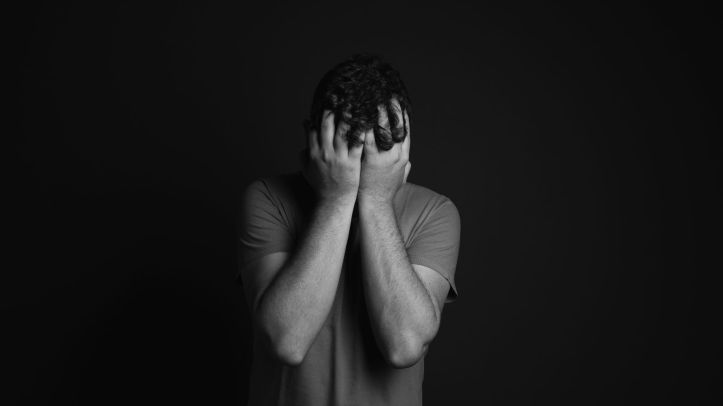
The Quiet Crisis
Every year, millions of men face mental health challenges—but don’t reach out for help. Globally, suicide rates are disproportionately higher in men. According to the World Health Organization, men are nearly twice as likely to die by suicide than women, with some countries seeing rates three to four times higher.
In the United States and UK, suicide is one of the leading causes of death for men under 50. These aren’t just statistics. These are brothers, fathers, friends, co-workers—and even celebrities we’ve admired from afar.
Think of Chester Bennington, the voice behind Linkin Park, or Avicii, the world-famous DJ. Anthony Bourdain, a chef and storyteller who inspired so many with his honesty and hunger for life. And Robin Williams, the man who made the world laugh while battling private pain.
Their deaths broke hearts—and opened eyes. These were strong, creative, successful men. But even they weren’t immune to burnout, depression, and internal battles that society often tells men to bury.
The Stigma: Be a Man, Keep It In
Why are men more at risk?
It starts with what we’re taught. From childhood, many boys absorb a dangerous message: Real men don’t cry. Don’t talk about feelings. Be strong. Be silent. Be tough.
This stereotype doesn’t just hurt. It kills. When vulnerability is seen as weakness, men are less likely to seek help, less likely to express emotion, and more likely to self-isolate. That isolation—paired with untreated depression or anxiety—can lead to dangerous outcomes, including substance abuse, breakdowns, and suicidal thoughts.
Burnout adds fuel to the fire. The pressure to succeed, provide, and perform—whether in careers, families, or social circles—can be suffocating. Especially for LGBTQ+ men who may also face discrimination, rejection, or identity struggles layered on top of everything else.
And while we’re slowly chipping away at the stigma, the truth is: many men still suffer in silence, afraid they’ll be judged, dismissed, or seen as “less than.”
Mental Illness Doesn’t Have a ‘Look’
One of the hardest things about mental health is how invisible it can be. A man can be successful, charismatic, physically healthy—and still be battling crippling anxiety or depression behind closed doors.
It’s not just celebrities. It’s also the construction worker who never misses a shift, the entrepreneur grinding 70 hours a week, the father holding it together for his family, the queer teenager afraid to come out, or the retired vet feeling forgotten.
Depression doesn’t always look like sadness. It can look like anger, numbness, or total withdrawal. For men, these symptoms are often misread or ignored—by others and even by themselves.
Burnout Is Real—and It’s Hitting Hard
Burnout isn’t just about being tired. It’s a state of emotional, physical, and mental exhaustion caused by long-term stress. And in a post-pandemic world where job insecurity, economic pressure, and constant digital connection are part of daily life, burnout is becoming the norm—not the exception.
For men raised to “push through,” rest can feel like failure. Admitting burnout can feel like admitting defeat. But pushing past limits without care or support only leads to deeper damage.
We need to normalize slowing down. We need to say it clearly: Rest is not weakness. Therapy is not shameful. Emotions are not flaws.
The LGBTQ+ Connection
For LGBTQ+ men, the risks are even higher. Studies show that gay, bi, and trans men experience significantly higher rates of depression, anxiety, and suicide attempts than their heterosexual peers.
This is not because of their identity—but because of the discrimination, rejection, and marginalization many still face. Even in 2025, being out and accepted isn’t a guarantee.
So as we celebrate Pride this June, let’s remember that visibility must be paired with support. Acceptance must be followed by action. Every man—straight, gay, bi, trans—deserves to feel safe, heard, and supported.
How We Start to Change Things
Breaking the stigma around men’s mental health starts with conversation—but it doesn’t end there.
Here’s how we can all take action:
1. Check In, Don’t Check Out
Ask the men in your life how they’re really doing. Not just “how’s work?” or “what’s new?”—but really ask. Listen without fixing. Sit with discomfort if it comes up. Show that you’re there for the hard stuff, not just the highlights.
2. Celebrate Vulnerability
When a man opens up, treat it with the same respect and admiration you would for bravery or strength—because it is bravery and strength. Vulnerability is not weakness. It’s connection.
3. Model Openness
If you’re a man reading this: be honest about your own struggles. Whether with friends, a partner, or a therapist, your honesty creates space for others to do the same.
4. Talk About Therapy Like It’s Normal—Because It Is
Therapy isn’t just for when you’re “broken.” It’s for growth. It’s for healing. It’s for becoming more yourself. The more we talk about therapy, the more men will see it as a valid—and valuable—part of life.
5. Remember You’re Not Alone
No matter how dark it gets, you are never alone. Help exists. People care. And healing is possible. There are crisis lines, support groups, apps, safe spaces—more resources than ever. Reaching out is not a sign of weakness. It’s a sign of life.
Final Words: Let June Be the Beginning
June is about Pride. It’s about awareness. But it’s also about action.
If we want to change the future, we must change how we talk about men’s mental health—at home, in schools, in offices, on social media, in locker rooms, in music, in film, in every place where men exist.
Because masculinity doesn’t have to mean silence. It can mean softness. It can mean struggle. It can mean survival.
Whether you’re a man navigating your own journey, a woman supporting your partner, a friend reaching out, or part of the LGBTQ+ community seeking safety and solidarity—this conversation includes you.
Let’s make space for men to cry. To rest. To talk. To feel. And above all, to live.
If You or Someone You Know Is Struggling—Please Reach Out
You are not alone. Support is available, no matter where you are in the world.
🌍 Global & Regional Mental Health Support
- United States:
988 Suicide & Crisis Lifeline — Call or text 988 (24/7, free and confidential)
The Trevor Project (LGBTQ+ youth) — Call 1-866-488-7386 or text START to 678678 - United Kingdom:
Samaritans — Call 116 123 (free, 24/7)
Mind UK — Mental health advice and support - Canada:
Talk Suicide Canada — Call 1-833-456-4566 (24/7) or text 45645 (evenings) - Australia:
Lifeline Australia — Call 13 11 14 (24/7)
Beyond Blue — Support and resources for anxiety, depression, and suicide prevention - New Zealand:
1737, Need to Talk? — Free call or text 1737 (24/7 mental health support) - India:
iCall — Call +91 9152987821 (free, 24/7)
AASRA — Call +91-9820466726 - South Africa:
SADAG — Call 0800 456 789 - Philippines:
National Center for Mental Health (NCMH) Crisis Hotline — Call 1553 (landline) or 0917-899-8727 / 0966-351-4518 (mobile)
Hopeline PH — Call 0917-558-4673, 0918-873-4673, or (02) 8804-HOPE (4673) (24/7 support) - Global LGBTQ+ Help:
It Gets Better Project
Switchboard (UK) — Call 0300 330 0630 - Global Mental Health Resources:
Befrienders Worldwide — Find suicide prevention helplines in your country
Mental Health Atlas (WHO) — International support resources
No matter your background, gender identity, or location—you are worthy of help, healing, and hope.
Your story matters. Let’s keep talking. Let’s keep listening. Let’s keep each other alive.
Discover more from Excapelabs
Subscribe to get the latest posts sent to your email.
 Excapelabs
💯💚❤️
Happy Sunday 🌅
God bless you ⭐🌈
LikeLike