Category: Featured Artist

Spotlight on sound. Featured Artist puts the focus on rising and standout talents making waves in the music scene. From their latest releases to the stories behind their songs, this is where we dive into their world—one track, one truth at a time. Get to know the artist, their voice, their vision, and why they deserve the spotlight now.

  • GLITCHTRAP: When the Day Job Ends, the Music Begins

    GLITCHTRAP: When the Day Job Ends, the Music Begins

    There is an unspoken belief that music belongs to the young.

    It is easy to picture a band made up of college students with endless weekends, flexible schedules, and nothing more pressing than rehearsals, songwriting, and finding the next gig. The reality is that many musicians eventually step away from that life. Careers begin. Families grow. Priorities shift. Instruments are packed away, and rehearsal spaces become distant memories.

    For many, that is where the story ends.

    For GLITCHTRAP, it became the beginning of a new chapter.

    The five-piece Cavite indie metal band inspired by 90s nu metal is made up of working professionals, husbands, fathers, gamers, artists, and longtime friends who chose not to leave music behind. Instead, they found a way to build it into the lives they had already created. Their rehearsals happen between remote work schedules. Their gigs are planned around family calendars. Every song they write is shaped by experiences that only adulthood can bring.

    Their story is one that many musicians in the Philippine underground scene quietly understand. Life changes, but the desire to create never really disappears.

    GLITCHTRAP is proof that passion does not have an expiration date.

    Music Never Left. Life Simply Took the Lead.

    Every member of GLITCHTRAP had already experienced being part of a band long before the name existed.

    They played during their younger years, when gigs were easier to accept and rehearsals could happen on a whim. Back then, making music came with limitations. Equipment upgrades had to wait. Recording depended on whatever budget was available. Like many young musicians, they relied on allowances from their parents and made the most of what they had.

    Today, the circumstances are different.

    “Di na bago sa’min yung pagtugtog,”  Zeke shares.

    Playing live, writing songs, and rehearsing no longer feel unfamiliar. What has changed is the commitment behind it.

    “I would say mas malalim ngayon kasi may means and ways.”

    It is a simple statement, but it carries the weight of experience.

    Growing older did not make them less passionate. It gave them opportunities they never had before.

    They can now invest in their instruments, recording sessions, and original material because they have spent years building careers outside of music. They understand the value of every rehearsal because free time has become one of the rarest things they own.

    For many Filipino metal bands balancing family and full-time jobs, this is the reality that rarely gets talked about. The music continues, but it has to coexist with meetings, deadlines, responsibilities, and raising children.

    GLITCHTRAP embraces that reality instead of fighting it.

    One Conversation That Changed Everything

    Ironically, GLITCHTRAP was never supposed to exist.

    The idea began in February 2025 when Zeke invited guitarist Roel to watch a small production event at a local bar in Dasmariñas, Cavite. They spent the evening doing what old friends often do, sharing drinks while talking about the bands they used to play with, the gigs they once experienced, and the memories that never really fade.

    Around them were local bands performing cover songs alongside their own original compositions. Watching other musicians take the stage reminded them of a part of themselves that had quietly been waiting in the background.

    During the event, one of the organizers approached them. He happened to be a close friend of Zeke’s, and during their conversation he mentioned that another production was already being planned for October.

    Curious, Zeke asked whether they accepted outside bands.

    The answer was yes.

    Without having an actual band, Zeke confidently replied, “I-lineup mo kami.”

    The organizer agreed.

    Only after the conversation ended did reality settle in.

    “Bigla kaming napressure ni Roel dahil sa kapirasong yabang namin,” Zeke recalls.

    That single moment transformed a casual night out into a commitment.

    There was now a performance waiting for a band that did not yet exist.

    Instead of backing out, they accepted the challenge.

    They began reaching out to people they trusted, musicians from different circles who either continued playing or had once shared the same dream years ago. Piece by piece, GLITCHTRAP started to take shape.

    Looking back, the story feels almost accidental.

    Yet it also reflects something deeper.

    Sometimes the opportunities we spend years waiting for arrive when we least expect them. The only difference is whether we are willing to say yes before we feel completely ready.

    Friendship Built the Foundation Before Music Did

    Many bands spend months searching for chemistry.

    GLITCHTRAP never had to.

    Their relationships had already been built long before they stood on the same stage.

    Zeke first met Roel during their years working in the BPO industry. Their friendship naturally continued beyond work, eventually becoming one of the foundations of the band.

    Jerome entered the picture through another friend who owned a recording studio in Imus, Cavite. The studio became more than just a rehearsal space. It became a place where musicians gathered, exchanged ideas, shared stories, and enjoyed a few drinks while making music.

    Roel and bassist Gino had known each other since childhood.

    Jerome and Mike had already played together years before GLITCHTRAP was formed. Their history even stretched back to sharing stages with respected names in the local rock community.

    “Mga antique people na kasi sila,” Zeke jokes.

    Because those relationships already existed, building trust inside the band happened naturally.

    “The chemistry was easy.”

    Their first rehearsal reflected exactly who they were.

    Instead of a formal audition or a structured session, they gathered inside the same recording studio, surrounded by instruments, conversations, and drinks.

    “So usually gano’n ang setup,” Zeke says. “Inom sa studio while practicing songs.”

    It is a detail they repeatedly laugh about throughout their story.

    While alcohol may have become an ongoing joke within the band’s history, what truly stands out is the comfort they have with one another.

    There is no pressure to impress.

    No need to pretend.

    No carefully manufactured image designed for social media.

    Just five friends making music because they genuinely enjoy being in the same room together.

    For independent artists trying to keep an indie band alive while working full-time, that kind of friendship may be just as important as musical talent.

    A Name Inspired by Gaming, Not Image

    The same honesty that defines GLITCHTRAP’s music also explains how they chose their name.

    There was no branding agency.

    No elaborate symbolism.

    No hidden meaning waiting to be decoded.

    The answer is much simpler.

    During another drinking session, the conversation shifted toward horror games, eventually landing on Five Nights at Freddy’s. One character immediately caught everyone’s attention.

    Glitchtrap.

    The name sounded memorable. It rolled naturally off the tongue and felt different enough to stand out.

    Originally, the band even stylized it as Glitchtr4p, referencing the fact that only four members were part of the original lineup. When Mike officially joined, they simplified it into GLITCHTRAP.

    When asked whether the name represents something deeper, Zeke immediately laughs.

    “Wala talaga.”

    Instead, he offers a description that feels far more genuine than any branding statement could ever be.

    “We’re just a bunch of titos na mga isip bata na may passion lang sa music, gaming and art.”

    That sentence captures GLITCHTRAP better than any carefully written bio.

    They are not trying to create mystery around themselves.

    They are not chasing trends or building fictional personas.

    They simply embraced the things they already loved.

    Gaming.

    Art.

    Friendship.

    Music.

    And perhaps that honesty is exactly what makes them relatable.

    For countless musicians who stepped away from the stage because adulthood demanded something different, GLITCHTRAP represents a reminder that passion can still exist alongside responsibility.

    Sometimes it simply waits until after the night shift ends.

    Music Written by Experience, Not Just Influence

    Every band eventually reaches a point where it has to answer one question.

    What do we want to sound like?

    For GLITCHTRAP, the answer was never about fitting into a particular subgenre of metal or chasing whatever sound happened to be popular. Instead, they focused on writing songs that reflected who they are today.

    When they describe their music, they use three words that immediately set the tone for everything they create.

    Raw. Honest. Groovy.

    Those aren’t marketing slogans. They are principles that guide every rehearsal, every arrangement, and every original song.

    “Raw” means refusing to polish away every imperfection.

    “Our music isn’t polished to hide imperfections,” the band explains. “We embrace emotion and authenticity in both our sound and performances.”

    For GLITCHTRAP, imperfections are part of the performance. They would rather capture the emotion behind a song than chase technical perfection that feels disconnected from the message.

    Their second principle is honesty.

    Every original song begins with something real. Whether it is anxiety, hope, loss, or personal struggles, the band draws inspiration from experiences they have lived rather than stories they invent.

    “Every song comes from real experiences.”

    That approach makes their music feel personal without becoming overly complicated. Listeners are invited to connect with emotions that many people carry but rarely talk about openly.

    The third word is perhaps the one that best separates them from many bands in the local heavy music scene.

    Groovy.

    In the Philippines, heavy music is often associated with relentless screams, growls, and breakdowns. GLITCHTRAP appreciates those influences, but they intentionally leave room for melody.

    “Dito sa Pilipinas, most of the metal bands are heavily influenced by grits, screams and growls. We tend to shy away from that, but not totally.”

    Instead of choosing one style over another, they combine clean vocals with heavier passages, creating songs that feel familiar to listeners who grew up with late-’90s and early-2000s nu metal, alternative metal, and post-hardcore.

    Most of the members are children of the ’80s. Those records became part of their musical upbringing, and today those influences naturally appear in the songs they write together.

    Rather than trying to sound modern for the sake of trends, GLITCHTRAP creates the music they themselves would enjoy listening to.

    That authenticity is difficult to manufacture, and perhaps that is why it resonates.

    Five Personalities, One Sound

    Although GLITCHTRAP shares the same vision, every member contributes something different to the band’s identity.

    Roel serves as guitarist and vocalist, but his role stretches far beyond that. According to Zeke, many of the band’s original riffs and even the drum arrangements begin with Roel’s ideas, a skill shaped by his early years as a drummer.

    “He started as a drummer,” Zeke jokes. “Eh tumanda na, napapagod.”

    Bassist Gino brings an instinctive understanding of music. He jokingly describes his process as “tenga, tenga lang,” but the band recognizes how naturally he adapts to arrangements. Around the group, he is also known as their unofficial dancer, adding another layer of energy to rehearsals.

    Jerome, the youngest member, is described as “the heartbeat of the band.” His drumming provides the pulse that keeps every performance moving forward.

    Mike adds another dimension through his guitar work, introducing heavier textures inspired by nu metal that give GLITCHTRAP’s sound its weight without overpowering its melodic side.

    When asked about his own role, Zeke answers with the same humor that runs throughout the band’s story.

    “Ako di ko sure kung ano ambag ko. Pero siguro masaya naman sila sa pinaggagagawa ko.”

    The response earns another laugh, but it also says something about the group’s dynamic.

    No one is trying to become the main character.

    Every member openly celebrates what the others contribute, creating an environment where collaboration matters more than individual recognition.

    Keeping an Indie Band Alive Means Learning to Manage Time

    If there is one challenge that every independent musician understands, it is time.

    Finding inspiration is difficult.

    Finding five people with matching schedules can be even harder.

    Every member of GLITCHTRAP works the night shift. Fortunately, they all work remotely, giving them slightly more flexibility than traditional office jobs. Even then, careers and family responsibilities always come first.

    Rehearsals are no longer spontaneous.

    Every practice requires checking calendars.

    Every gig invitation involves conversations with spouses, family commitments, work deadlines, and personal schedules before anyone says yes.

    For working professionals trying to keep an indie band alive, this is often the unseen part of making music.

    The audience sees the performance.

    They rarely see the weeks of planning that made it possible.

    Creative differences also happen, but GLITCHTRAP approaches them with a simple philosophy that has helped preserve both the band and their friendships.

    “Pag ayaw ng isa, ayaw na ng lahat.”

    If one member is uncomfortable with an idea, they move on.

    No arguments.

    No unnecessary debates.

    No bruised egos.

    “Masyado na kaming matanda para mamroblema sa petty things.”

    It is a rule built on mutual respect rather than compromise.

    The older they have become, the more they understand that protecting friendships is more important than winning creative disagreements.

    For a band built on years of trust, that mindset may be one of their greatest strengths.

    The Stories That Make Them Laugh the Most

    Like every band, GLITCHTRAP has memories that have become part of its identity.

    Their favorite stories are rarely about performing on stage.

    Instead, they happen during rehearsals.

    One memory takes them back to their very first jam session as a band, before Jerome officially joined as drummer. Their friend King filled in behind the kit while everyone gathered to rehearse.

    Or at least, that was the plan.

    They began the evening the same way many of their stories begin.

    With drinks.

    Within less than two hours, the group had already finished two bottles of Alfonso.

    By the time they were supposed to start practicing their second song, everyone had already admitted defeat.

    The rehearsal ended.

    The conversations continued.

    The night became less about perfecting arrangements and more about building friendships.

    Another favorite memory revolves around Mike’s first jam session with the band.

    Everyone was immediately impressed by both his musical ideas and the heaviness of his guitar tone. Before the session was over, they had already started convincing him to become a permanent member.

    They kept asking.

    And asking.

    Eventually, Mike said yes.

    It was another reminder that some of the strongest bands are not formed through auditions or advertisements.

    Sometimes they simply grow from friendships that already exist.

    More Than a Band, A Reminder for Every Indie Musician

    GLITCHTRAP’s story is not extraordinary because they formed a band.

    Thousands of bands have done that.

    Their story matters because of when they chose to do it.

    They formed a band after careers had already been established.

    After families became part of everyday life.

    After adulthood introduced responsibilities that often convince people to give up creative pursuits altogether.

    For many artists in the Philippine independent music scene, that reality feels familiar.

    Dreams are often postponed.

    Sometimes they quietly disappear.

    GLITCHTRAP offers a different perspective.

    Growing older does not mean leaving creativity behind.

    It simply changes the way you make space for it.

    When asked how they hope people will remember them, the band’s answer reflects the same honesty found throughout their music.

    “We’d like to be remembered as a band that made honest music that connects with people and somehow helps them find inspiration and comfort through our songs.”

    There is no mention of fame.

    No talk of chart rankings or viral success.

    Only the hope that someone listening to their songs might find comfort, understanding, or even the motivation to keep creating.

    Perhaps that is the most meaningful legacy an independent band can leave behind.

    GLITCHTRAP is not trying to relive the past.

    They are proving that passion can grow alongside careers, marriage, parenthood, and responsibility.

    Their rehearsals happen after work.

    Their performances fit between family commitments.

    Their songs are written from real experiences instead of imagined ones.

    In many ways, they represent a chapter that countless musicians hope to reach but rarely believe is possible.

    The dream did not end when adulthood arrived.

    It simply learned how to coexist with it.

    And somewhere after another remote work shift, another family dinner, another scheduled rehearsal, and another evening spent with friends, GLITCHTRAP continues to write the next chapter of their story, one honest song at a time.

  • EXPEL: Finding Peace in Total Chaos

    EXPEL: Finding Peace in Total Chaos

    Bulacan hardcore band EXPEL turns frustration, conviction, and groove into a voice that refuses to be silenced.

    The Philippine hardcore scene has always been fueled by authenticity. It is a space where emotion is louder than perfection, where every breakdown carries weight, and where every lyric reflects the realities people live through. Among the newer names making their mark is EXPEL, a Bulacan-based hardcore band whose music blends groove-heavy riffs with themes that challenge corruption, question society, and confront personal struggles.

    Although relatively new, EXPEL has already built a reputation for delivering music that balances aggression with memorable rhythms. Their songs carry the intensity expected from hardcore, but underneath the heaviness is a clear intention, to make listeners think while keeping them moving.

    Their journey did not begin with an elaborate plan. Like many stories rooted in local music communities, it started with simple encounters.

    A Band Born From the Scene

    Before EXPEL became a band, its members were already crossing paths in the Bulacan hardcore community.

    According to the band, everything began when guitarist Joshua Dale reached out with a simple message.

    “Noong una nagkaka-tanguan lang kami ni Joshua Dale sa eksena dito sa Bulacan. Isang beses nag-PM siya sa akin na magbuo daw kami ng banda.”

    From there, the lineup slowly came together through friendships and connections that already existed within the scene.

    Joshua introduced drummer Setset. Former CONTINENTS bandmate Eys joined on bass, while Eys invited Thurs to handle another guitar after meeting through their shared interest in motorcycles. Vocalist Erick eventually completed the lineup after being introduced through Rohnell of Death By Encore.

    Rather than being assembled through auditions or advertisements, EXPEL grew organically through people who already shared a passion for hardcore music. Every member entered the band through trust, friendship, and the local community that continues to connect musicians across Bulacan.

    That sense of community remains one of the band’s strongest foundations today.

    Why “EXPEL”?

    A band’s name often becomes its first statement, and for EXPEL, that statement reflects everything they want their music to say.

    The members explain that the name naturally aligned with the themes they wanted to write about.

    Their songs revolve around subjects such as corruption, life, personal beliefs, and the realities people experience every day.

    Instead of choosing a name simply because it sounded aggressive, EXPEL chose one that represents pushing against injustice, questioning the systems around them, and expressing convictions through music.

    Those ideas would later become the heart of their first EP.

    Heavy Doesn’t Mean You Can’t Groove

    EXPEL openly credits bands such as Expire, Snapcase, Terror, Suburban Scum, and Rotting Out as major influences.

    While those names have helped shape the band’s musical direction, EXPEL isn’t interested in copying anyone else’s sound.

    Instead, they focus on one quality they all enjoy.

    Groove.

    The band explains that they naturally gravitate toward music that feels rhythmic and energetic. Even when the lyrics are filled with anger or frustration, they believe listeners should still enjoy the experience.

    As they put it:

    “Mahilig kasi kami sa groovy ang vibes na tunog. Kahit galit yung mga lyrics namin, para sa amin hindi dapat mawala yung tunog na mae-enjoy ng lahat.”

    That philosophy gives EXPEL a distinct identity within hardcore. Their music hits hard, but it also invites movement. Every riff is designed not only to communicate emotion but also to create energy inside a live venue.

    It is the kind of music built equally for reflection and for the pit.

    Total Chaos, Searching for Peace Through Conflict

    EXPEL’s debut EP, Total Chaos, reflects the environment surrounding its creation.

    The band explains that while writing the record, they witnessed major events unfolding both locally and internationally.

    During that period, protests in Manila resulted in deaths, while wars overseas continued to dominate headlines.

    Those events became the emotional foundation of the EP.

    Rather than writing fictional stories, EXPEL chose to respond to the realities they were witnessing.

    The songs continue their recurring themes of corruption, life, belief, and personal conviction, but they also carry a larger message about resilience.

    The band’s perspective is summarized in one statement that defines the entire EP.

    “Naniniwala kami na Total Chaos brings true peace.”

    For EXPEL, chaos is not simply destruction.

    It represents struggle.

    Whether someone is standing against corruption or fighting battles within themselves, they believe conviction is what ultimately leads people toward meaningful change.

    As they explain, whether the fight is against the government or within one’s own heart, belief becomes the force that guides people toward the future they truly want, for themselves and for the world around them.

    That perspective gives Total Chaos a deeper purpose beyond its heavy sound.

    The anger is not empty.

    It points toward hope.

    Building Songs One Riff at a Time

    Behind every EXPEL song is a collaborative process that develops gradually rather than all at once.

    The writing almost always begins with guitar riffs.

    Once the instrumental ideas begin taking shape, the band heads to Francia at Solarium Records to record raw drum tracks. Hearing those early recordings helps everyone understand the overall mood and direction of the song before moving forward.

    Only after the musical atmosphere becomes clear does vocalist Erick begin writing lyrics.

    The completed ideas are then brought back into the rehearsal studio, where the band jams together and refines every section until everyone is satisfied.

    Once the arrangement is finalized, they head to Aldi at Groove Grid Records to record the final vocal tracks.

    It is a process built on patience and collaboration.

    Rather than forcing lyrics into unfinished music, EXPEL allows each stage to influence the next, ensuring that every song grows naturally from its original riffs into a complete composition.

    Earning Their Place

    Breaking into the Philippine hardcore scene is never easy.

    New bands constantly emerge, each trying to establish their own voice while earning the respect of longtime supporters.

    For EXPEL, the response has been encouraging.

    The members say they are grateful that listeners continue waiting for new releases while receiving consistent support from both friends and family.

    Beyond online engagement, they have also experienced strong energy during live performances.

    Whether performing alongside veterans or newer acts in the scene, the atmosphere remains positive.

    Every gig becomes another reminder that the hardcore community continues to welcome new voices willing to contribute honestly.

    That support motivates the band to keep creating.

    Looking Beyond the EP

    Although Total Chaos introduced EXPEL to listeners, the band already has its eyes on something much bigger.

    Their next goal is a full-length album.

    Recording has become the current priority, and the members also revealed plans to feature numerous collaborations throughout the project.

    If everything goes according to plan, they hope to release the album next year.

    For supporters who have followed them since the beginning, that announcement represents an exciting next chapter.

    The band’s final message remains simple but heartfelt.

    “Maraming salamat agad sa inyong lahat.”

     
  • RAGE, RITUAL, REBIRTH: INSIDE AFAIA’S BERSERKER

    RAGE, RITUAL, REBIRTH: INSIDE AFAIA’S BERSERKER

    A community bled for this one. Here’s the story behind it.

    There is a version of this story that starts with a smoke machine that never showed up. There is another version that starts in 2017, with a band nobody knew, playing wherever they could get a stage. Both versions are true. Both versions lead to the same place: a two day, seventeen band celebration built around a single music video called BERSERKER, and a band called AFAIA finally stepping into the identity they’d been chasing for years.

    This isn’t a comeback story. It’s a passing of the torch, caught on camera, mid flame.

    THE END OF ONE ERA, THE START OF ANOTHER

    Ask AFAIA what BERSERKER means to them and the answer doesn’t come fast. It comes heavy.

    “BERSERKER means a lot to us. We see it as the official beginning of AFAIA’s new era.”

    Behind that new era is a quieter, harder truth: this was the last project to include members of the old lineup before the current one took the reins completely. Not a clean break. A handoff.

    “This was the final project that involved members from our previous lineup before the current lineup officially took over. In a way, it bridges our past and our future.”

    Months of prep went into it. Not just the song, the whole machine around it: the shoot, the launch, the bands sharing the bill, the atmosphere. And it took longer than planned, because things that matter usually do.

    “We faced a lot of challenges along the way, and the whole process took a little longer than we initially expected. But looking back, it was all worth it.”

    WHY BERSERKER

    The title wasn’t picked for shock value. It was picked because it was already true.

    “It captures the wrath, aggression, and raw emotion that we want to portray through our new music. This is the rage that’s been building up through the years, and this song is our way of finally letting it out.”

    But dig past the aggression and there’s a structure underneath it, a map of grief the band built into the video on purpose. Anger first. Then silence. Isolation. A point where you start to lose yourself. Then the rage breaks loose. And somewhere after all of that: acceptance, and the will to fight again.

    “It’s actually inspired by the cycle of grief. It starts with anger, then there are moments of silence and isolation… Eventually, it leads to acceptance, and finally, the will to fight and move forward.”

    That’s the trick of BERSERKER. It reads as fury on the surface and grief underneath, which is usually how fury actually works.

    ON SET: GHOSTS, DANCE MOVES, AND A KID WHO STOLE THE SCENE

    Ask any band what the hardest part of a shoot was and you expect stories about ego, about creative clashes, about somebody storming off. AFAIA doesn’t give you that.

    “The biggest challenge was really finding the time. We’re all adults now, we all have different jobs, responsibilities, and schedules.”

    No drama. Just calendars.

    What they do give you is Matthew Medina, the band’s former guitarist back in their As Far As I Am days, stepping into the role of the Berserker itself and blowing everyone’s expectations out of the water.

    “He was able to deliver every emotion so naturally that we were all just watching in disbelief.”

    And then there’s Paprika Starr, playing a character who’s already dead for most of the story, working with almost nothing and still leaving a mark.

    “Even the small dance sequence she did left an impact on all of us. We were just looking at each other thinking, ‘Wow… ang galing ng bata.’”

    The band’s verdict, only half joking:

    “We might have future stars here. So Matthew, Paprika… if FAMAS is watching, you know where to find them.”

    NOBODY SLACKED OFF

    Every member had a hand in the concept, the direction, the logistics. Setting up the venue at dawn. Hauling equipment. Buying materials. Chipping in money when it was needed.

    “This project was a complete team effort. Nobody slacked off, and everyone gave their time, effort, and passion to make it happen.”

    WHY THIS WAS NEVER JUST AFAIA’S NIGHT

    Seventeen bands. Two days. A launch that turned into a full blown scene reunion. AFAIA is blunt about why they built it this way: the people on that stage, behind the sound board, and holding the sponsorship checks weren’t strangers. They were the people who kept AFAIA alive when almost nobody else was paying attention.

    “We never forget the people who helped us along the way. The bands we invited weren’t just random bands. They’re our friends, the people who supported us, believed in us, and shared the journey with us.”

    There’s a phrase the band keeps coming back to, one passed down from home:

    “We always say, ‘We’re all AFAIA.’ This wasn’t just our celebration. It was a celebration of everyone who became part of our journey and helped us get to where we are today.”

    Even the wisdom behind it comes from further back:

    “My mother always says, ‘Ang pag-angat ng dagat ay pag-angat ng lahat ng bangkang nakasakay dito.’”

    Rising tide, all boats. That’s the whole philosophy in one line.

    And onstage, the promise never changes.

    “Fans can always expect 110% from us every single time we step on stage… And if one day we can give 130%, then we’ll gladly do that too.”

    THE SCENE THEY’RE BUILDING TOWARD

    AFAIA started in 2017 as a band nobody knew, playing anywhere they were let in the door. They’re candid about how slow that climb was.

    “This community wasn’t built overnight. It was built through years of hard work, sleepless nights, endless rehearsals, and never giving up.”

    They’re just as candid about the state of Philippine deathcore and metal right now: smaller than other genres, still finding its footing, but undeniably moving.

    “We’re seeing more bands emerge, more people getting into heavier music, and more events that support the scene. It’s still growing, and we’re really happy to see that.”

    Their advice to bands just starting out is simple, and it isn’t dressed up.

    “Don’t be afraid to be a beginner. Every great band started somewhere, and there’s nothing wrong with starting from the bottom.”

    WHAT THEY WANT YOU TO WALK AWAY WITH

    If BERSERKER is someone’s first exposure to AFAIA, the band isn’t chasing a specific reaction. They’re chasing something more useful than that.

    “If listening to our music helps someone release that pent up anger or tension instead of carrying it around or expressing it in a more destructive way, then I think we’ve accomplished what we set out to do.”

    A full length album is coming. It’s close.

    “This album means a lot to us because it represents everything we’ve become as a band. We poured our hearts, our experiences, and every ounce of passion we have into these songs.”

    THE FUN STUFF

    Every set needs a perfectionist, and AFAIA’s is Tito Kier, who spent the shoot climbing up and down rigging just to get the decorations symmetrical.

    “He was very particular about making everything look clean and symmetrical… it definitely took a lot of patience and effort.”

    Three words for BERSERKER, straight from the band:

    “Wrath, aggression, and beginning.”

    And the story nobody outside the room knew: the shoot didn’t have a smoke machine. What you’re seeing drifting through those cinematic shots is two people vaping on repeat until the atmosphere looked right.

    “That was mostly Deion and Kym vaping nonstop to create the atmosphere. They basically became our human smoke machines that day. So shoutout to them for sacrificing their lungs for the cinematic shots.”

    THE SHOUTOUTS

    The old lineup didn’t disappear when the new one stepped up. They showed up behind the camera instead.

    “Mathew Medina, our former guitarist, portrayed the Berserker in the music video. He also hosted our MV launch events.”

    “Christian Fuentes, our former drummer, was the videographer behind the music video and made sure every shot and every angle looked amazing.”

    “Jerico Rangas, another former guitarist, edited the entire music video, and he did an incredible job.”

    “Then there’s Lordnie, our former bassist, who later became the photographer of the event.”

    “Tito Kier, if you’re reading this, good job! We really appreciate all the hard work you put into making the set look amazing.”

    “Shoutout to them [Deion and Kym] for sacrificing their lungs for the cinematic shots.”

    And the closing word, for everyone who bought a ticket, streamed a track, or showed up:

    “Kami ang AFAIA. Lahat tayo AFAIA. At mahal namin kayong lahat.”

    BERSERKER isn’t the end of anything. By AFAIA’s own account, it’s the opening bell. An album’s coming. The scene’s rising. And somewhere in the smoke that two people vaped into existence, a new chapter is already burning.

  • Soñado: From Classroom Dreams to Indie Scenes

    Some bands are born out of the chaos of the underground scene. Others, from childhood friendships or neighborhood hangouts. But for Soñado, it all started with a quiet lunch break and two young dreamers—one writing lyrics, the other dreaming of singing on stage. And what began as a class project between a drummer and a vocalist blossomed into something bigger than either of them could have imagined: a shared dream, now turned into a living, breathing band.

    From Sweet Chilli to Soñado

    “Ang pangalan talaga namin dati, Sweetchilli,” one of the band members shares in the interview, laughing. “Kasi ‘yun ang treat samin ng club adviser namin after practice.”

    It’s such a charming origin story—naalala mo ‘yung mga panahong libre lang ang softdrinks and fries after school gigs? But as their musical journey started to evolve, so did their identity. One of them paused and asked: Paano nga ba tayo nagsimula?

    That question led to a realization: Soñado—a Spanish word that means “dreamed.” Because that’s exactly what this band is. A dream.

    “Pinangarap nga pala namin ‘yung banda,” they said. “Isang magandang pangarap.”

    Three Friends and a Dream

    The band started as a trio—just a drummer, a vocalist (who’s also his girlfriend), and a fellow schoolmate on guitar. No bassist yet. No studio. Just the fire of a shared dream burning in the hallways of their school. Bit by bit, they grew. Through lunch breaks filled with scribbled lyrics and late-night messages exchanging chords, the band began to take form.

    “Tatlo palang kami noon… lahat ng ito nagsimula sa salitang pangarap,” they recalled.

    When asked how they write songs, they said they write from the gut—from heartbreaks, joy, and those little fleeting moments in life that most people ignore.

    “Pag broken ako sinusulat ko nararamdaman ko… pag grateful ako sa partner ko sinusulat ko rin. Ganun kami eh, kasi mas maganda pag tunay na pakiramdam.”

    First Gig Jitters

    Their first performance was on March 30, 2023. A date they’ll never forget.

    “First time namin eh, lahat kami baguhan. Hindi ganon kagalingan. Takot sa judgements, nahihiya—ang daming pakiramdam,” they said.

    But when the last chord rang out and the lights dimmed, they felt something different. Their club adviser beamed with pride, and that was more than enough. It wasn’t about technical perfection. It was about showing up—about proving to themselves that the dream was real.

    From Lunch Break Lyrics to Late Night Studios

    Unlike most songwriting setups where bands jam together in a garage or studio, Soñado’s process is a bit more personal. The drummer writes alone—usually during school lunch breaks—then brings the lyrics to the band. From there, everyone adds their piece.

    “Usually ako lang nakakaisip sumulat kasi wala naman din ako ginagawa pag lunch break… tapos ipapakita ko sa kanila, mag-aambagan na kami.”

    Their songs are stories from their lives—about friends, love, loss, the stress of school, and moments that just stick with you. Real feelings. Relatable emotions.

    The Hard Part? The Tricycle Fare and Food Payments

    While other bands talk about industry politics and pressure, Soñado keeps it grounded. When asked what the hardest part of being an indie band is, they gave a refreshingly honest answer.

    “Wala pa masyado eh. Bata pa kami. Siguro yung gastos sa pamasahe sa studio—HAHAHA.”

    Most of the time, they’re not even paid in cash.

    “Kadalasan bayad samin foods and alak—masaya na kami dun. Mas masaya kasi pag masaya ang crowd.”

    It’s that kind of passion and simplicity that makes you root for them. They’re not in it for the fame. They just want to play. To share. To dream.

    When Everything Almost Fell Apart

    Like any band, Soñado wasn’t immune to hard times. There was a moment when things got shaky—members started leaving, gigs were lined up, and they didn’t know if they’d make it through.

    “Di ko alam anong gagawin ko noon,” they confessed. “Hanggang sa dumating si Aeross, kapatid ng girlfriend ko. Dun na ulit ako nagkaroon ng lakas ng loob.”

    With the arrival of new members—including siblings and close friends—they pieced the band back together. And now? The lineup feels tighter than ever. Each person has a role, a place, a purpose.

    Growing Up While Growing Together

    Since that first performance, Soñado has grown—not just musically, but as people too. They’ve matured in their sound, learned how to handle nerves, and most importantly, learned how to keep showing up.

    “Nag-go-grow kami kasi ineenjoy namin… at masaya kami na natutupad yung pinangarap naming banda.”

    They don’t try to act like experts. They just keep trying. Keep dreaming.

    From Local Stages to Big Dreams

    When asked about dream gigs, their answers were humble but sincere. They want to open for Mayonnaise or Kamikazee—bands they grew up listening to. Their dream venue? Social House.

    “Gusto namin mareach ang TF (talent fee), kasi medyo mahal na pamasahe at studio,” they laughed. But you can feel it—there’s hunger in their humor. These dreams don’t feel far off.

    The 5-Year Plan: Keep Moving, Keep Dreaming

    In five years, they hope to be playing gigs consistently, earning a decent TF, and sharing their music with more people.

    “Di kami titigil sa pagpapakilala sa ibat ibang lugar. Gagalaw nalang kami.”

    There’s no gimmick. No PR spin. Just movement.

    If They Could Talk to Their Younger Selves

    “Pagpatuloy mo lang mga gusto mo… mangarap ka lang ng mangarap, kasi ngayon unti-unti mo nang nakukuha.”

    That’s the kind of advice you give when you’re starting to see the fruits of your labor. When the sleepless nights and unpaid gigs start to make sense. When you realize the dream didn’t just stay a dream—it became a plan.

    What They Want You to Feel

    Soñado isn’t trying to be the next big thing overnight. What they want is deeper.

    “Yung meaning ng kanta. Yung mga advice tungkol sa pangarap. Inspired sana sila.”

    They want listeners to feel something real. To be reminded that no matter how young or unsure you are, dreams have power. Especially when shared.

    A Message to Aspiring Indie Artists

    “‘Ibuhos at itanim mo muna sa ngayon, para pagdating ng panahon, may bunga at aanihin ka na.’”

    Soñado is proof that with enough passion, the smallest seed of a dream can bloom into something beautiful. No manager, no big label, no viral hit—just faith, effort, and the willingness to play no matter what.

    Their music might not be everywhere yet—but they’re not in a rush. Because for Soñado, the dream is already happening.

    And they’re just getting started.

  • AFAIA Is the Cavite Deathcore Band That Wants to Set You Free

    AFAIA Is the Cavite Deathcore Band That Wants to Set You Free

    There is a line in one of AFAIA’s songs that stops you cold. “Some forgive and forget, more forgive and remember, most forgive and remind.” It is not a lyric trying to be clever. It is just the truth, laid bare, wrapped in something heavy enough to match the weight of it.
    AFAIA, the Cavite-based deathcore band formerly known as As Far As I Am, came back to the Philippine underground scene in 2025 with a renewed sense of purpose. Six songs in, a music video on the way, and a full album in the works, they are not easing back in. They are going all the way.
    This is their story.

    From Metalcore Roots to Deathcore Identity


    AFAIA started in 2017 under the full name As Far As I Am, shaped by the metalcore wave that dominated the local scene at the time. Bands like Killswitch Engage were in constant rotation, and the sound they built reflected that era.
    When they returned in 2025, something had shifted. “We wanted to be more honest with ourselves and finally show the genre that was really close to our hearts, which is deathcore,” the band shared. It was not a rebrand for visibility. It was a correction toward something truer.
    Deathcore remains one of the more niche corners of the Philippine metal underground. The fanbase is small. The path is harder. AFAIA knew this going in, and they went in anyway.

    The Name Still Means Everything


    Shortening to AFAIA was a practical move, but the meaning behind “As Far As I Am” stayed with them. The band described it as a philosophy rooted in equality.
    “You can only walk as far as I am,” they explained. “It means we all have our own journey and our own path in life. The goals may be different, and the paths may not intertwine, but at the end of the day, we’re all bound to the same destination.”
    In a scene where the pressure to break through fast is constant, that philosophy is grounding. Not everyone moves at the same pace. That is not failure. That is just life.

    The Sound: Aggression, Emotion, and Six Songs That Hit Hard


    Three of their deathcore tracks are already out. “Last Breath of Regret,” “Jester’s Demise,” and their carrier single “Berserker” are all available for free streaming and download across platforms. Three more are in the pipeline for release in the coming months.
    Their sound did not arrive overnight. “There wasn’t really one specific moment that triggered it. It was more of a slow build-up through the years,” the band said. Over time, the aggression, heaviness, and emotional intensity of deathcore became the language that fit them best.
    Every song is built collectively. No single composer owns the direction. Everyone brings riffs, ideas, structure, and emotion to rehearsal, and the song takes shape from there. New members who joined after the hiatus brought fresh energy that pushed the writing forward.
    “It’s really about collaboration and trust within the band. Tulungan lang talaga,” they said.

    On Writing “Parasito”: When Forgiveness Is Earned, Not Given


    Their debut single “Parasito” came from a real place. The song is about a mistake, and what follows after one. Not just guilt, but consequences. Not just apology, but the long, uneven road of what comes next.
    “We all know ‘Parasito’ is a song about a mistake, and how forgiveness is actually earned, not given freely,” the band said. “It has a very emotional context because it happens in real life. People make mistakes, and it’s not something that is easily accepted.”
    The layered line about forgiveness, “some forgive and forget, more forgive and remember, most forgive and remind,” came from watching how people actually handle pain. Not how they should. How they do.
    “‘Most forgive and remember’ — that’s very real. Even if you say you’re okay, the memory of what happened is still there. And ‘some forgive and remind,’ that’s when the pain is still present and it gets brought up again and again.”
    It is heavy. It is meant to be.

    Why All Their Music Is Free


    Every AFAIA release, past and present, is available for free download. No paywalls. No exclusive tiers. Just the music, open to whoever wants it.
    The reason is straightforward. “Our main goal is not to earn from the music itself. Our goal is to spread our music to as many people as possible. We understand that not everyone has the same capability or access, so we want our music to be as accessible as possible.”
    In a streaming era built around monetization, it reads as counterintuitive. For AFAIA, it reads as consistent. Music, they said, is something to be shared, not kept.
    You can stream and download everything on Spotify, Apple Music, and YouTube Music now.

    The Gig They Will Never Forget


    More than a hundred live shows into their run, across small stages, big events, and competitions, the one that stays with them most is not the largest. It is the most intimate.
    A small bar in Cavite. Everyone there was a friend. The applause was genuine. The energy in the room felt like something real.
    “Even though we’ve played bigger stages and more intense competitions, the most memorable for us are those kinds of gigs. Intimate shows where you’re playing for people who genuinely support you and are there for the music and the bond itself.”
    That says a lot about who AFAIA is as a band.

    What’s Next for AFAIA


    The next few months are going to be busy. A music video for “Berserker” is currently in production, with a target release around June. A full album is in the works, with the hope of dropping it before the year ends. More releases, possible additional MVs, and album-related live shows are all on the horizon.
    For a band that only returned to the scene months ago, the momentum is striking. Six songs written. Three released. A full project taking shape. And still, the message stays consistent: the music is for you, it is free, and it is coming.
    “Sana kasama pa rin namin kayo sa journey all throughout the way.”

    Conclusion


    AFAIA is not trying to go viral. They are not chasing a wider audience by softening their edges. They are making the heaviest music they know how to make, giving it away for free, and trusting that the people who need it will find it.
    In a scene still figuring out where deathcore fits, that kind of clarity is rare. They know who they are. They know what the music is for. And if their first run of songs is any indication, the full album is going to hit hard.
    Follow them. Download the music. Show up when they play Cavite. Some bands are worth being early for.

  • SETSUNA Ignites Davao Mall Tour Finale with LOIS PH – Slap Armies and Dragons Unite

    When a tour ends on a high, you don’t just remember the music—you remember the energy, the faces in the crowd, and that feeling of being part of something bigger. For SETSUNA, their last stop in the Davao leg of their LOIS PH mall tour wasn’t just another show—it was a night where two worlds collided: the new wave of heavy music and the enduring legacy of one of the Philippines’ most iconic metal acts, Slapshock.

    LOIS PH: Carrying a Legacy Forward

    LOIS PH isn’t just a brand—it’s a name with deep roots in the local scene. Managed by the same team that put Dickies on the map in the Philippines, they’ve always understood that streetwear and music move together. Back when Dickies was just starting here, they made a bold move: choosing Slapshock—a young, hungry band at the time—as their first artist partner. That decision paid off, shaping not just the brand’s street cred but cementing its presence in the culture.

    Fast-forward to today, LOIS PH is building on that same formula: backing artists who embody raw energy, authenticity, and connection with the crowd. Which is why SETSUNA, with their relentless grind and growing following, was a natural fit for the brand’s mall tour.

    Bringing Lean Ansing into the Fold

    For the Davao finale, LOIS PH took things up another notch. They brought in Lean Ansing, Slapshock’s guitarist, to join SETSUNA on stage. The move wasn’t just about star power—it was about impact. SETSUNA had prepared Slapshock covers for the setlist, and having Lean there turned those moments into something electric.

    “Kaya sinama ni LOIS si Lean Ansing para yung impact ng Slapshock cover ng SETSUNA is mas ramdam,” the band shares. And it worked—Slap Armies and Dragon fans stood side by side, feeding off each other’s energy all night.

    The Setlist: Heavy, Tight, and Unforgettable

    The night kicked off with the band’s own material, a statement that they could hold the stage on their own terms:

    1. Hardin – Opening with precision and grit, the song set the mood: this wasn’t going to be a casual mall show; this was going to hit hard.

    2. Ahon – A rallying cry that got heads nodding and fists up.

    3. Harinawa – Melodic but charged, a breather before the storm.

    4. Dalangin – The crowd sang back, proving that SETSUNA’s originals are sticking with fans.

    Then came the moment the Slap Armies had been waiting for:

    1. Wake-up (Slapshock cover) – With Lean Ansing’s guitar cutting through the mix, this one hit like a wave. The crowd’s roar was instant.

    2. Agent Orange (Slapshock cover) – The energy doubled, with old-school fans reliving the chaos and new ones discovering why Slapshock’s songs still destroy live.

    From there, SETSUNA went into one of their most important new releases:

    1. Magliyab – Their collaboration with Lean Ansing. It wasn’t just played—it was unleashed. A fresh anthem that proved the old guard and the new wave can create something massive together.

    Closing the night:

    1. Silaw – Even as the last song, Lean stayed on stage, jamming with the band until the final note. The synergy was real—smiles, sweat, and noise.

    Beyond the Stage

    The energy didn’t end when the amps shut off. Fans lined up at the LOIS PH store for signings, photos, and quick conversations with the band. For some, it was more than just a meet-and-greet—it was the culmination of a personal tour. “Meron din mga fans na pinuntahan lahat ng mall tour namin,” the band notes. That kind of loyalty isn’t built overnight; it’s earned, one show at a time.

    Why LOIS PH and SETSUNA Work Together

    In many ways, the SETSUNA x LOIS PH partnership mirrors the early days of Dickies and Slapshock. It’s about recognizing potential, supporting the grind, and connecting with audiences in their own spaces. LOIS PH understands that the mall tour format isn’t just about selling clothes—it’s about building scenes in cities across the country, making live music accessible to fans who might not always get to see their favorite bands up close.

    For SETSUNA, it’s a chance to push their music further, to bring their sound to both hardcore fans and casual mall-goers who might just discover them by walking past the stage. And with each show, the line between fan and friend gets thinner.

    Looking Ahead: Manila Shows Incoming

    The Davao finale might be over, but the momentum isn’t slowing down. “Mall shows in Manila soon,” the band teases. If the Davao crowd is any indication, Manila’s in for something special—especially with the kind of energy that comes when SETSUNA and LOIS PH join forces.

    With Magliyab now part of their arsenal and Lean Ansing’s stamp of approval, SETSUNA steps into the next chapter with more fire than ever. And just like that first Dickies x Slapshock collab years ago, this feels like one of those moments people will look back on and say, “That’s when things leveled up.”

    Follow LOIS PH for updates on the Manila shows and exclusive behind-the-scenes from the mall tour. For SETSUNA fans—new and old—this is just the start.

  • Ang Dating Don Juan: Riding the Post-Pandemic Wave with Pop-Punk Fire

    Ang Dating Don Juan: Riding the Post-Pandemic Wave with Pop-Punk Fire

    It’s 2022. The city is still shaking off the haze of lockdowns. Live music, once silenced, is crawling back into bars, clubs, and tiny backstreet venues. Somewhere in this slow-burn comeback, a few long-time friends—each from different bands that had gone quiet during the pandemic—look at each other and decide: “Tara. Buo-in na natin ’to.”

    That’s how Ang Dating Don Juan was born.
    No grand ceremony, no overly deep meaning behind the name (“Wala naman syang meaning. Sadyang yun lang talaga ang naisip namin,” they admit). Just a shared itch to make noise again. And noise, they did.


    From Hiatus to Hype

    “Original pa naman lahat ng members,” says vocalist-guitarist Yuwi. The lineup has remained untouched since day one. They weren’t strangers thrown together by ads or scene matchmaking—they were already friends, just on different paths. When the gigs came back post-pandemic, the idea clicked. The plan wasn’t just to jam for nostalgia’s sake; it was to release songs and get back into the circuit.

    Their first track as a band, “Parang Langit Na,” came together like a fresh breath after months indoors. “Bagong proseso para samin—halo ng aming mga inspirasyon, style, at kwento ng pag-ibig,” says Yuwi. As a pop-punk band, they wanted the energy high and the emotions right on the surface.

    Musically, they pull from Belmont, The Story So Far, Neck Deep, and One Ok Rock—bands known for melodic precision and heartfelt delivery. “Sakanila kami kumukuha ng inspirasyon sa pagsusulat—inaaral namin kung paano nila binibigyan ng talino at detalye bawat parte ng kanta, at ina-apply namin sa sariling gawa,” Yuwi explains.


    Keeping It Together

    In an industry where bands form and break apart with alarming frequency, Ang Dating Don Juan is still in its “honeymoon” phase. “Wala pa naman,” says Yuwi when asked if they’ve had near-breakups. “I think the band is still too young to have these kinds of problems.”

    Bassist Rem puts it in more colorful terms: “Depende siguro kung ugod ugod na tapos di na kinakaya yung rayuma. haha.”

    That doesn’t mean the grind isn’t real. Gigs mean long nights, heavy gear, and minimal sleep. “Sa live gigs, pagod at puyat ang kalaban parati,” Rem says. “On the gig itself, situational per venue pero nasusolve naman.”

    Their songwriting process is currently anchored by Yuwi, who lays down the foundation before the rest of the band pitches in. But they’re not afraid to shake things up. “Balak daw magexperiment ng bagong songwriting process sa next album,” Rem teases.


    A Sound That Sticks

    In a sea of local bands, they’ve carved a space with what lead guitarist Mat describes as “melodic guitar leads at energy ng kanta.” It’s an approach that mixes the catchiness of pop-punk with an edge sharp enough to cut through a crowded lineup.

    Jovan, another member of the crew, adds that the dedication in the group keeps their sound tight: “Naging unique siguro kami dahil sa dedikasyon ni Mat. Di kami pwedeng tamarin—nakakahiya kung di namin matapatan yung ‘dedikasyon’ ni Mat. hahaha.”

    That energy isn’t just about the music—it’s about the connection. “First, gusto namin maramdaman nila yung naramdaman rin namin when we listened to our favorite bands for the very first time,” says Yuwi. “Yung hype, yung eargasm, yung longing for a live show. Second, we want to connect with them on a deeper level… Moving forward, magrerelease kami ng mga kanta about how life fucks us up inside out.”

    He promises the sophomore album will be “everybody’s life story.” A bold claim, but one that fits their mix of relatability and stage-burning confidence.


    Life on the Road (and Stage)

    Right now, Ang Dating Don Juan is in the middle of their cheekily-titled album tour “Wag kang mag tour ka naman.” They’ve been posting updates on their page for fans who want to catch the next stop. The tour is more than just promotion—it’s a way of saying thanks.

    “Syempre, punong puno ng pasasalamat dahil kung wala sila, wala rin naman kami sa eksena na kung nasaan man kami ngayon,” says Yuwi. “Babawi nalang kami sakanila sa pagtugtog namin ng malupit sa bawat shows!”

    That gratitude also pushes them to play with full force, no matter the crowd size. Whether it’s a cramped underground space or a bigger festival slot, they treat it with the same level of energy. “Babawi kami sa kanila sa bawat gig,” Mat echoes.


    The Next Chapter

    The band isn’t slowing down. Aside from the ongoing tour, they’ve hinted at a collaboration with a “very special guest.” No details yet—just enough to get fans speculating. “May niluluto kaming collab… abangan!!” Mat grins.

    Jovan backs this up, mentioning that a new release is already in the works alongside the collab. “Abangan nyo na lang,” he says, almost daring fans to keep an eye out.


    Why the Name Works

    Some band names come with backstories, metaphors, or deep personal connections. Ang Dating Don Juan? Not so much. “Wala naman syang meaning,” they admit. “Sadyang yun lang talaga ang naisip namin.”

    Maybe that’s the charm—it’s not trying too hard. It’s memorable, easy to say, and just mysterious enough to make people ask about it. In a scene where image can overshadow substance, the band lets the music do most of the talking.


    In the Studio and Beyond

    Recording sessions for the band are equal parts work and camaraderie. The group’s chemistry, built from years of friendship, makes it easy to throw ideas around without stepping on egos.

    With Yuwi at the helm of songwriting, and everyone else throwing in riffs, fills, and vocal tweaks, each track becomes a group effort. For the next album, that process might shift—something they see as a natural evolution rather than a risk.

    Experimentation is already baked into their DNA. As they mix influences from Western pop-punk to Japanese rock, the goal isn’t to mimic but to adapt. Belmont’s precise structures, TSSF’s lyrical grit, Neck Deep’s hooks, and One Ok Rock’s anthemic punch—all reimagined through their own experiences.


    Looking Ahead

    If you’ve been following the band, you know the pace they’re keeping is relentless. Gigs, recording, touring—it’s all in motion. The challenge, especially for a relatively young band, is sustaining that momentum without burning out.

    For Ang Dating Don Juan, the key seems to be staying grounded in why they started in the first place: the thrill of playing, the connection with the crowd, and the simple joy of making music with friends.


    Final Words to the Scene

    Before wrapping up, they want the community to know they’re here to stay—and they’re here to keep delivering. “Babawi nalang kami sakanila sa pagtugtog namin ng malupit sa bawat shows,” says Yuwi again, as if it’s a promise stitched into the band’s ethos.

    They’re not pretending to have all the answers, or to carry some grand mission statement. But in a post-pandemic local scene that’s still finding its rhythm, Ang Dating Don Juan is proof that sometimes, you don’t need a deep backstory or industry playbook. Sometimes, it’s enough to show up, plug in, and play like you mean it.

    Because at the end of the night—when the lights fade, the gear’s packed, and the adrenaline settles—it’s the songs, the sweat, and the shared moments with the crowd that make a band worth remembering.

    And for Ang Dating Don Juan, this is just the beginning.

  • Summerfling Memoirs Isn’t Just a Band—It’s the Feeling You Can’t Forget

    Summerfling Memoirs Isn’t Just a Band—It’s the Feeling You Can’t Forget

    If you think Summerfling Memoirs is just another sad indie band with a poetic name, think again. Behind that sentimental-sounding label lies a group that writes like they’ve lived a hundred lives and broken a thousand hearts.

    Yes, their name comes from the idea of a fleeting summer romance—quick, passionate, beautiful, and destined to end—but in the world of Summerfling Memoirs (SFM), every ending still echoes long after the last chorus fades.

    They don’t just make songs. They create emotional time bombs that explode quietly inside your chest.

    And they know it.

    Not Just a Summer Thing

    The term summer fling brings to mind late-night drives, beach bonfires, and kisses under city lights—things that are beautiful because they don’t last. For SFM, that fleeting feeling is exactly the point.

    “SFM is based on the summer fling term,” they explained in a shared Google Doc interview. “A short-term romantic relationship that typically occurs during the summer months, characterized by its temporary nature and often without the intention of long-term commitment.”

    But don’t mistake that for something shallow. They aren’t writing about flings for fun. They’re writing about the kinds of temporary moments that stay with you forever. The kind that change you, hurt you, haunt you.

    “It’s relevant with our group’s point of views in terms of songwriting and creative nature in general,” they said, “and also personal experiences.”

    So yes, SFM might sing about heartbreak. But it’s not heartbreak for heartbreak’s sake—it’s heartbreak that builds character. Heartbreak that turns into art.

    The Drama of the Ordinary

    Their approach to music is cinematic but never exaggerated. They build stories out of silence, metaphors, and memories, and that’s what sets them apart.

    “Mostly what we think on this is, it will be a melodramatic concept,” they said. “It could revolve around a seemingly ordinary person thrust into extraordinary circumstances, forcing them to confront intense emotions and dilemma.”

    It sounds like something straight out of a coming-of-age film, but the magic is that they never make it feel forced. Their lyrics may be subtle, but the emotions hit loud.

    “Minsan depende sa mood,” they added. “And some of the writings build by metaphor.”

    It’s not just poetry—they write with the kind of depth that’s only possible when someone’s actually been through it.

    And they have been through it.

    Manifestations, Not Just Music

    For SFM, music doesn’t just reflect real life—it sometimes predicts it. That’s a scary thought for anyone who’s heard their more gut-wrenching tracks.

    “It is weird to think about it, but it does,” one of them admitted. “All songs I wrote reflected—or should I say manifested—and I really hate to say it does. It’s depressive and haunting.”

    The use of “haunting” here is no exaggeration. There’s a sense that their songs are less about telling a story and more about trying to survive one. Their music doesn’t give you answers; it sits with your pain until you’re ready to face it.

    And sometimes, even they aren’t ready to play what they’ve written.

    “Soon Enough”: A Song They Can Barely Sing

    When asked which of their tracks is the hardest to perform live, there wasn’t much hesitation.

    “Oh, this is hard,” they answered. “Every track can be a candidate on this. Maybe ‘Soon Enough.’”

    The reason? That song was written for a best friend who passed away.

    “Playing it is deeply personal as it evokes the sadness of loss and requires strong emotions to capture its true meaning.”

    It’s not just the lyrics that make it heavy. It’s the memory it carries. It’s the absence of someone who used to be in the room.

    You don’t perform a song like ‘Soon Enough’—you relive it.

    Healing Through Song (Sort Of)

    The irony isn’t lost on them—writing these songs hurts, but it also helps. Their music carries sadness, but it’s never hopeless.

    “In terms of difference, our songs can be generalized with others and can be relatable and simple,” they said. “But it bonds with a strong emotion and empathizes with frustration and enlightening.”

    There’s that word again—enlightening. It keeps coming up in their answers, as if they’re trying to say, “We don’t want you to stay sad. We just want you to know you’re not alone.”

    At the end of the day, that’s what makes them more than just a heartbreak band. It’s not about the drama—it’s about the after.

    Not Just Any Band

    If you think Summerfling Memoirs is just a brand name slapped onto a group of musicians, think again.

    “First of all, SFM is not only a band,” they said. “It’s a family, lifestyle, and passion.”

    It’s rare to hear a band describe themselves in such a personal way without sounding like a marketing pitch. But with SFM, it doesn’t feel like PR—it feels like truth.

    “SFM teaches us being humble, appreciative, and being patient in all aspects,” they shared. “Enjoying life in and out of music, enhancing our creative ideas, business, or personal growth.”

    There’s something about the way they answer that makes you believe it’s not just talk. They live their songs. They live their art. And they don’t fake the feelings that come with it.

    Boundaries and Branding

    Of course, not every song makes it to the SFM playlist. They’re deliberate about what they release—and why.

    “SFM has a certain rule in terms of song selections, especially on branding and identity,” they admitted. “Not really everything gets in.”

    And it’s not about ego or trying to be edgy. They know what SFM sounds like. More importantly, they know what it feels like.

    They guard that feeling. Carefully.

    It’s why their songs, even the sad ones, never feel empty or recycled. Every track has a purpose. Every lyric has weight.

    Not This Time—Never Again

    One of the most cryptic but memorable quotes from the band during the interview was this:

    “Yes. Never again this time for real! And the universe will conspire with the view that you don’t exist.”

    It’s the kind of line you don’t expect to find in a standard press kit. It reads like the final page of a breakup letter—or a diary entry from someone who finally let go.

    That’s SFM for you. No filter. No press-trained answers. Just real emotion, phrased however it decides to come out.

    Sometimes, it’s a scream. Sometimes, it’s a whisper. Either way, it stays with you.

    Hoping You Feel It

    At the core of everything they do—songs, performances, painful interviews—SFM just wants one thing: for you to feel.

    “We hope that the listeners appreciate and catch the beauty, emotion, simplicity, experience,” they wrote. “And above all, [we hope we’re] enlightening the listeners into a positive perspective.”

    That word again. Enlightening.

    Because even if their songs are filled with sadness, their goal isn’t to bring people down. It’s to remind them that they can get up again. That what feels fleeting might still be worth remembering.

    That even the shortest flings, summer or not, leave the longest memories.

    What’s Next for SFM?

    Maybe a new single. Maybe another tearjerker. Maybe something that surprises even them.

    They didn’t tease any specific plans. But knowing SFM, they won’t need to. Whatever they release next, it’ll come from the same place: real experience, real feeling, real life.

    And we’ll be here for it, ready to press play, break a little inside, and call it healing.

    Because that’s what Summerfling Memoirs does best.

    Follow SFM on social media and streaming platforms for upcoming releases. Just don’t expect them to sugarcoat anything. That’s not how heartbreak—or good music—works.

  • Behind the Song “I Believe” by Prinsesani

    Behind the Song “I Believe” by Prinsesani

    I’m not a professional music critic, and I don’t claim to be an expert in songwriting or production. I’m just someone who loves music deeply—the kind that sticks with you quietly, until one day it feels like the words were written for exactly what you’re going through.

    “I Believe” by Prinsesani is one of those songs. It’s been sitting in my playlist for months now, even before the recent typhoons—Crising, Emong, and Dante—hit the country and left entire communities devastated. A week ago, as the skies poured relentlessly and news of destruction kept flooding in, I found myself going back to this track. Not for entertainment, but for something deeper—comfort, hope, and something solid to hold on to.

    This song isn’t flashy or overly complex. It doesn’t need to be. That’s the beauty of it. The melody is simple, gentle, almost like a prayer. And the lyrics? They’re raw and honest. Words like “I believe in You, even when I don’t see the way” hit differently when you’re walking through something dark.

    There’s a quiet strength in Prinsesani’s voice. She doesn’t just sing about faith—she lives it, breathes it through every note. You can hear the cracks, the surrender, the quiet determination to keep believing even when everything around you feels uncertain. That authenticity makes the song even more powerful.

    For me, this track came at the right time. These past few weeks haven’t been easy—not just because of the storms, but because of personal struggles that I’ve been carrying quietly. I won’t go into all the details, but let’s just say there were moments when I didn’t know what to pray anymore. I just needed something to remind me that God’s promises still stand, even when everything feels like it’s falling apart.

    And that’s exactly what this song did. It reminded me to hold on, to trust, even when I couldn’t see the outcome. “I Believe” became more than just background music—it became a declaration. A quiet, tear-filled one, maybe, but a declaration all the same.

    Music has a way of reaching into places we don’t even realize are hurting. That’s what this song did for me. So if you’re in a season where your faith is being tested, or you’re just looking for a song that feels like a warm hand on your shoulder, I can’t recommend this enough.

    Listen here:

    You don’t need to have the right words. You don’t need to be okay. Sometimes, just pressing play and letting the lyrics speak for you is enough.

    Let me know if you’ve heard the song too—or if there’s another track that’s helped you hold on lately. I’d love to hear about it.

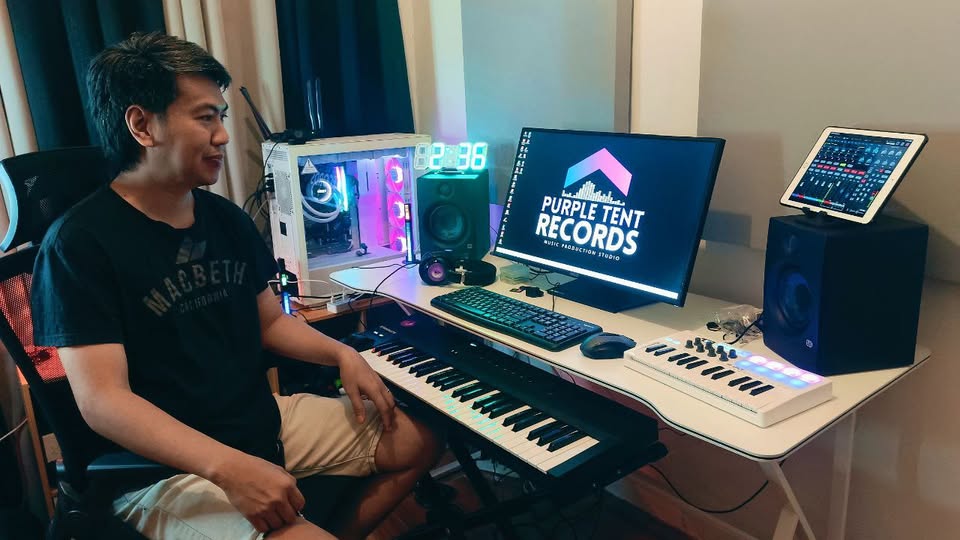
  • Inside Purple Tent Records: Where Local Bands Find Their Sound and Space

    Inside Purple Tent Records: Where Local Bands Find Their Sound and Space

    Tucked in a quiet corner somewhere in Bulacan is a studio with a name that feels almost poetic — Purple Tent Records. It’s not just a recording space. It’s a feeling. It’s that kind of place where musicians don’t need to wear a mask. No high-budget aesthetics, no over-the-top pretensions — just honest music-making, brewed with heart, coffee, and sometimes a little bit of chaos.

    When you ask Purple Tent what it’s like to record there, they won’t give you a corporate mission statement or rattle off a gear list. They’ll tell you it depends. On the artist. On the vibe. On the weather, maybe. But one thing’s certain — they want you to feel at home.

    “As much as possible, gusto ko na maramdaman ng artists na at home sila dito sa studio,” they said.

    And they mean it. Whether that’s allowing a band to roll around on the studio floor, sleep between takes, or have coffee-fueled kwentuhan mid-session, Purple Tent has built its identity on being a bahay — a small, simple house for big, bold sound.

    A Studio That Listens First

    No cookie-cutter formulas. No “one-size-fits-all” approach. The recording process at Purple Tent is as personalized as it gets.

    “Dahil bawat artist/band ay may kanya-kanyang genre at tunog,” they explained. “Nakikinig ako ng mga references na sikat or kilalang songs para malaman ko kung paano ko s’ya i-master ayon sa vibe ng song nila.”

    It always begins with listening. Not just to the music — but to the artist’s ideas, dreams, sonic goals. Everything from what snare to use to what kick drum sounds right for a specific track is part of the conversation.

    And for first-timers in the studio? They’ve got you.

    “Siguro matic naman din sa amin na mga producers na mag-guide at tumulong sa mga artist kung medyo nahihirapan sila sa nirerecord nila,” they added.

    You don’t walk in a stranger and walk out a star. You walk in uncertain and walk out heard.

    No Fancy Gear, Just Killer Ears

    When asked about what gear gives Purple Tent an edge, the answer was simple and a little unexpected.

    “Wala eh. Haha.”

    Instead, they believe the real magic comes from the producer’s ears — the ability to listen deeply, adjust instinctively, and bring a song to life. You can have all the same DAWs and plugins in the world, but the outcome will always differ based on who’s behind the board.

    “Siguradong magkakaiba pa rin ng magiging tunog dahil magkakaiba kami ng approach sa pag-master ng isang kanta.”

    Their process is clean and efficient. Most artists come in ready, but inspiration often sneaks in mid-recording, prompting spontaneous changes and bursts of creativity.

    Coffee, Kape, Kulitan

    If there’s one thing Purple Tent values as much as the music, it’s the connection. Collaboration isn’t some sterile, business-speak concept here — it’s food-sharing, coffee-hoarding, laughter-filled bonding.

    “Kapag may malakas mag-kape, nauubos yung stock ko ng kape dito. Haha,” they shared, clearly amused.

    And yes, direction changes mid-recording happen. A lot.

    “Madalas mangyari ito. Kapag nadidinig na nila unti-unti nang nabubuo yung song, nakakapiga pa sila ng fresh ideas para magdagdag ng flavor sa song.”

    Sometimes, all it takes is hearing a clean version of your track to realize what it still needs — a change in tone, a tweak in arrangement, or just a sprinkle of inspiration.

    A Sound That’s Yours, Not Theirs

    The line between giving guidance and overpowering an artist’s voice is one they carefully walk.

    “Importante para sa akin na mailabas nila yung bilang ‘sila’ mismo sa kanta nila,” they said. “Yung tipong kapag madinig ng listeners yung song nila, alam kaagad kung sino yung banda — hindi yung kung saan nirecord.”

    The producer’s job? To suggest, not impose. To offer a clearer vision when the artist feels lost — never to take the wheel completely.

    Even when things get challenging — like spending 16 straight hours recording or listening to the same track for days just to tweak the tiniest detail — they don’t complain.

    “Sakit sa tenga isipin no? Pero ‘yun talaga ang trabaho namin. Haha.”

    What’s In a Name?

    The name “Purple Tent” wasn’t pulled out of thin air.

    “Purple kasi it represents creativity, magic and wisdom, tapos yung tent means home. Maliit at simple na bahay.”

    And it fits. This isn’t some big-budget studio trying to compete with giants. It’s a cozy shelter built for stories — and songs — to unfold.

    From Solo Artists to the Band Scene

    Purple Tent started out producing songs for solo artists. That’s where the groundwork was laid. But now, the focus has expanded — especially towards bands in Bulacan and nearby scenes.

    “Sa ngayon gusto kong mairecord yung eksena ng mga banda dito sa Bulacan at sa mga kalapit na lugar. Kahit anong genre, G ako.”

    They’re not gatekeeping genres or handpicking only those with “industry potential.” If you’ve got passion, you’re welcome. And if you’re part of the independent band wave rising in the region, even better.

    Building a Platform, One Track at a Time

    Beyond the recording sessions, Purple Tent Records is building something bigger — a community.

    Take SpotLive, for example, a performance series they started to help artists promote their original work. It’s their way of introducing new acts not just to listeners, but to the ecosystem of musicians building their careers from scratch.

    “Para makatulong sa mga artist na makapag-promote ng mga orig nila. At isa na din dun ay para makapagpakilala at masubukan din nila dito.”

    You’ll find these sessions on their YouTube channel — humble, homegrown, but with a touch of grit and ambition that makes you want to root for everyone involved.

    Looking Ahead

    Purple Tent doesn’t have lofty promises or inflated branding language. They’re simply on a mission to help more musicians record, express, and evolve.

    “Yes! Yan talaga ang vision ko. Sana mas lumaki at makilala pa ang Purple Tent para mas marami tayong matulungan na artists.”

    And if you’re an aspiring musician reading this, they’ve got one piece of advice:

    “Gawa lang kayo ng gawa ng mga kanta. Someday makakapag-record din kayo dito. Haha.”

    No pressure. No rules. Just music — and a tent that’s purple for a reason.

    Check out Purple Tent’s SpotLive features and original recordings on YouTube. Support local. Support the sound of home.